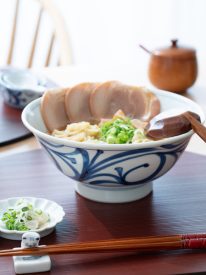
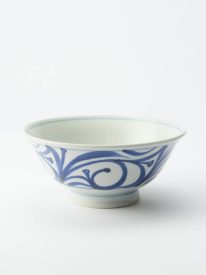
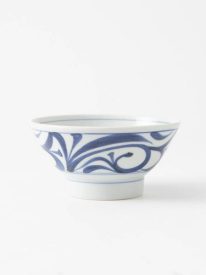
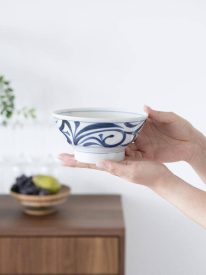
A stunning hand-painted arabesque design is rendered in indigo over the sturdy white porcelain of this large ramen bowl. The signature tsuketate technique, where each stroke is applied in a single motion without outlines, enhances the flowing, dynamic pattern. The bowl’s robust build makes it resistant to breakage and suitable for both microwave and dishwasher…
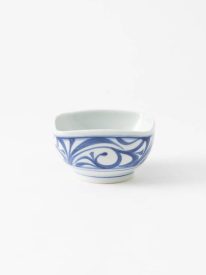
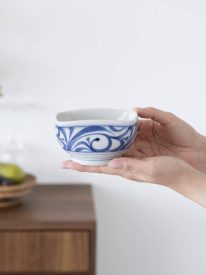
This small square kobachi bowl features a hand-painted arabesque pattern, one of the representative motifs of Tobe ware. The indigo shade adds a modern touch, while the natural motifs convey the warmth of hand-painted craftsmanship. It is ideal for serving various side dishes, such as tangy sunomono and slowly simmered nimono. The shape stands out…
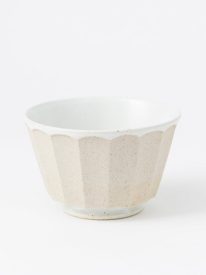
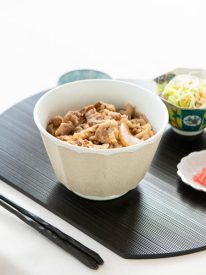
This regular-sized donburi bowl features a smooth, matte white glaze on the outer rim and inner surface, creating a striking contrast with the textured, natural clay on the faceted exterior. This combination of materials offers both a refined tactile experience and a contemporary appeal. Its depth and straight sides help retain the food’s warmth while…
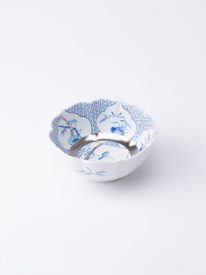
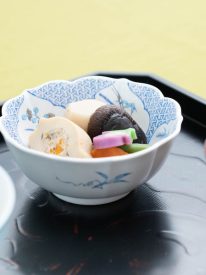
The sides of the bowl are shaped like the petals of a flower giving the bowl an elegant look. Items with distinctive curves such as this bowl are made by first making a base by pressure casting and then carved by skilled craftsman to give the final refined touch. The inside is decorated with traditional…
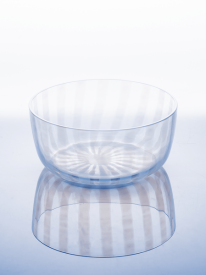
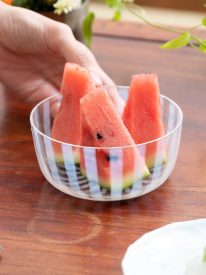
This is a glass bowl with the tokusa “horsetail” pattern from the Taisho Roman glass series by Hirota Glass, a long-established glass manufacturer in Tokyo. The tokusa motif, cherished since the Edo period (1603 CE-1868 CE), symbolizes growth and prosperity. Its straight, upward-reaching lines embody aspirations for success and flourishing, making it a beloved design through…
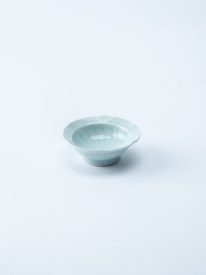
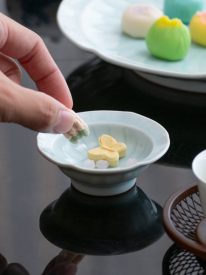
This celadon kobachi small bowl is well-suited for sauces and condiments, and can enrich your tea time with a refined touch when used for small sweets. Celadon, with its beautiful gradient from white to light blue, enhances dish presentation and imparts a cool, refreshing feel. The rim, designed with gentle curves that create a soft…
This small donburi bowl features one of the signature motifs of Tobe ware. The graceful arabesque design comes alive with the warmth of its dynamic hand-painted brushstrokes, inspired by nature and the striking contrast of indigo on porcelain white. The bowl is suited for smaller servings of gyudon, oyakodon, and other donburi dishes. It can…
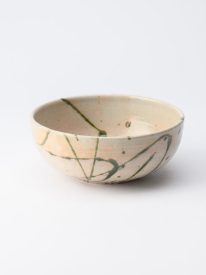
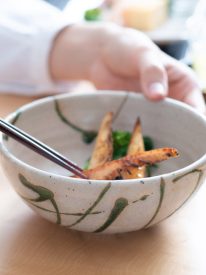
This bowl fascinates with its elegant water plant motif, the designs flowing naturally across the surface. The green glaze and abstract brushstrokes are characteristic of Yashichida Oribe ware. Tsujii Musashi, inspired by nature, infuses his creations with a subtle, rustic charm. The bowl’s refined beauty is further enhanced by gohondedelicate pinkish spots that appear naturally…
This large bowl is decorated with a hand-painted arabesque pattern on the rustic texture of stoneware and feels warm and inviting. Its practical design makes it easy to use, combining functionality with charm. The vibrant red hue of the design, which extend to the interior, beautifully frame your food to enhance its presentation like a…
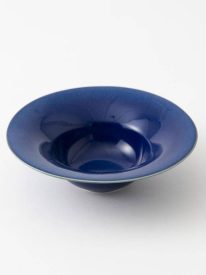
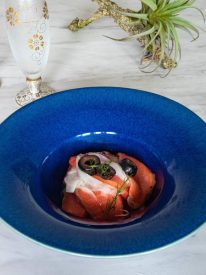
This deep side plate in a shiny dark blue color has an exquisite silhouette with wide rims and and a beautiful curve. The size is perfect for serving a salad, appetizers, sunomono “vinegared food,” aemono “seasoned or sauced food” and nimono “simmered food.” It is great for not only Japanese food, but also various food…
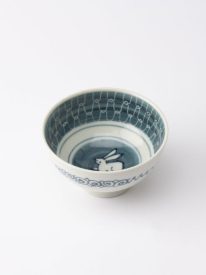
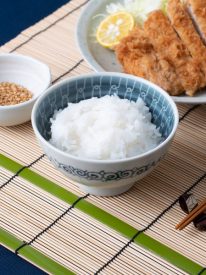
This is a Japanese rice bowl by Ri Sanpei (Yi Sam-pyeong) Kiln, a brand by the descendant of Yi Sam-Pyeong. Molded on the potter’s wheel, with handwritten rabbits and reticulated patterns, have an indescribably lovely atmosphere that soothes the hearts of those who see them. The rabbit in the center is drawn in a round…
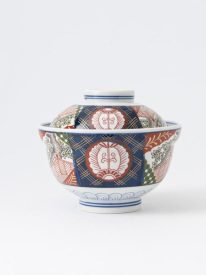
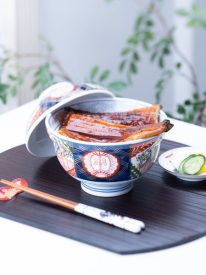
This large-sized Japanese donburi rice bowl features sakura, or cherry blossoms, framed by dark blue, lattice-like patterns, all rendered in the traditional nishiki-e style. Nishiki-e, meaning “brocade picture,” is a multi-colored woodblock print technique that revolutionized ukiyo-e during the Edo period (1603 CE-1868 CE), when most prints were in black and white. The lid helps keep…

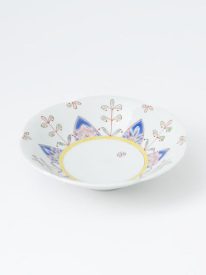 Blue Dream Medium Bowl
 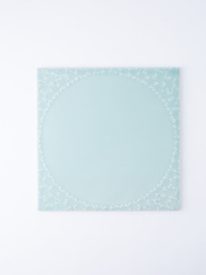 Moist Sakura Square Main Plate
 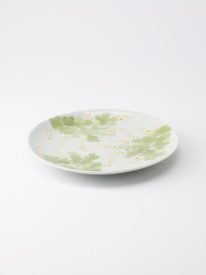 Mimosa Side Plate
 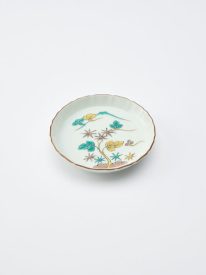 Plants with Mt. Fuji Sauce Plate
 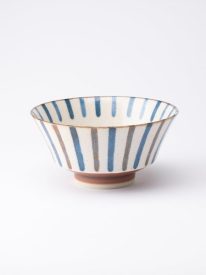 Nanpu Rain Mino Ware Donburi Bowl M