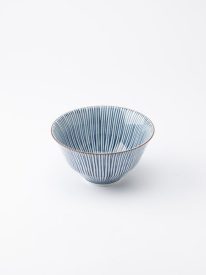
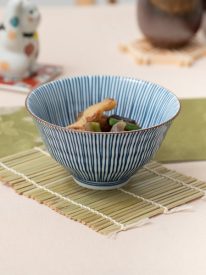
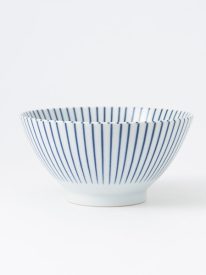
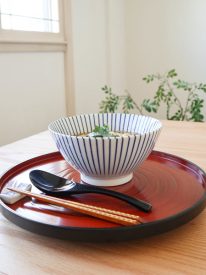
This small-sized donburi bowl from Fukuhou Kiln features the traditional Japanese tokusa “horsetail” pattern. Its depth helps retain the food’s warmth while adding a touch of style and practicality. Beloved since the Edo period (1603 CE-1868 CE), this pattern of straight vertical lines is inspired by the Japanese plant tokusa, known in English as rough…
A fun bowl featuring a playful decoration of a little man soaking in a bath, which appears when you pour soup into it. The traditional pattern drawn on the bowl creates a unique combination with the whimsical design, serving as a perfect example of Choemon’s ability to blend traditional and modern elements into tableware. Originally…
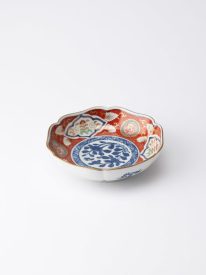
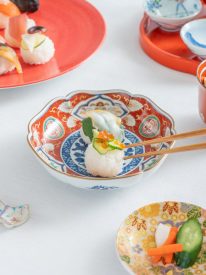
This mokko-shaped small bowl features a modern interpretation of the traditional classic patterns of old Imari. Mokko is the name for a round squarish shape and is considered an auspicious shape which represents family prosperity. “Aka” means red and “dami” is the name for the technique where the artist first outlines the area to be…
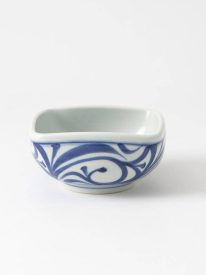
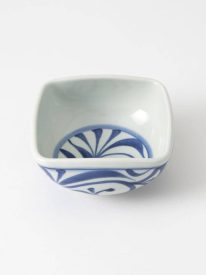
This square medium bowl features a hand-painted arabesque pattern, one of the representative motifs of Tobe ware. The indigo shade adds a modern touch, while the natural motifs convey the warmth of hand-painted craftsmanship. It is ideal for serving various side dishes, such as tangy sunomono and slowly simmered nimono. The shape stands out with…
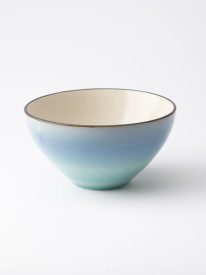
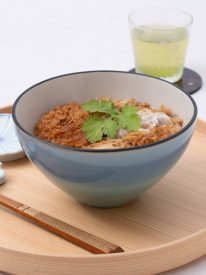
Elegant and modern, this medium bowl features a stunning gradient of blue hues. This donburi bowl showcases the distinctive crack-like texture of kannyu, a crazed surface formed by the differing expansion rates of clay and glaze. These delicate patterns add depth and character to the design. In addition to its striking appearance, the bowl is highly…
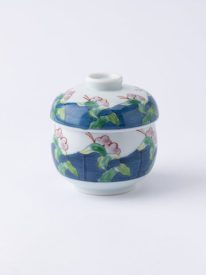
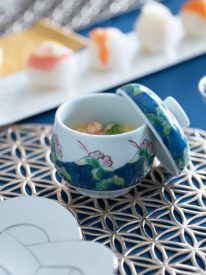
This chawanmushi (Japanese steamed egg custard) bowl has a purple flower painting in a round form. If you make chawanmushi with it, you can enjoy the authentic taste of this delicious egg custard and the atmosphere of a Japanese restaurant. When the lid is removed, the bowl can also be used as a small kobachi…
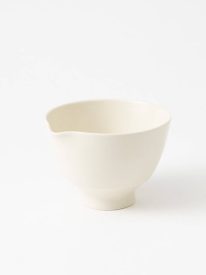
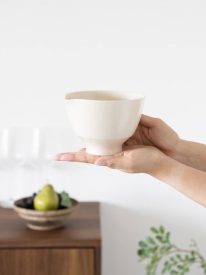
This Japanese bowl with spout from the “Une” series is made by Taniguchi Seidojo, which has been making Kutani ware clay for three generations. The carefully selected clay of Kutani ware, known as Hanasaka ceramic stone, is inevitably discarded during the clay making process. The silky, transparent, beautiful beige glaze was created to make the…
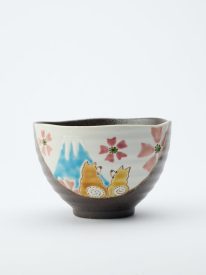
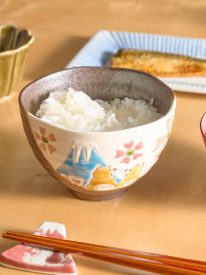
This rice bowl showcases a delightful illustration of two charming Shiba Inu snuggled together at the foot of Mount Fuji. Enhanced with delicate cherry blossom motifs, the design exudes a sense of Japanese charm and elegance. Expertly shaped on a potter’s wheel, the bowl offers a warm and comfortable feel when held in your hands. The…
This large-sized Japanese donburi bowl features a traditional Japanese pattern called tokusa “horsetail” in blue on white porcelain. The simple yet memorable design makes it suitable for any table setting. The bowl is perfect for gyudon, oyakodon, and other donburi dishes. It can also be used to serve noodle dishes like udon or soba. With its…
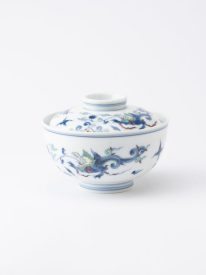
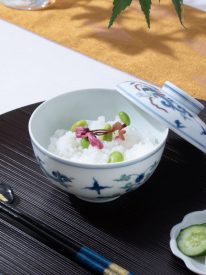
This kobachi small bowl with a lid is adorned with vibrant dragon and arabesque patterns, which stand out beautifully against white porcelain. Both dragons and arabesque motifs are considered auspicious and have been popular designs on tableware since ancient times. The bowl is perfectly sized for serving rice and is also ideal for simmered dishes. The…
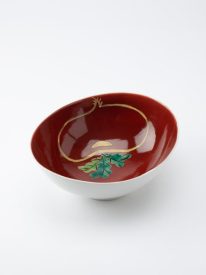
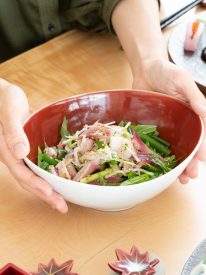
A beautiful Kutani ware bowl featuring a hand-drawn turnip. This unique design captivatingly showcases the contrast between the pure white exterior and the deep red interior, exuding a strong presence without being overly ostentatious. The bright green leaves and the soft outlines of the yellow turnip are well balanced, creating a warm and impressive painting. Due to…
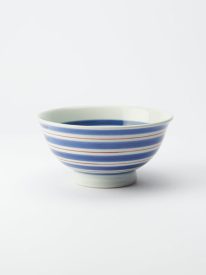
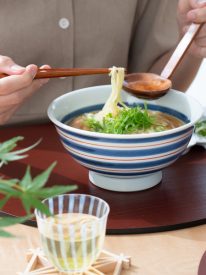
Thick blue and fine red lines alternate around the whole exterior of snow-white porcelain of this donburi bowl. The blue lines are drawn using the traditional gosu pigment, while the red accents enhance the design. The hand-painted blue patterns are made using the tsuketate technique, where each stroke is applied without outlines. This gives the bowl…

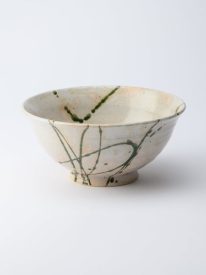 Musashi Kiln Water Plant Mino Ware Ramen Bowl M