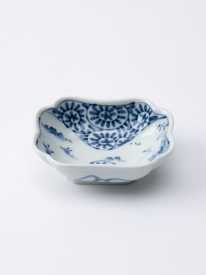
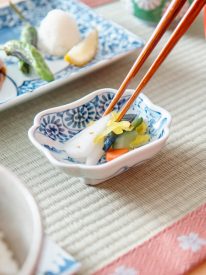
This indigo-dyed, rectangular kobachi small bowl is crafted by Takayama, a renowned maker of Hasami porcelain. The interior of the plate is delicately decorated with a serene landscape scene, beautifully framed by the traditional octopus arabesquetako karakusapattern. This design, featuring endlessly winding vines, has long been cherished in Japan as an auspicious motif symbolizing longevity and…
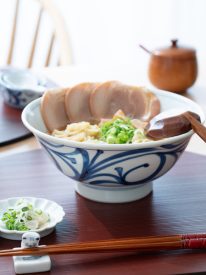
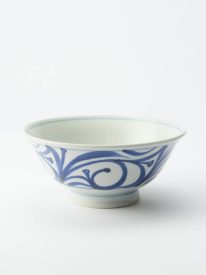
A stunning hand-painted arabesque design is rendered in indigo over the sturdy white porcelain of this large ramen bowl. The signature tsuketate technique, where each stroke is applied in a single motion without outlines, enhances the flowing, dynamic pattern. The bowl’s robust build makes it resistant to breakage and suitable for both microwave and dishwasher…
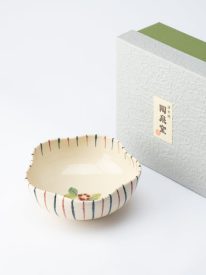
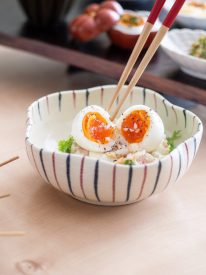
The meticulously adapted tokusa (horsetail) design, a masterpiece innovatively developed by craftsperson Taniguchi, adorns this bowl from Tosen Kiln. The tokusa pattern is vividly presented in two colors, imparting warmth and depth to the hand-drawn lines. These lines, initially penciled to ensure spacing, defy the impersonal touch of printing, thus infusing the bowl with…
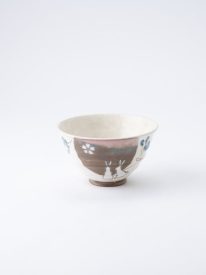
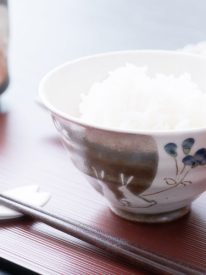
This cute Japanese rice bowl features two rabbits sitting side by side. The soft touch of the drawing and the rustic atmosphere of the clay texture make this rice bowl perfect for everyday. The inside bottom of the rice bowl is also painted with a blue flower that will make you love it more and…
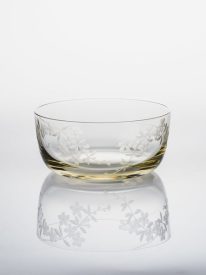
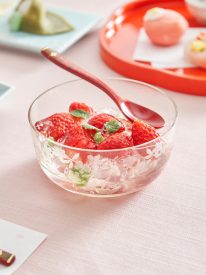
This bowl is adorned with the distinctly Japanese weeping cherry blossom, expertly carved by artisan Otomo Kenji using the Edo Hanakiriko technique. The bowl’s hue is an ancient color, imbued with a subtle yellow tint, and aims to evoke a nostalgic atmosphere, making it perfectly suited for everyday use. It not only showcases the color…
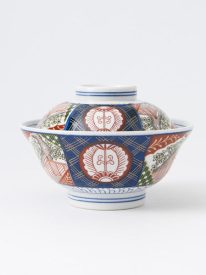
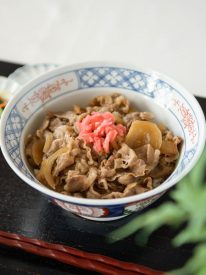
This regular-sized Japanese donburi rice bowl features sakura, or cherry blossoms, framed by dark blue, lattice-like patterns, all rendered in the traditional nishiki-e style. Nishiki-e, meaning “brocade picture,” is a multi-colored woodblock print technique that revolutionized ukiyo-e during the Edo period (1603-1868 CE), when most prints were in black and white. The lid helps keep the…
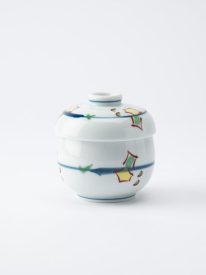
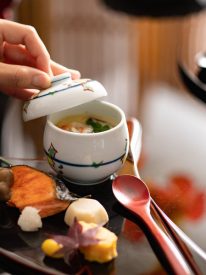
Enjoy delicious chawanmushi (Japanese steamed egg custard) with your favorite ingredients at home with this beautiful Arita ware chawanmushi bowl from Tasei Kiln. Lines painted in gosu, a cobalt blue pigment, across the lid and the bowl give accent to the soft round shape and enhance its warm and gentle impression. Diamond-shaped patterns evenly painted along…
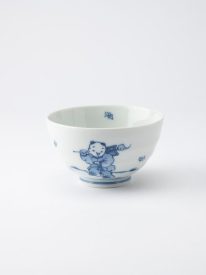
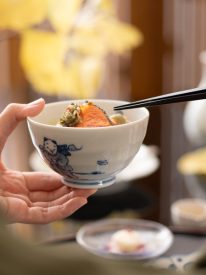
This splendid rice bowl, adorned with delicately painted karako, Chinese-style playful children, encapsulates the essence of playful elegance. Meanwhile, the interior features a single butterfly, displaying both a narrative quality and refined simplicity. Holding this charming bowl in your hand, you can feel the lightness and thinness characteristic of Mikawachi ware. It displays an exquisite gradation,…
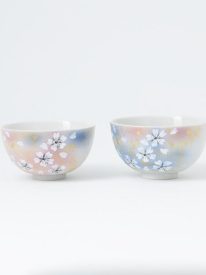
A beautiful pair of rice bowls with a pink and blue sasanqua motif. It is beautifully applied Ginsai, the Kutani ware technique by which five-color glaze is applied over silver foil. The cracks on the surface are created by the traditional technique of “Kannyu” (penetration), which allows you to enjoy the beauty of handcrafting.The shape made on…
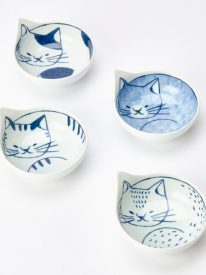
This charming set features four small Japanese bowls adorned with beautifully detailed, hand-drawn cat illustrations. Each bowl showcases a different cat with unique fur patterns, all in an endearing curled-up position. The raised ears of the cats bring personality to each feline friend and add a playful touch to the bowl’s design. The smooth porcelain…
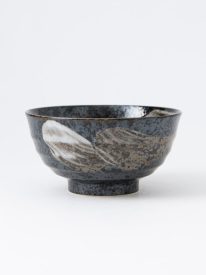
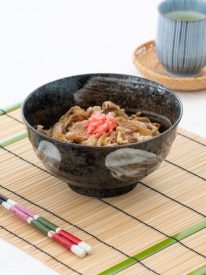
Imbued with a dark elegance, this regular-sized donburi bowl brings a refined, upscale touch to any meal. The glossy black glaze, enhanced with a subtle metallic sheen, provides the perfect backdrop for bold brushstrokes in brown and white. Crafted on a potter’s wheel, the bowl has a pleasing weight and a warm, tactile quality, making…
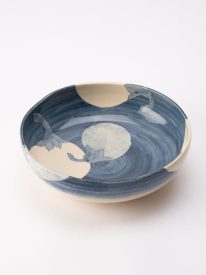
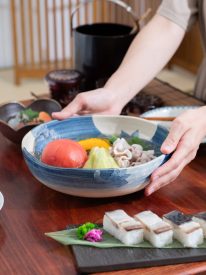
This bowl features round Kamo eggplants, a summer vegetable from Kyoto, in the serene blue and white of sometsuke. Kyoto vegetable designs are created by applying a water-resistant substance to outline the shapes. Then, gosu, a cobalt blue glaze, is hand-painted over the surface, leaving the protected areas untouched. After a second bisque-firing, delicate lines…

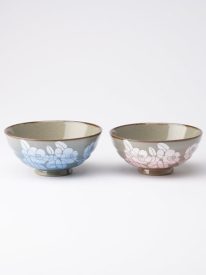
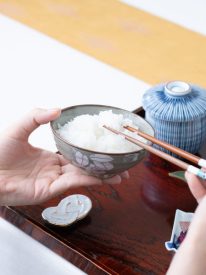

 Flower Dance Kutani Japanese Rice Bowl Pair