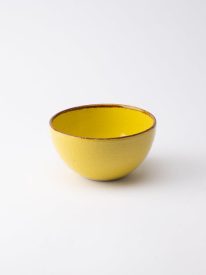
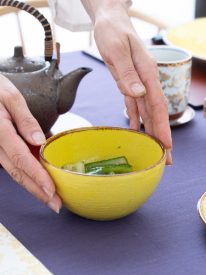
This beautiful yellow stoneware bowl is eye-catching. The bumpy surface is unique to stoneware which has a rustic, warm, and chunky texture. The brown glazed rim enhances the vividness of the yellow color. Measuring D12.3cm(4.8in), it is suitable for rice, fruit, soup, yogurt, etc. Flamenco is a series born from an exploration of “color”. The characteristic yellow…
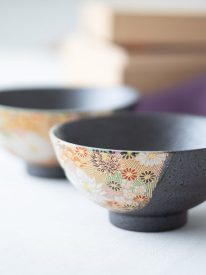
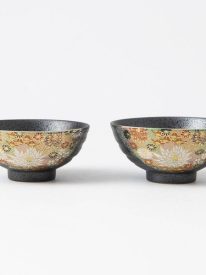
A pair of Japanese rice bowls decorated in beautiful Hanazume style, meaning filled with flowers, one of the most notable design of Kutani ware which has been handed down from the Taisho period (1912-26). In Japan, there is a culture of giving rice bowls as a gift to married couples to celebrate their marriage. It’s…
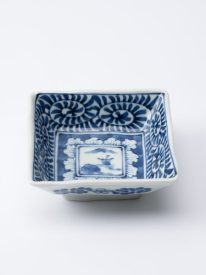
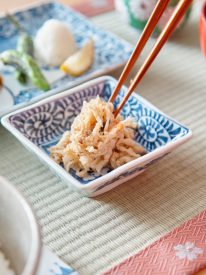
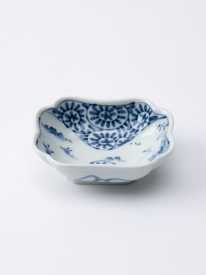
This elegant square kobachi small bowl is crafted by Takayama, a renowned maker of Hasami porcelain, and is dyed with seitan, a kind of indigo. The center of the plate features a traditional sansui landscape painting depicting the grandeur of nature, surrounded by a delicate yet bold karakusa arabesque pattern. In Japanese culture, sansui art symbolizes the…
This indigo-dyed, rectangular kobachi small bowl is crafted by Takayama, a renowned maker of Hasami porcelain. The interior of the plate is delicately decorated with a serene landscape scene, beautifully framed by the traditional octopus arabesquetako karakusapattern. This design, featuring endlessly winding vines, has long been cherished in Japan as an auspicious motif symbolizing longevity and…
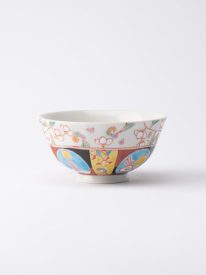
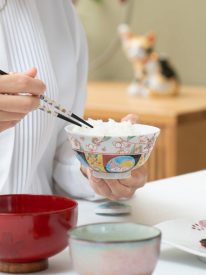
This rice bowl features a pattern designed with a moonlight night motif delicately painted by artisans of Ginshu Kiln, which is especially known as its romantic and playful pastel colored painting. If you take a closer look, there are rabbits hiding in the clouds. The painted areas have a slightly raised texture, a characteristic of Kutani…
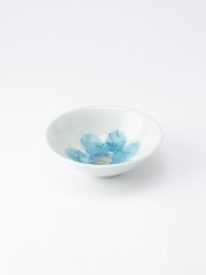
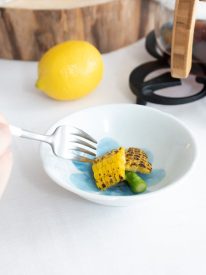
This charming Tobe ware kobachi bowl features a beautiful flower in gentle light blue color. The subtle color decorates the blooming flower painted on a white porcelain canvas. Small dots painted in gold are scattered, adding a discreet accent to the overall design. The detailed design of the rim adds to the floral motif of this kobachi…
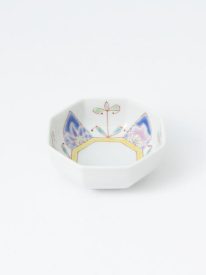
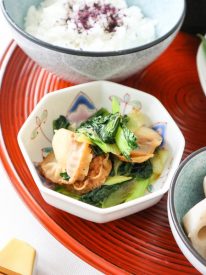
This bowl showcases dreamy patterns delicately painted by the artisans of Ginshu Kiln, renowned for its romantic and playful pastel-colored designs. The painted areas have a slightly raised texture, a characteristic of Kutani ware, which is traditionally hand-painted using Japanese coloring pigments and a brush. It is suitable for serving side such as sunomono (vinegared…
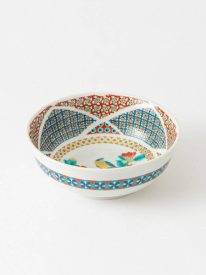
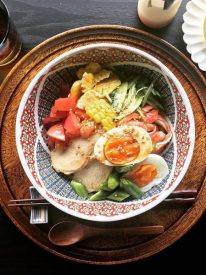
The Japanese bowl features a bird resting on a branch of camellia in bright colors. The delicate and intricate pattern drawn on the inside of the bowl gradually appears while eating, which is a pleasant surprise. A Japanese traditional pattern is also drawn on the outside, so it is a beautiful bowl from any angle….
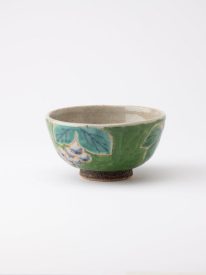
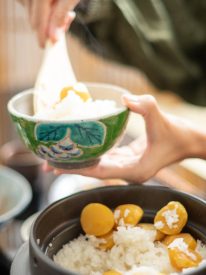
This is a Hasami ware rice bowl made by Kousai Kiln. It is handpainted to bring out the warm texture of the clay. The base of the rice bowl is finished in green with a blue grape and leaf design. The rough texture of the clay is coated with a glossy, bright glaze that offers different textures….
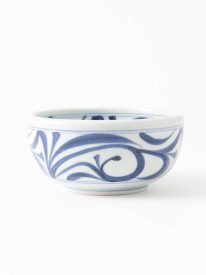
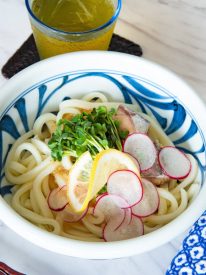
This large-sized serving bowl features one of the signature motifs of Tobe ware. The graceful arabesque design is brought to life by the warmth of its dynamic hand-painted brushstrokes, inspired by nature and the striking contrast of indigo on porcelain white. The extended pattern inside the bowl creates a rich and harmonious design. Renowned for…
This splendid rice bowl, graced with delicately painted chrysanthemums and bush clover, encapsulates the essence of nature’s elegance. The understated charm of the painting within adds a delightful surprise, while its exterior showcases a refined simplicity. The design features flowers of chrysanthemum and bush clover, which invite a serene and sublime state of mind. You can…
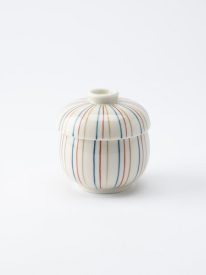
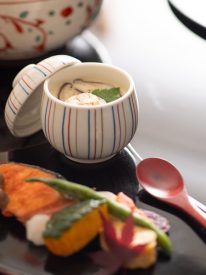
Enjoy delicious chawanmushi, Japanese steamed egg custard, in this beautiful Arita ware chawanmushi bowl. This Chawanmushi bowl is painted in the “Tokusa (Horsetail)” pattern which is a classic motif that has been beloved since the Edo period (1603 CE – 1867 CE). Its straight-growing appearance symbolizes wishes for growth and prosperity. And the three subdued colors…

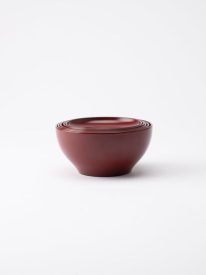 Ancient Red Lacquer Yamanaka Lacquerware Oryoki Bowl Set
 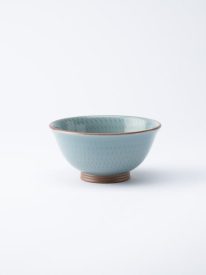 Soryu Kiln Celadon Tobikanna Kiyomizu Ware Rice Bowl
 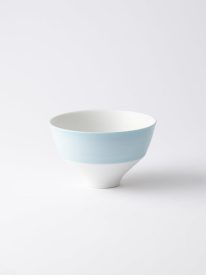 Japan Blue Pearl Blue Japanese Rice Bowl
 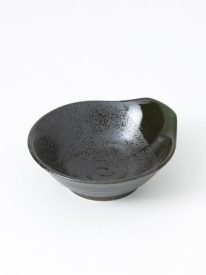 Black and Green Tonsui Bowl
 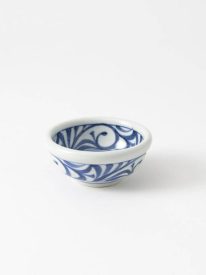 Arabesque Kobachi Small Bowl
 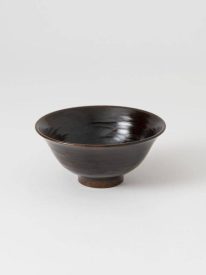 Japanese cherry birch Yamanaka Lacquerware Japanese Rice Bowl