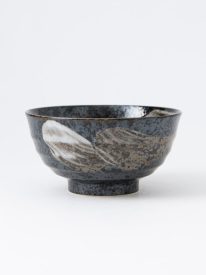
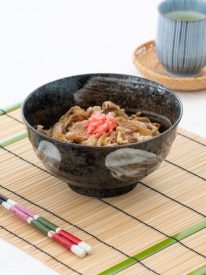
Imbued with a dark elegance, this regular-sized donburi bowl brings a refined, upscale touch to any meal. The glossy black glaze, enhanced with a subtle metallic sheen, provides the perfect backdrop for bold brushstrokes in brown and white. Crafted on a potter’s wheel, the bowl has a pleasing weight and a warm, tactile quality, making…
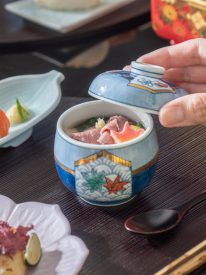
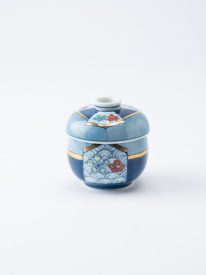
Enjoy delicious chawanmushi, Japanese steamed egg custard, in this beautiful Arita ware chawanmushi bowl. The pairing of deep navy blue reminiscent of the sea over a faint blue sky is punctuated with a thick gold accent that seems to express a bright horizon. An auspicious wave pattern is highlighted on each side by a double…
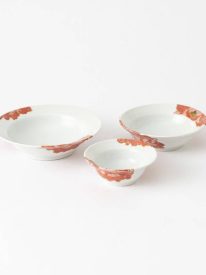
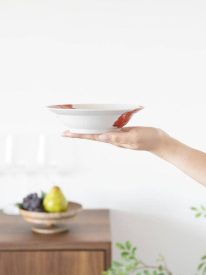
This gorgeous Japanese bowl set adorned with a bright red peony is made by Mr. Tsuyoshi Sato, a Kutani ware artisan known for his use of bright colors and florals. With brush painting, which is a characteristic of Kutani ware, a thick peony motif is drawn as if it bloomed on the rim and outer…
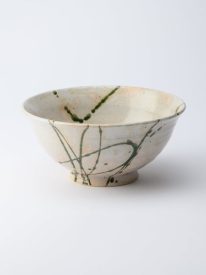
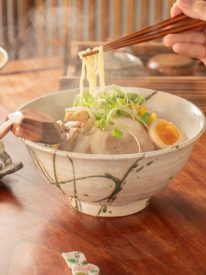
This donburi fascinates with its elegant water plant motif, highlighted with brown splashes. The green glaze and abstract brushstrokes are characteristic of Yashichida Oribe ware. Tsujii Musashi, inspired by nature, infuses his creations with a subtle, rustic charm. The bowl’s refined beauty is further enhanced by gohondedelicate pinkish spots that appear naturally after the firing…
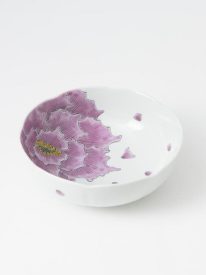
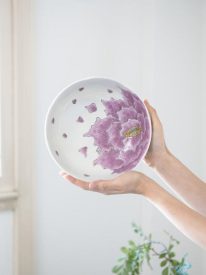
The large bowl features a beautiful pink peony, hand-painted by artist Fukuda Yoshinori. A large peony is designed to fit the round bowl, with scattered petals drawn around it and on the outside of the bowl. Rooted in the rich tradition of Kutani ware, Fukuda Yoshinori brings his mastery of akae, Yoshidaya, and ko-kutani styles…
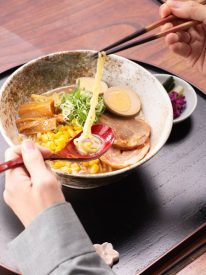
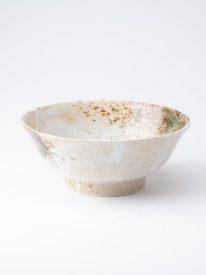
This regular-sized ramen bowl showcases the soft, earthy tones of Shino ware, with shades of brown and green blending seamlessly into a white base. It features a generous application of white glaze, creating a speckled appearance, while the unglazed areas highlight a beautifully rough texture. Originating in Gifu Prefecture during the Azuchi-Momoyama period (1573 CE-1603…
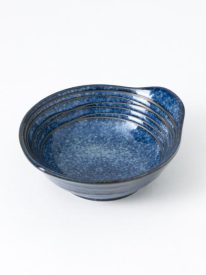
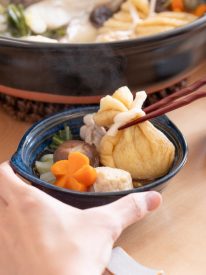
This tonsui bowl features deep blue stripes, named for the glaze’s shading that resembles a sea of clouds. Its fresh, modern look pairs beautifully not only with Japanese dishes but also a wide range of other cuisines. Typically used as a serving bowl for hot-pot dishes, the tonsui can also hold noodle dipping sauces or…
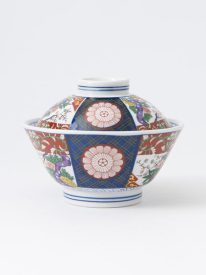
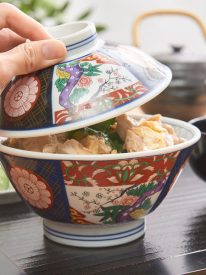
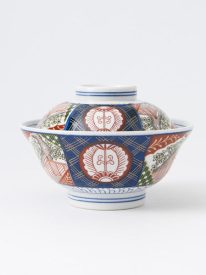
This small-sized Japanese donburi rice bowl features peonies, framed by dark blue, lattice-like patterns, all rendered in the traditional nishiki-e style. Nishiki-e, meaning “brocade picture,” is a multi-colored woodblock print technique that revolutionized ukiyo-e during the Edo period (1603-1868 CE), when most prints were in black and white. The lid helps keep the food warm and…
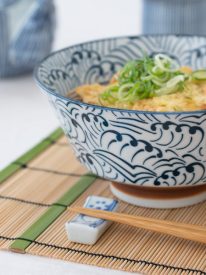
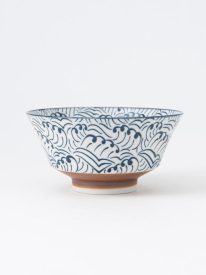
This regular-sized ramen bowl showcases a traditional seigaiha, or “wave” pattern in rich indigo blue, a motif that symbolizes good fortune in Japanese culture. Ideal for serving ramen, udon, or soba, this bowl enhances the presentation of your favorite noodles while bringing a touch of elegance and tradition to your table. Its versatile design also…
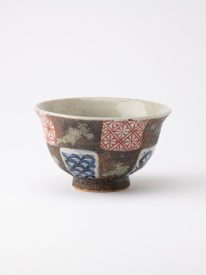
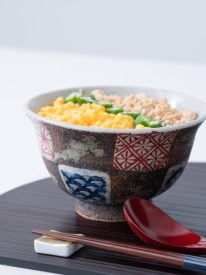
This regular-sized donburi bowl features a charming checkered pattern over an unglazed rustic brown background. Adorned with various traditional designs like the asanoha “hemp leaf” pattern and seigaiha “wave” pattern, each symbolizes continuity and prosperity, carrying the auspicious wish that good fortune will last forever. Its depth helps retain the food’s warmth while adding a…
This regular-sized Japanese donburi rice bowl features sakura, or cherry blossoms, framed by dark blue, lattice-like patterns, all rendered in the traditional nishiki-e style. Nishiki-e, meaning “brocade picture,” is a multi-colored woodblock print technique that revolutionized ukiyo-e during the Edo period (1603-1868 CE), when most prints were in black and white. The lid helps keep the…
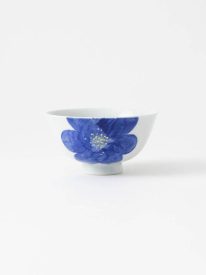
This beautiful rice bowl features soft blue flowers as if painted with watercolors. The bright design resembles blooming flowers, bringing joyful atmosphere on the table. It is painted by the female artist, Ohigashi Alyne, who was born in Philippines. She uses a unique technique called washi-zome (Japanese paper dyeing) and continues her ideal stoneware-making in Higashi…

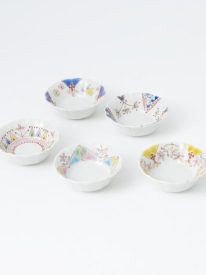 Colorful Kobachi Small Bowl Set
 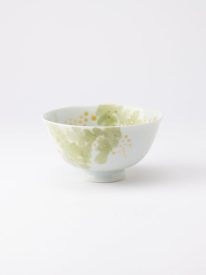 Mimosa Japanese Rice Bowl
 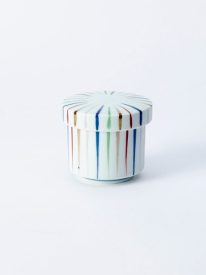 Straw Pattern Chawanmushi Bowl
 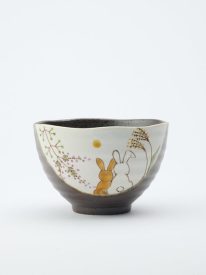 Rabbits in Sunny Spot Japanese Rice Bowl
 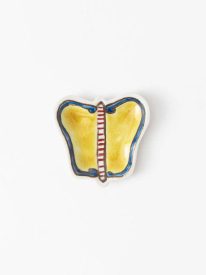 Sumo Referee's Fan Sauce Plate
 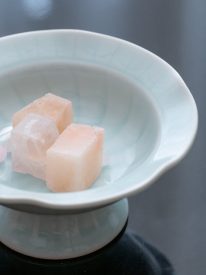 Kaiseki Swirl Pattern Footed Kobachi Small Bowl
 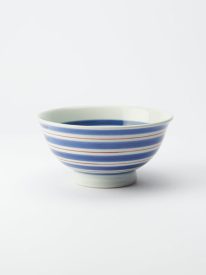 Blue and Red Line Donburi Bowl S