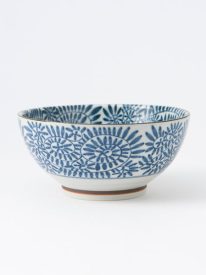
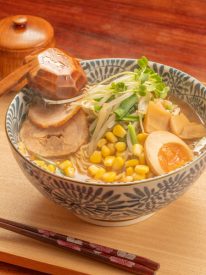
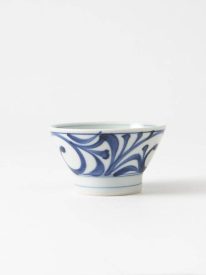
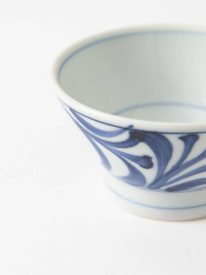
A multitude of leafy curlicues creates a stunning, deep indigo blue arabesque motif on this Japanese bowl. The design of simplified leaves over spiraling vines fills not only the outside, but also the inside the bowl, for a playful ornamental effect. Due to their natural tendency to keep growing, vines are considered to be a…
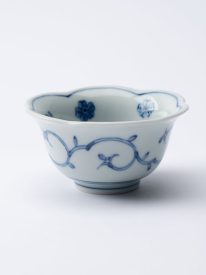
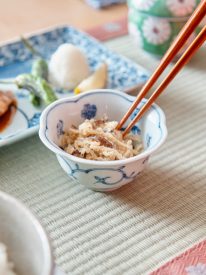
This elegant petal-rimmed kobachi small bowl is crafted by Takayama, renowned for Hasami porcelain. In the classic blue and white of sometsuke, it features an interior pattern of a blooming peony surrounded by waves and gently falling sakura. The exterior is adorned with karakusa scrollwork of budding vines. This pattern has long been cherished in…
This kobachi small bowl features a beautiful arabesque pattern, one of the representative motifs of Tobe ware. The shade of indigo gives a sense of modern elegance. You can feel the warmth of hand-painting from the patterns using nature motifs. The size is perfect for a small portion of side dishes such as a tangy sunomono…
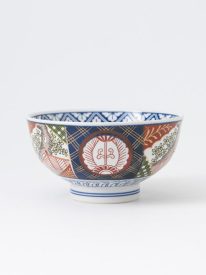
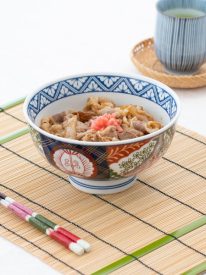
This regular-sized Japanese donburi rice bowl features sakura, or cherry blossoms, framed by dark blue, lattice-like patterns, all rendered in the traditional nishiki-e style. Nishiki-e, meaning “brocade picture,” is a multi-colored woodblock print technique that revolutionized ukiyo-e during the Edo period (1603-1868 CE), when most prints were in black and white. The bowl is perfect…
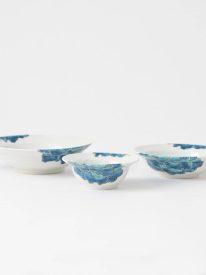
This gorgeous Japanese bowl set adorned with a bright blue peony is made by Mr. Tsuyoshi Sato, a Kutani ware artisan known for his use of bright colors and florals. With brush painting, which is a characteristic of Kutani ware, a thick peony motif is drawn as if it bloomed on the rim and outer…
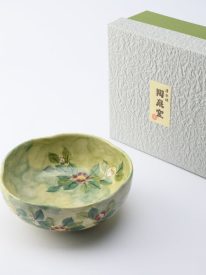
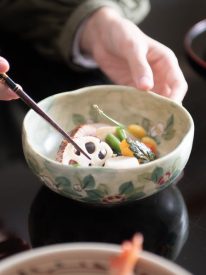
The meticulous camellia design, a masterpiece passionately developed by Taniguchi, graces this bowl from Tosen Kiln. Camellias, symbolic of both elegance and the enduring spirit of Japanese culture, are vividly presented. The leaves, seamlessly blending dark and light green shades, instill a sense of harmony. In contrast, the petals, painted with white and red…
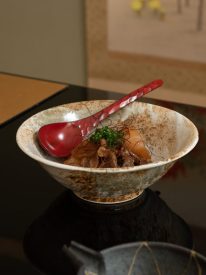
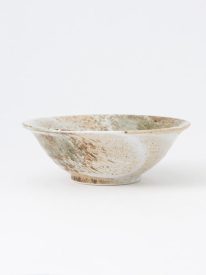
The beautiful white hue of this small ramen bowl is a hallmark of Shino ware. The speckled glaze creates a design that feels both liberating and sophisticated. Shino ware is a type of Mino ware, originally fired in Mino, Gifu Prefecture, during the Azuchi-Momoyama period (1573-1603 CE). While most of the bowl is glazed, offering…
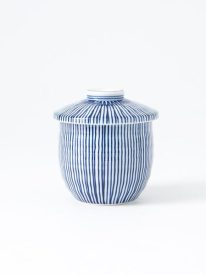
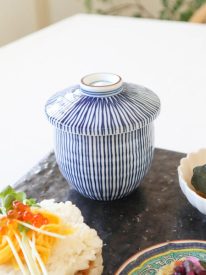
This chawanmushi (Japanese steamed egg custard) bowl has a simple and modern design which looks great on any table. If you make chawanmushi with it, it will give you the authentic taste and atmosphere of a Japanese restaurant. When the lid is removed, it can also be used as a teacup. The Tokusa series by the…
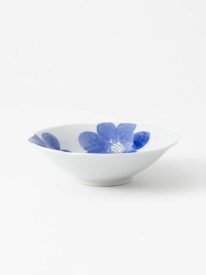
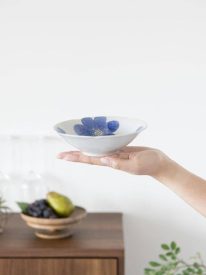
This beautiful bowl features soft blue flowers as if painted with watercolors. The bright design and shape of the rim resembles blooming flowers, bringing joyful atmosphere on the table. It is painted by the female artist, Alyne Ohigashi, who was born in Philippines. She uses a unique technique called washi-zome (Japanese paper dyeing) and continues her…
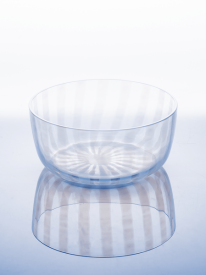
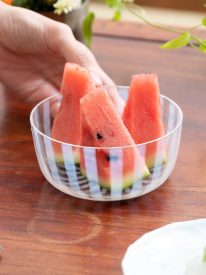
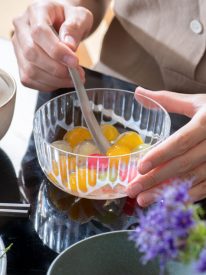
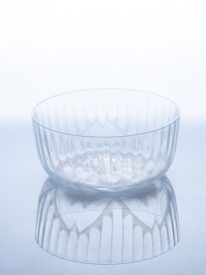
This is a glass bowl with the tokusa “horsetail” pattern from the Taisho Roman glass series by Hirota Glass, a long-established glass manufacturer in Tokyo. The tokusa motif, cherished since the Edo period (1603 CE-1868 CE), symbolizes growth and prosperity. Its straight, upward-reaching lines embody aspirations for success and flourishing, making it a beloved design through…
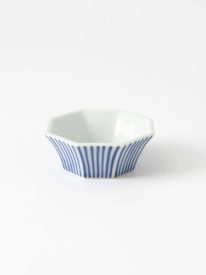
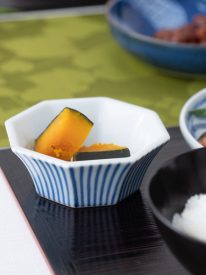
This octagonal kobachi small bowl features simple blue tokusa stripes shaded with delicate hand-painting. Tokusa, known as the horsetail plant, symbolizes longevity in Japanese culture. The indigo shade adds a modern touch, while the natural motif conveys the warmth of hand-painted craftsmanship. Perfect for serving small portions of side dishes like tangy sunomono or simmered nimono, it also…
This is a glass bowl with a sakura “cherry blossom” design from the Taisho Roman glass series by Hirota Glass, a long-established glass manufacturer in Tokyo. Cherry blossoms, with their charming appearance and deep cultural significance, are beloved not only in Japan but also around the world. They symbolize both natural beauty and rich tradition. This pattern…

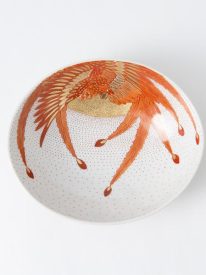 Akae Red Phoenix Kutani Oval Bowl
 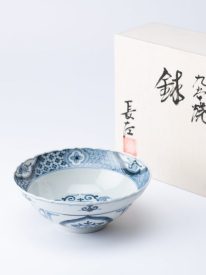 Myousen Toubou Treasure Pattern and Fuyode Kutani Bowl 7.7 in
 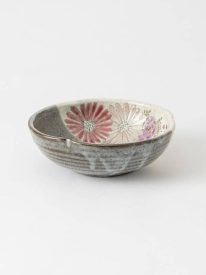 Brilliant Pink Flower Medium Bowl