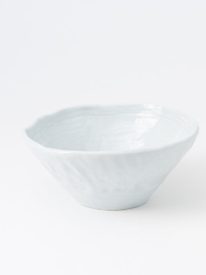
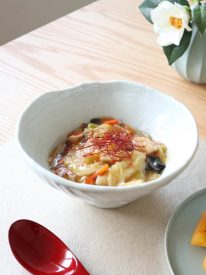
This donburi bowl boasts an attractive celadon finish. The combination of the undulating surface and the smooth, lustrous glaze provides a delightful tactile experience. Shaped using a potter’s wheel, this piece has a pleasant weight that makes it a pleasure to hold in one’s hands. The bowl is perfect for a variety of donburi dishes,…
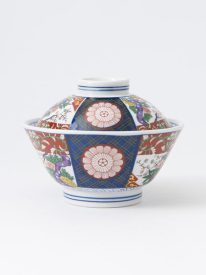
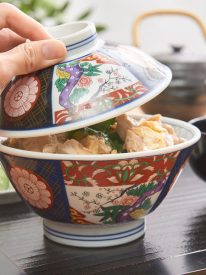
This small-sized Japanese donburi rice bowl features peonies, framed by dark blue, lattice-like patterns, all rendered in the traditional nishiki-e style. Nishiki-e, meaning “brocade picture,” is a multi-colored woodblock print technique that revolutionized ukiyo-e during the Edo period (1603-1868 CE), when most prints were in black and white. The lid helps keep the food warm and…
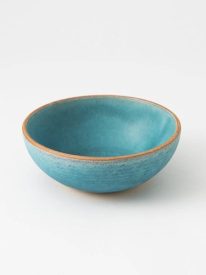
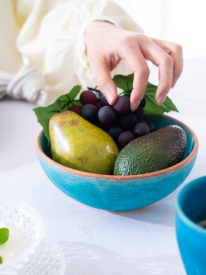
This simple and modern bowl features a beautiful turquoise color. The glaze’s appearance varies uniquely with each piece according to the conditions during firing, resulting in a naturally exquisite shade of blue. The 17.8 cm (7 in) size is perfect for smaller servings of salads, appetizers, aemono (seasoned dishes), or nimono (simmered dishes). Its shallow shape…
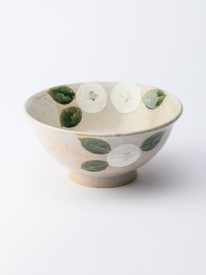
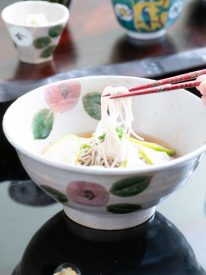
This ramen bowl from Musashi Kiln is adorned with charming red and white camellia motifs, reflecting the beauty of nature. Tsujii Musashi, the artisan behind the kiln, draws inspiration from his surroundings to create pieces that embody a subtle, rustic elegance. The bowl’s refined appearance is further enhanced by gohondenatural pinkish spots that emerge after…
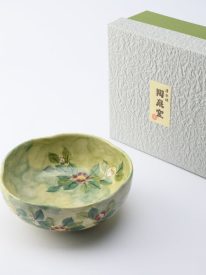
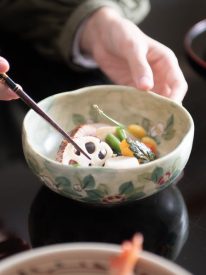
The meticulous camellia design, a masterpiece passionately developed by Taniguchi, graces this bowl from Tosen Kiln. Camellias, symbolic of both elegance and the enduring spirit of Japanese culture, are vividly presented. The leaves, seamlessly blending dark and light green shades, instill a sense of harmony. In contrast, the petals, painted with white and red…
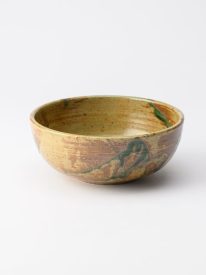
This bowl fascinates with its elegant water plant motif, highlighted with brown splashes. The green glaze and abstract brushstrokes are characteristic of Yashichida Oribe ware. Hand-crafted, this bowl reflects nature’s rustic beauty by accentuating the rokurome, or the rhythmic marks made by the potter’s wheel, which add a special texture and warmth. Its lightweight design…
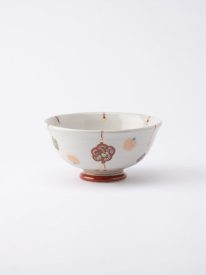
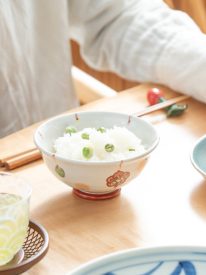
This small rice bowl is decorated with gorgeous and lovely mizuhiki motif. The colorful knots give the bowl a nostalgic and graceful feeling.Kanazawa, the birthplace of Kutani ware, is known for its unique and rare traditional craft called Kaga Mizuhiki. Made by Kokuzou Kiln, known for the gentle and warm stoneware with beautiful colors and elegant…
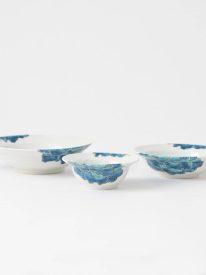
This gorgeous Japanese bowl set adorned with a bright blue peony is made by Mr. Tsuyoshi Sato, a Kutani ware artisan known for his use of bright colors and florals. With brush painting, which is a characteristic of Kutani ware, a thick peony motif is drawn as if it bloomed on the rim and outer…
This large-sized serving bowl features one of the signature motifs of Tobe ware. The graceful arabesque design is brought to life by the warmth of its dynamic hand-painted brushstrokes, inspired by nature and the striking contrast of indigo on porcelain white. The extended pattern inside the bowl creates a rich and harmonious design. Renowned for…
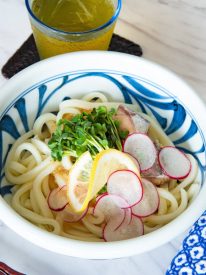
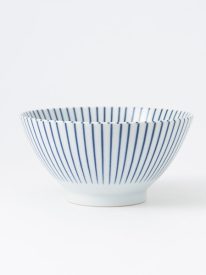
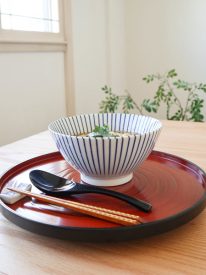
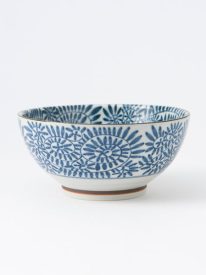
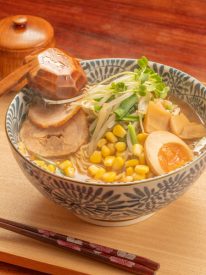
This large-sized Japanese donburi bowl features a traditional Japanese pattern called tokusa “horsetail” in blue on white porcelain. The simple yet memorable design makes it suitable for any table setting. The bowl is perfect for gyudon, oyakodon, and other donburi dishes. It can also be used to serve noodle dishes like udon or soba. With its…
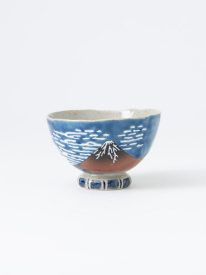
This bowl features Red Fuji, capturing the moment of the rising sun turning Mount Fuji red in a clear early morning. Each piece is handcrafted by an artisan of Kutani ware. It is painted with Japanese color paints using a brush, as you can see the painted part is slightly thickened. With the combination of…
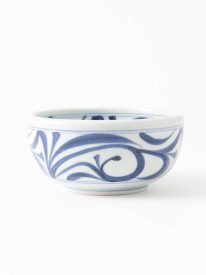
A multitude of leafy curlicues creates a stunning, deep indigo blue arabesque motif on this Japanese bowl. The design of simplified leaves over spiraling vines fills not only the outside, but also the inside the bowl, for a playful ornamental effect. Due to their natural tendency to keep growing, vines are considered to be a…


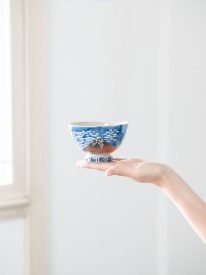
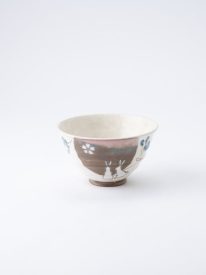 Tougen Kiln Rabbit Hasami Japanese Rice Bowl