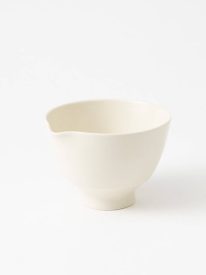
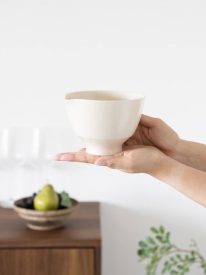
This Japanese bowl with spout from the “Une” series is made by Taniguchi Seidojo, which has been making Kutani ware clay for three generations. The carefully selected clay of Kutani ware, known as Hanasaka ceramic stone, is inevitably discarded during the clay making process. The silky, transparent, beautiful beige glaze was created to make the…
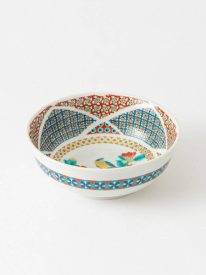
The Japanese bowl features a bird resting on a branch of camellia in bright colors. The delicate and intricate pattern drawn on the inside of the bowl gradually appears while eating, which is a pleasant surprise. A Japanese traditional pattern is also drawn on the outside, so it is a beautiful bowl from any angle….
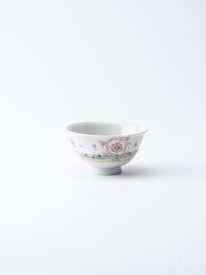
This rice bowl features a pattern designed with a moonlight night motif delicately painted by artisans of Ginshu Kiln, which is especially known as its romantic and playful pastel colored painting. If you take a closer look, there are rabbits hiding in the clouds. The painted areas have a slightly raised texture, a characteristic of Kutani…
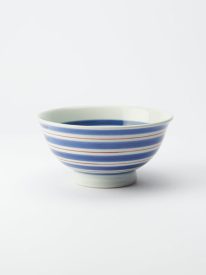
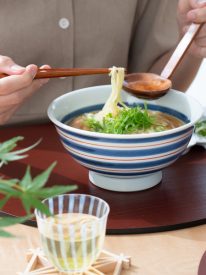
Thick blue and fine red lines alternate around the whole exterior of snow-white porcelain of this donburi bowl. The blue lines are drawn using the traditional gosu pigment, while the red accents enhance the design. The hand-painted blue patterns are made using the tsuketate technique, where each stroke is applied without outlines. This gives the bowl…
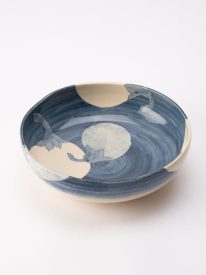
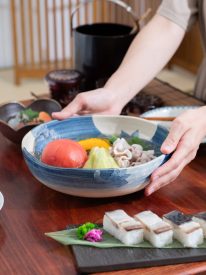
This bowl features round Kamo eggplants, a summer vegetable from Kyoto, in the serene blue and white of sometsuke. Kyoto vegetable designs are created by applying a water-resistant substance to outline the shapes. Then, gosu, a cobalt blue glaze, is hand-painted over the surface, leaving the protected areas untouched. After a second bisque-firing, delicate lines…
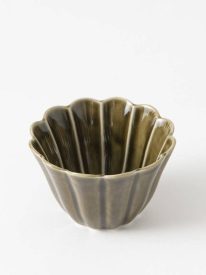
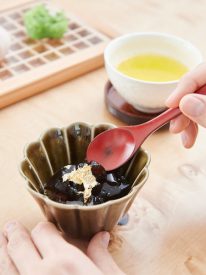
This kobachi small bowl features a chrysanthemum shape and the glossy khaki colored glaze, which enhances the fresh and delicious appearance of the served food. The size is perfect as kobachi to serve any side dish, such as sunomono(vinegared food) , aemono(seasoned or sauced food) and nimono(simmered food) individually.
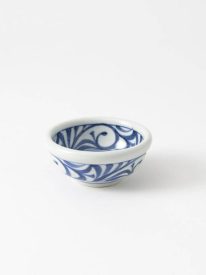
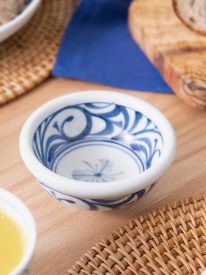
This small kobachi small bowl features a hand-painted arabesque pattern, a representative motif of Tobe ware. The deep indigo shade adds a hint of modern elegance. Its size is ideal for serving side dishes like tangy sunomono or gently simmered nimono. It’s also perfect for small portions of relishes, which can be placed on a…
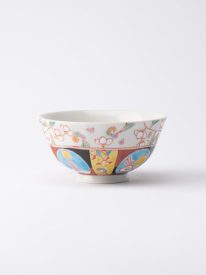
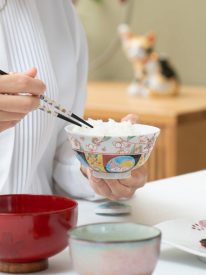
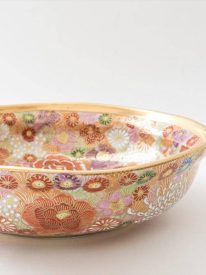
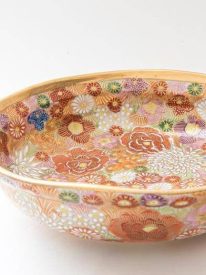
This elegant bowl features a delicate Hanazume style, meaning filled with flowers, one of the most notable design of Kutani ware which has been handed down the Taisho period (CE 1912-1926). Filled with colorful flowers all over the body with gold trimming, it has a timeless elegance and sophistication created by hand drawn technique; there…
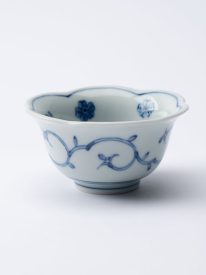
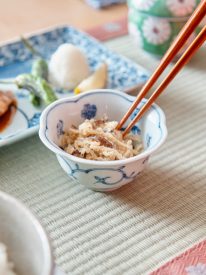
This elegant petal-rimmed kobachi small bowl is crafted by Takayama, renowned for Hasami porcelain. In the classic blue and white of sometsuke, it features an interior pattern of a blooming peony surrounded by waves and gently falling sakura. The exterior is adorned with karakusa scrollwork of budding vines. This pattern has long been cherished in…
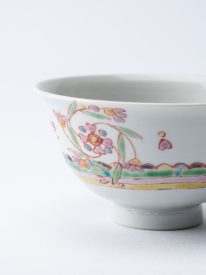
This rice bowl features flower petals delicately painted by artisans of Ginshu Kiln, which is especially known as its romantic and playful pastel colored painting. The painted areas have a slightly raised texture, a characteristic of Kutani ware, which is traditionally hand-painted using Japanese coloring pigments and a brush. With a diameter of 10.3 cm(4.1 in),…
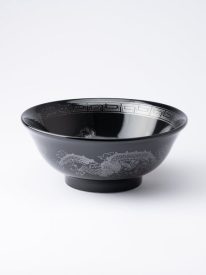
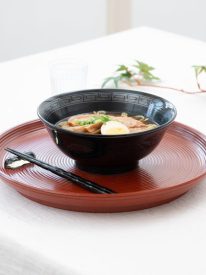
This regular-sized Mino ware ramen bowl features a glossy black background with an elegant silver dragon painted on the sides and bottom. In Asian cultures, the dragon is an auspicious creature, symbolizing nobility and good fortune. Inside the bowl, the square spiral pattern, known as raimon in Japanese, is a traditional Chinese lightning design symbolizing…
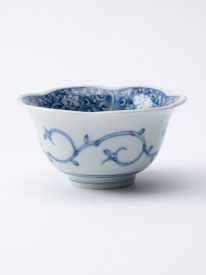
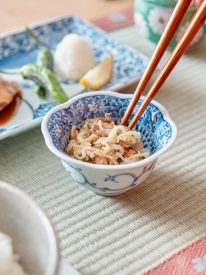
This elegant kobachi small bowl is crafted by Takayama, renowned for Hasami porcelain. In the classic blue and white of sometsuke, it features an interior pattern of richly swirling scrollwork, with additional vine-like arabesques toward the rim. This beautifully contrasts with a simple exterior of simple karakusa budding vines. Vine motifs have long been cherished…

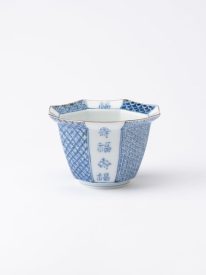 Old Imari Fukujyu Octagonal Kobachi Bowl
 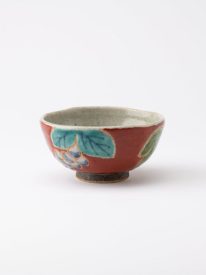 Kousai Kiln Red Grapes Hasami Ware Japanese Rice Bowl S