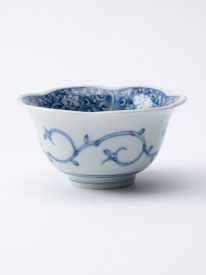
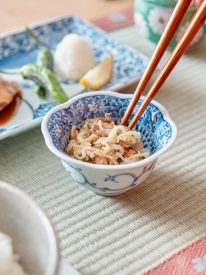
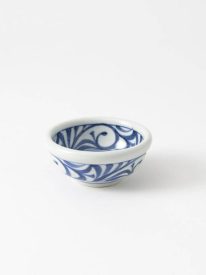
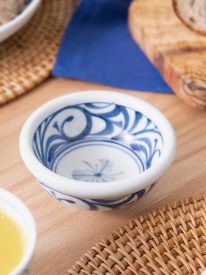
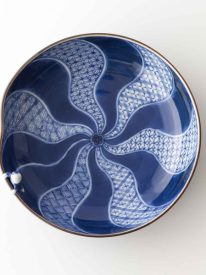
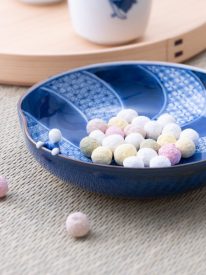
This elegant kobachi small bowl is crafted by Takayama, renowned for Hasami porcelain. In the classic blue and white of sometsuke, it features an interior pattern of richly swirling scrollwork, with additional vine-like arabesques toward the rim. This beautifully contrasts with a simple exterior of simple karakusa budding vines. Vine motifs have long been cherished…
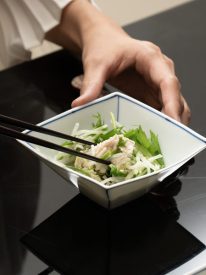
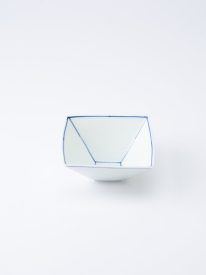
This kobachi bowl is perfectly suited for serving side dishes. The lines drawn along the rim accentuate the bowl elegantly. Employing a technique of “Sometsuke” (underglaze cobalt blue) painting on a base brilliantly fired to a pure white, each piece is meticulously crafted, embodying the essence of Seto Sometsuke ware. Though square, the form exhibits…
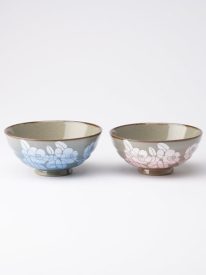
A beautiful pair of rice bowls with a pink and blue sasanqua motif. It is beautifully applied Ginsai, the Kutani ware technique by which five-color glaze is applied over silver foil. The cracks on the surface are created by the traditional technique of “Kannyu” (penetration), which allows you to enjoy the beauty of handcrafting.The shape made on…
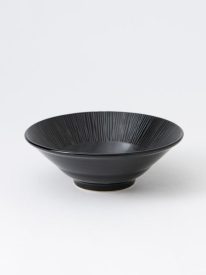
This small-sized Japanese ramen bowl offers an appreciation for the depth of the color black. The inner rim features a chic, textured rendering of the traditional Japanese pattern called tokusa “horsetail.” The simple yet powerful design will leave a lasting impression as part of your table setting. The bowl is perfect for a variety of noodle…
This small kobachi small bowl features a hand-painted arabesque pattern, a representative motif of Tobe ware. The deep indigo shade adds a hint of modern elegance. Its size is ideal for serving side dishes like tangy sunomono or gently simmered nimono. It’s also perfect for small portions of relishes, which can be placed on a…
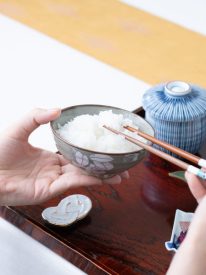
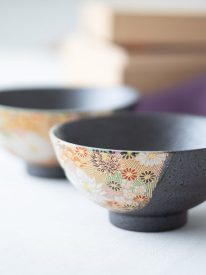
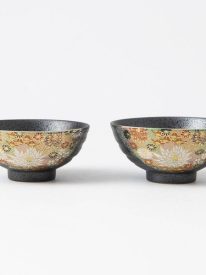
A pair of Japanese rice bowls decorated in beautiful Hanazume style, meaning filled with flowers, one of the most notable design of Kutani ware which has been handed down from the Taisho period (1912-26). In Japan, there is a culture of giving rice bowls as a gift to married couples to celebrate their marriage. It’s…
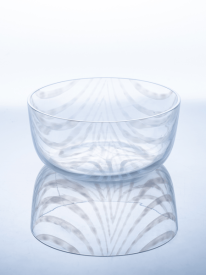
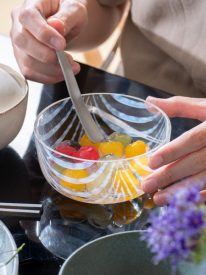
This is a glass bowl with makiage pattern from the Taisho Roman glass series by Hirota Glass, a long-established glass manufacturer in Tokyo. Makiage is a traditional tie-dyeing technique used in kimono making. This method creates intricate patterns that convey an aura of elegance and grace. This pattern is created by the aburidashi “invisible ink” technique,…
A fun bowl featuring a playful decoration of a little man soaking in a bath, which appears when you pour soup into it. The traditional pattern drawn on the bowl creates a unique combination with the whimsical design, serving as a perfect example of Choemon’s ability to blend traditional and modern elements into tableware. Originally…
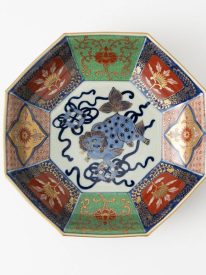
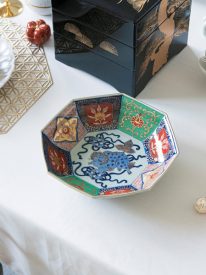
The gorgeous bowl features a lion and peony with a modern interpretation of the traditional classic patterns of old Imari. In Japanese arts, the combination of splendid peony and the imposing tiger is often depicted as regarded as a symbol of bravery and wealth. This gorgeous pattern, expressed by the colorful colors using gold is…
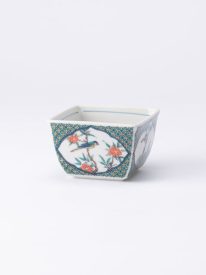
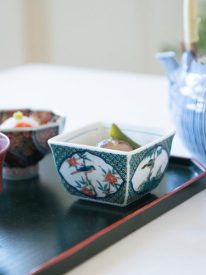
This kobachi small bowl features a bird resting on a branch with flowers. Kutani ware uses Japanese coloring paint, as you can see the painted bird is slightly thickened and standing out. Its size is suitable for serving appetizers, salad, and side dishes such as sunomono (vinegared food) and nimono (simmered food) for one person….
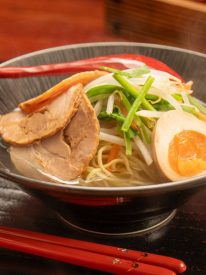
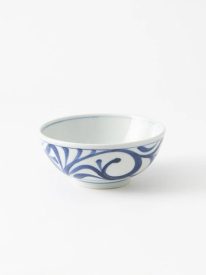
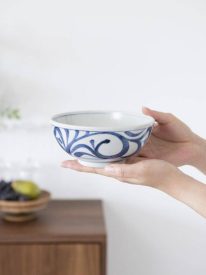
This bowl features one of the signature motifs of Tobe ware. The graceful arabesque design is brought to life by dynamic hand-painted brushstrokes, inspired by nature and the striking contrast of indigo on porcelain white. The bowl is perfect for gyudon, oyakodon, and other donburi dishes. It can also be used to serve noodle dishes like…
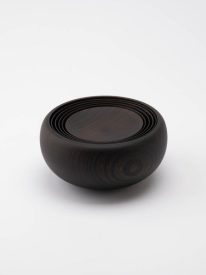
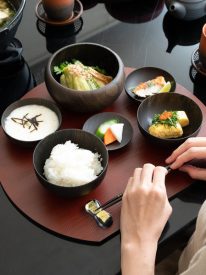
Oryoki is a functional set of bowls designed to minimize waste in daily life, based on Zen Buddhist practices. It has been gaining attention for its ease of use, functionality, and minimalist design, making it ideal for contemporary dining. Its compact design allows even a six-layer set to be stored effortlessly, making it both practical…

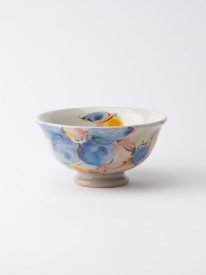 Flowers In The Wind Japanese Rice Bowl
 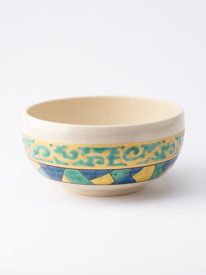 Arabesque and Cracked Ice Pattern Serving Bowl
 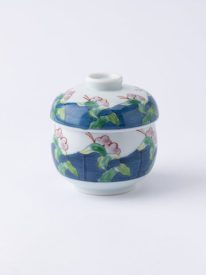 Purple Flower Chawanmushi Bowl
 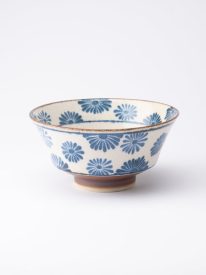 Nanpu Flower Mino Ware Donburi Bowl M
 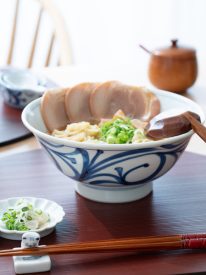 Arabesque Ramen Bowl S