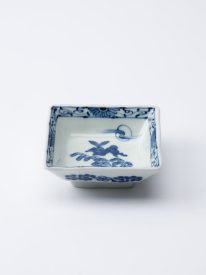
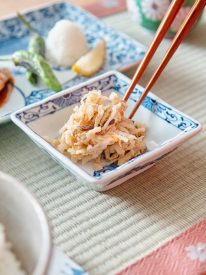
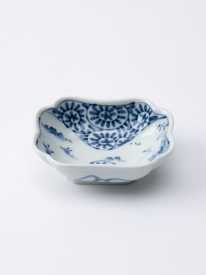
This square kobachi small bowl is crafted by Takayama, a renowned maker of Hasami porcelain, and dyed with seitan, a kind of indigo. The inside of the bowl is beautifully adorned with a design of a rabbit leaping under the moon and the traditional seigaiha pattern of blue ocean waves. The seigaiha motif depicts gently…
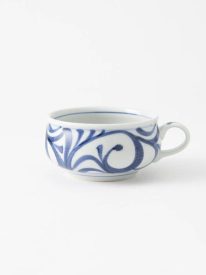
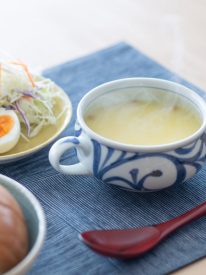
This soup cup showcases a classic arabesque pattern, one of the defining motifs of Tobe ware. The indigo shade lends a modern touch, while the hand-painted nature motifs bring a sense of warmth and craftsmanship to each piece. With its soft, rounded shape, this cup creates a cozy, relaxing ambiance. While designed for soup, it’s…
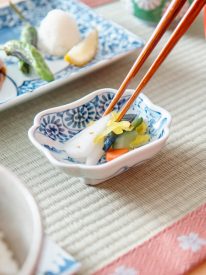
This indigo-dyed, rectangular kobachi small bowl is crafted by Takayama, a renowned maker of Hasami porcelain. The interior of the plate is delicately decorated with a serene landscape scene, beautifully framed by the traditional octopus arabesquetako karakusapattern. This design, featuring endlessly winding vines, has long been cherished in Japan as an auspicious motif symbolizing longevity and…
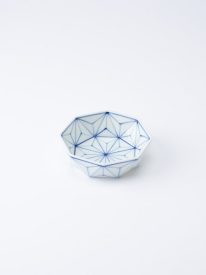
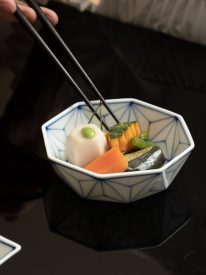
This Kobachi bowl features the traditional Japanese hemp leaf pattern. The hemp leaf is considered as a symbol of good luck meant to ward off evil and is commonly used on kimono and tableware. Employing a technique of “Sometsuke” (underglaze cobalt blue) painting on a base brilliantly fired to a pure white, each piece is…
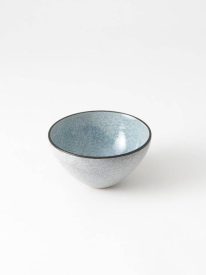
This simple, modern kobachi small bowl features a stunning bright blue color. Handcrafted by Hibino Ceramic, a brand known for creating tableware that enhances the presentation of dishes and makes them look even more appealing. In addition to its beautiful design, the bowl is durable and easy to use, making it a popular choice in…
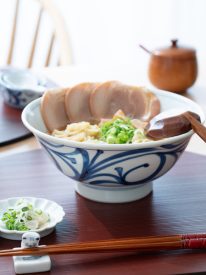
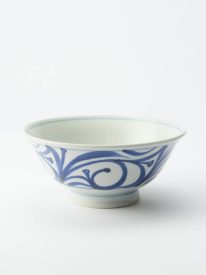
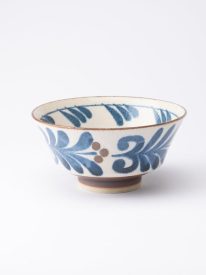
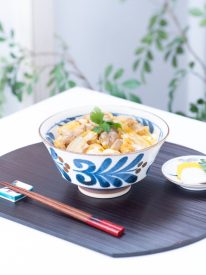
A stunning hand-painted arabesque design is rendered in indigo over the sturdy white porcelain of this large ramen bowl. The signature tsuketate technique, where each stroke is applied in a single motion without outlines, enhances the flowing, dynamic pattern. The bowl’s robust build makes it resistant to breakage and suitable for both microwave and dishwasher…
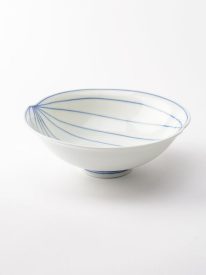
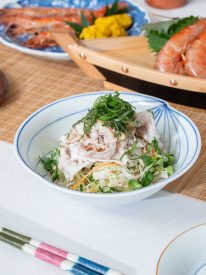
On this bowl, lines in sometsuke “Blue and White” style form smooth and elegant curves, representing leaf veins. These lines are hand-painted by artisans, with subtle variations in thickness and shade making each unique. When using this plate, you can feel a closeness to nature. Sometsuke is a technique that applies indigo color onto a base…
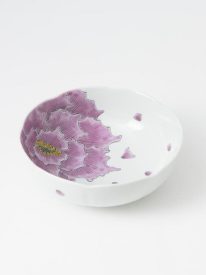
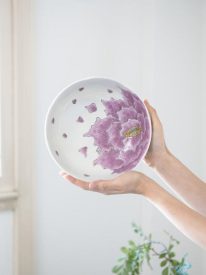
The large bowl features a beautiful pink peony, hand-painted by artist Fukuda Yoshinori. A large peony is designed to fit the round bowl, with scattered petals drawn around it and on the outside of the bowl. Rooted in the rich tradition of Kutani ware, Fukuda Yoshinori brings his mastery of akae, Yoshidaya, and ko-kutani styles…
As suggested by its name nanpu, meaning “southern winds,” this bowl features a design that evokes the feeling of a warm breeze. The brush works in blue and brown symbolizing the wind blowing, give the design a natural comfort. The slightly warped rim allows for easy stacking with bowls of the same shape, ensuring convenient storage….
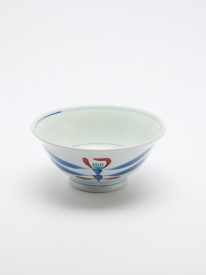
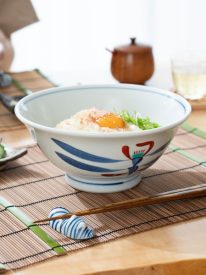
The hand-painted motif on this donburi bowl gracefully transitions between a flower and a dragonfly. The charming design is rendered in blue and red on white porcelain. Created using the tsuketate technique, where each stroke is applied without outlines, the design wins you over with its hand-painted touch and genuine creativity. The sturdy bowl is…
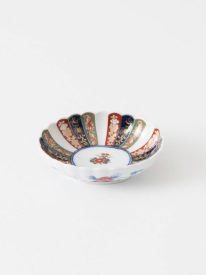
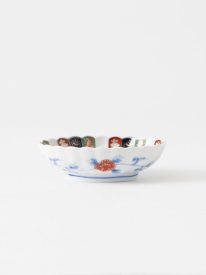
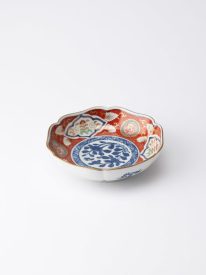
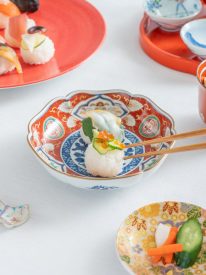
This gorgeous kobachi small bowl features a modern interpretation of classic old Imari patterns. Its vivid colors, paired with gold and white, lend a sophisticated flairideal both for everyday use and as a special gift for anyone who appreciates Japanese arts and crafts. Sized for side dishes like sunomono (vinegared items), aemono (seasoned dishes), or…
This mokko-shaped small bowl features a modern interpretation of the traditional classic patterns of old Imari. Mokko is the name for a round squarish shape and is considered an auspicious shape which represents family prosperity. “Aka” means red and “dami” is the name for the technique where the artist first outlines the area to be…

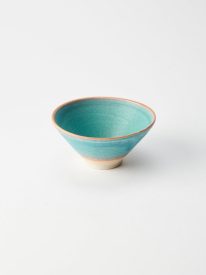 Summum Japanese Rice Bowl
 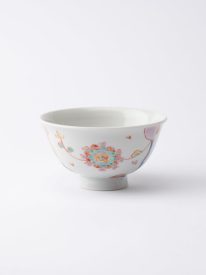 Flower Balloon Japanese Rice Bowl
 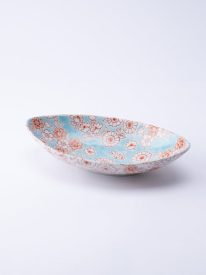 Flower Shower Oval Large Bowl
 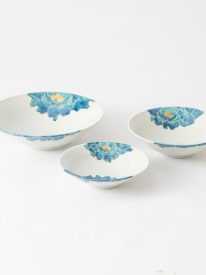 Blue Peony Bowl Set A
 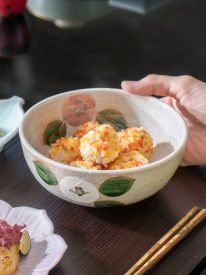 Camellia Serving Bowl