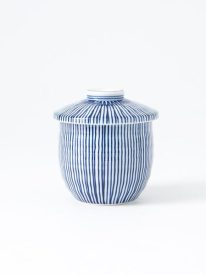
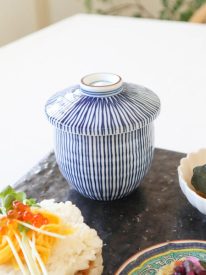
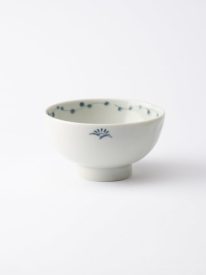
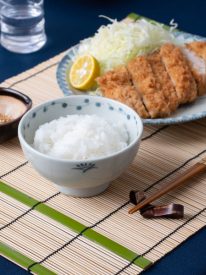
This chawanmushi (Japanese steamed egg custard) bowl has a simple and modern design which looks great on any table. If you make chawanmushi with it, it will give you the authentic taste and atmosphere of a Japanese restaurant. When the lid is removed, it can also be used as a teacup. The Tokusa series by the…
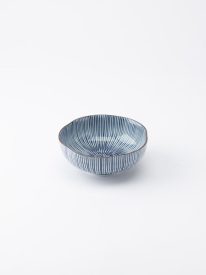
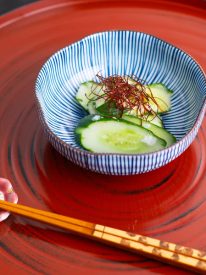
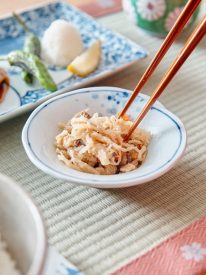
This small bowl is designed with a “Tokusa” pattern drawn by hand with a broom-like brush to make the thin blue lines centering to the middle of the bowl. The undulating sides give the kobachi bowl extra shine and a beautiful shape. The kobachi bowl is small bowl for a single serving of an appetizer…
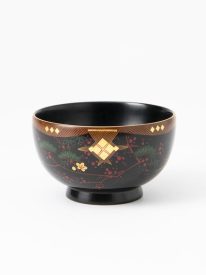
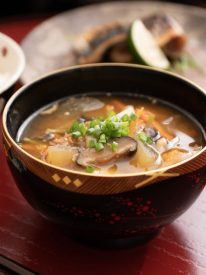
This soup bowl is hollowed out from Japanese horse chestnut, which is the best material for wood bowls. It has a slightly matte texture in calm black color.The lacquering process, from the base coat to the top coat, has been inspected for designation as a traditional Aizu lacquerware craft.Aizu-e, the traditional design of Aizu lacquerware,…
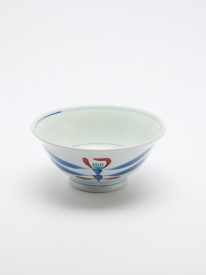
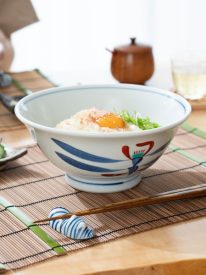
The hand-painted motif on this donburi bowl gracefully transitions between a flower and a dragonfly. The charming design is rendered in blue and red on white porcelain. Created using the tsuketate technique, where each stroke is applied without outlines, the design wins you over with its hand-painted touch and genuine creativity. The sturdy bowl is…
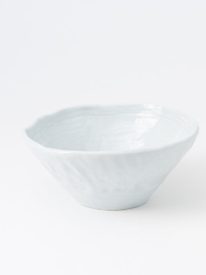
This donburi bowl boasts an attractive celadon finish. The combination of the undulating surface and the smooth, lustrous glaze provides a delightful tactile experience. Shaped using a potter’s wheel, this piece has a pleasant weight that makes it a pleasure to hold in one’s hands. The bowl is perfect for a variety of donburi dishes,…
The Japanese kobachi from the “Une” series is made by Taniguchi Seidojo, which has been making Kutani ware clay for three generations. Instead of using vivid colors of Kutani ware, they propose a new, simple and modern Kutani ware that can only be created by a company that knows the characteristics of clay. The carefully…
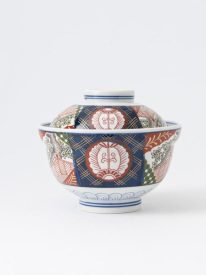
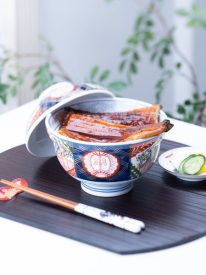
This large-sized Japanese donburi rice bowl features sakura, or cherry blossoms, framed by dark blue, lattice-like patterns, all rendered in the traditional nishiki-e style. Nishiki-e, meaning “brocade picture,” is a multi-colored woodblock print technique that revolutionized ukiyo-e during the Edo period (1603 CE-1868 CE), when most prints were in black and white. The lid helps keep…
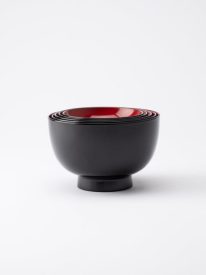
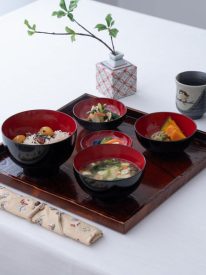
While utilizing Yamanaka lacquerware techniques, this product is made of resin, and is recommended for those who want to enjoy “Oryoki” in a casual manner. The combination of black on the outside and red on the inside is chic and glamorous, and is recommended not only for daily use but also when entertaining guests. In…
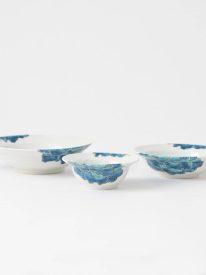
This gorgeous Japanese bowl set adorned with a bright blue peony is made by Mr. Tsuyoshi Sato, a Kutani ware artisan known for his use of bright colors and florals. With brush painting, which is a characteristic of Kutani ware, a thick peony motif is drawn as if it bloomed on the rim and outer…
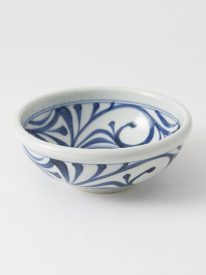
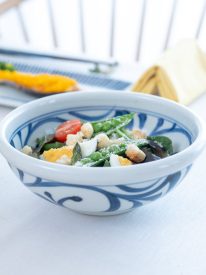
This medium bowl features a hand-painted arabesque pattern, a signature motif of Tobe ware. The deep indigo hue adds a modern touch to its traditional design. Sized for versatility, it’s perfect for daily use, whether serving salads, simmered dishes like nikujaga, or cold udon and soba noodles. The wide shape comfortably holds each dish, enhancing…
This is a Japanese rice bowl by Ri Sanpei (Yi Sam-pyeong) Kiln, a brand by the descendant of Yi Sam-Pyeong, the discoverer of white porcelain ore for Arita ware. Molded on the potter’s wheel, with handwritten flower and arabesque patterns, have an indescribably lovely atmosphere that soothes the hearts of those who see them.Using the same…
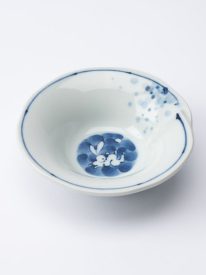
This is an indigo-dyed moon and rabbit kobachi small bowl crafted by Takayama, a renowned maker of Hasami porcelain. The inside of the bowl features a charming illustration of a rabbit playfully leaping beneath the moon, delicately painted in soft indigo tones. In Japanese culture, the rabbit is a symbol of fertility, longevity, and prosperity, making…

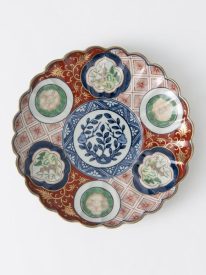 Old Imari Red Sansui Side Plate
 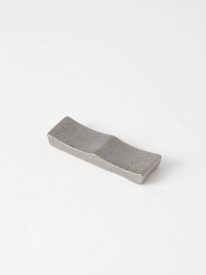 Ginsai Chopstick Rest
 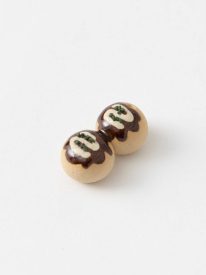 Takoyaki Chopstick Rest
 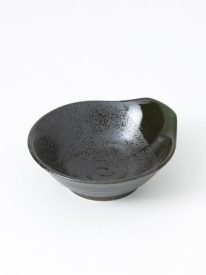 Black and Green Tonsui Bowl