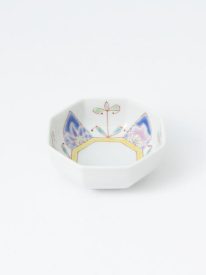
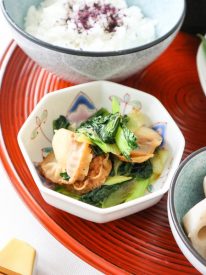
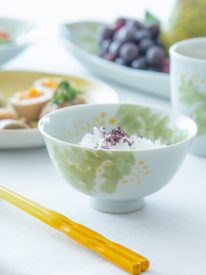
This bowl showcases dreamy patterns delicately painted by the artisans of Ginshu Kiln, renowned for its romantic and playful pastel-colored designs. The painted areas have a slightly raised texture, a characteristic of Kutani ware, which is traditionally hand-painted using Japanese coloring pigments and a brush. It is suitable for serving side such as sunomono (vinegared…
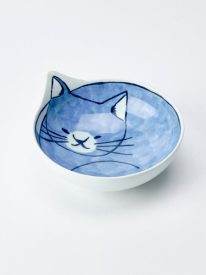
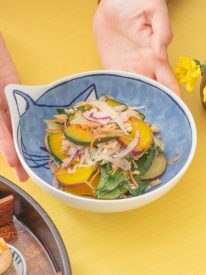
This Hasami ware bowl features a lovely blue cat. The cat is depicted with slightly pointed ears in an adorable curled-up pose, giving the bowl a unique and charming design. The carefully shaded colors on the body enhance the bowl’s charm, making the overall design even more endearing. The smooth porcelain texture and indigo color…
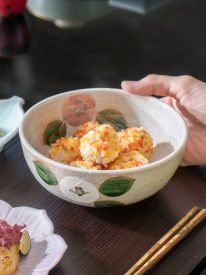
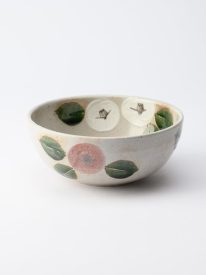
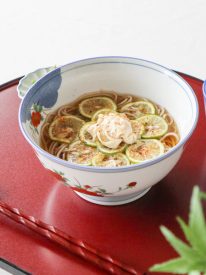
This bowl fascinates with its charming red and white camellia motif, reflecting the beauty of nature. Tsujii Musashi, the artisan behind the kiln, draws inspiration from his surroundings to create pieces that embody a subtle, rustic elegance. The bowl’s refined appearance is further enhanced by gohondenatural pinkish spots that emerge after the firing process. Its…
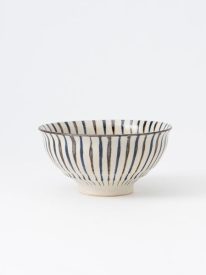
This small-sized donburi bowl features the traditional Japanese tokusa “horsetail” pattern with vertical stripes in dark blue and earthy brown. The rich, rusty hue of the brown, due to its high iron content, gives the bowl a warm, inviting finish. Beloved since the Edo period (1603-1868 CE), this pattern of straight vertical lines is inspired by…
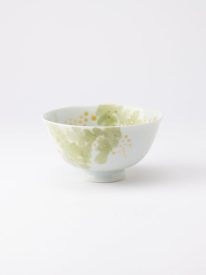
A beautiful mimosa design is painted on a white porcelain canvas. In places, small dots painted in gold are scattered throughout the design, adding a discreet accent to the overall design. The refreshing impression of this rice bowl will enlighten your table. It is painted by the female artist, Alyne Ohigashi, who was born in…
This regular-sized Japanese donburi rice bowl features sakura, or cherry blossoms, framed by dark blue, lattice-like patterns, all rendered in the traditional nishiki-e style. Nishiki-e, meaning “brocade picture,” is a multi-colored woodblock print technique that revolutionized ukiyo-e during the Edo period (1603-1868 CE), when most prints were in black and white. The bowl is perfect…
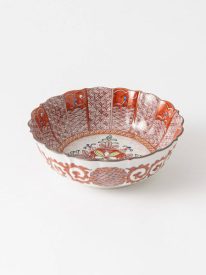
This stunning Akae-style Japanese bowl showcases intricate hand-painted details, characteristic of the Iidaya/Akae style of Kutani ware. The finely detailed artwork is truly remarkable, with not only an elaborate pattern adorning the inside but also a gracefully wavy rim and beautifully decorated exterior, making it a captivating piece from every angle. Its size is ideal…
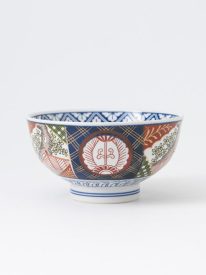
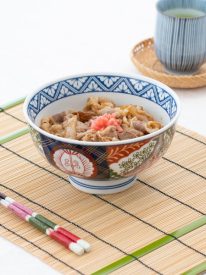
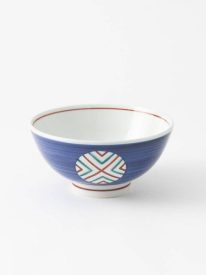
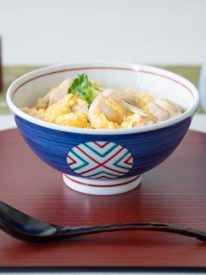
Featuring a sharp red and green pattern peeking out from a large round cut-out shape, called marunuki, this large donburi bowl makes a strong visual impression. The pattern stands out against a striking indigo blue background. The bright red is echoed on the foot of the bowl and the inner rim, creating a beautifully balanced design…
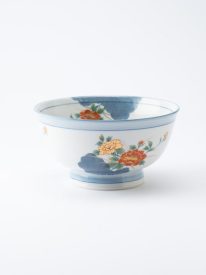
This large donburi bowl is beautifully adorned with delicately drawn peonies and a fabric-like pattern called nunome. In Japanese culture, peonies symbolize nobility, prosperity, and good fortune. The addition of gold accents enhances the bowl’s traditional elegance. The interior of the bowl is also decorated with peonies, allowing you to enjoy a visual feast while savoring…
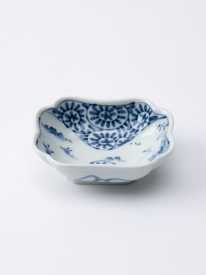
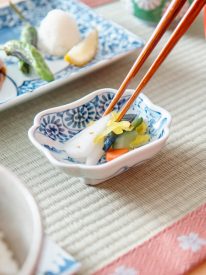
This indigo-dyed, rectangular kobachi small bowl is crafted by Takayama, a renowned maker of Hasami porcelain. The interior of the plate is delicately decorated with a serene landscape scene, beautifully framed by the traditional octopus arabesquetako karakusapattern. This design, featuring endlessly winding vines, has long been cherished in Japan as an auspicious motif symbolizing longevity and…
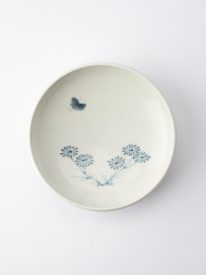
This is a serving bowl by Ri Sanpei (Yi Sam-pyeong) Kiln, a brand by the descendant of Yi Sam-Pyeong, the discoverer of white porcelain ore for Arita ware. It depicts a butterfly flying over a chrysanthemum flower, and the rim around it looks like a picture frame. The pattern is also drawn on the outside, making it…
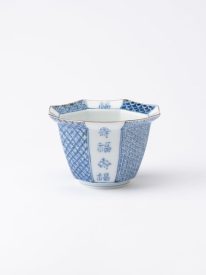
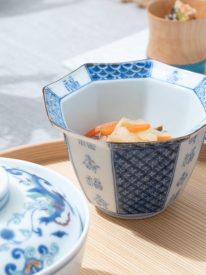
This kobachi small bowl is adorned with a fukuju pattern in the style of old Imari. Fukuju symbolizes happiness and longevity, with the design rooted in this auspicious character. The bowl has an octagonal shape with an outward-extending rim. Its depth makes it ideal for serving soupy dishes, as well as appetizers and desserts.


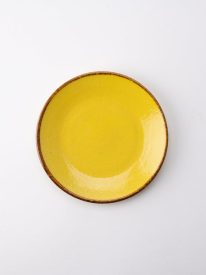 MERU Flamenco Modern Mino Ware Plate 6.7in
 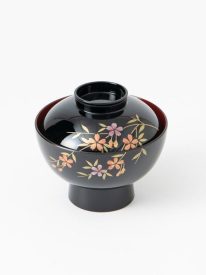 Sakura Soup Bowl with lid