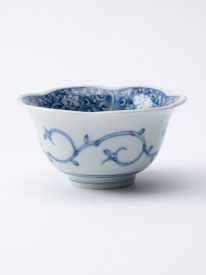
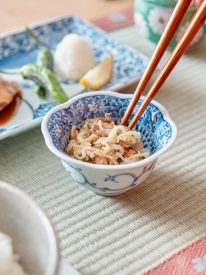
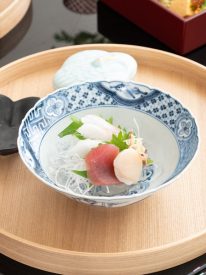
This elegant kobachi small bowl is crafted by Takayama, renowned for Hasami porcelain. In the classic blue and white of sometsuke, it features an interior pattern of richly swirling scrollwork, with additional vine-like arabesques toward the rim. This beautifully contrasts with a simple exterior of simple karakusa budding vines. Vine motifs have long been cherished…
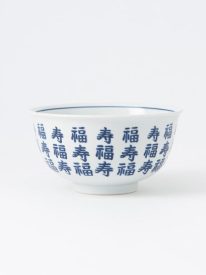
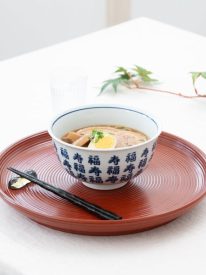
This large bowl is adorned with the kanji characters for “happiness” and “long life.” A smooth blue line runs along the inner rim and the kanji for “happiness” is also written at the bottom of the bowl. With its traditional and rustic design, this bowl is perfect for personal use or as a thoughtful gift,…
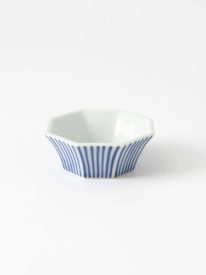
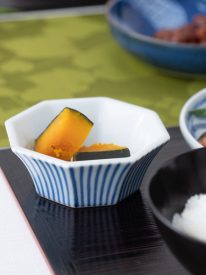
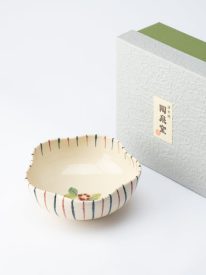
This octagonal kobachi small bowl features simple blue tokusa stripes shaded with delicate hand-painting. Tokusa, known as the horsetail plant, symbolizes longevity in Japanese culture. The indigo shade adds a modern touch, while the natural motif conveys the warmth of hand-painted craftsmanship. Perfect for serving small portions of side dishes like tangy sunomono or simmered nimono, it also…
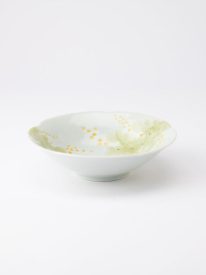
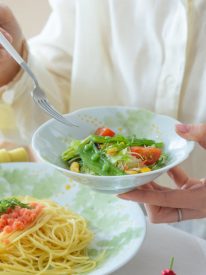
A beautiful mimosa design is painted on a white porcelain canvas. In places, small dots painted in gold are scattered throughout the design, adding a discreet accent to the overall design. The refreshing impression of this bowl will enlighten your table. It is painted by the female artist, Alyne Ohigashi, who was born in Philippines…
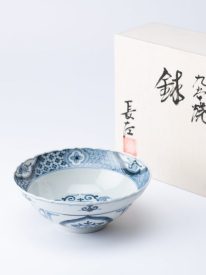
This bowl showcases exquisite sometsuke designs hand-painted by master craftsman Yamamoto Choza. Detailed depictions of ancient treasures are believed to invite good fortune and prosperity. On the bottom of the bowl is the fuyode pattern, named after the Japanese word for cotton rose, with petal-like windows embellished with auspicious motifs. The intricacies of each design…
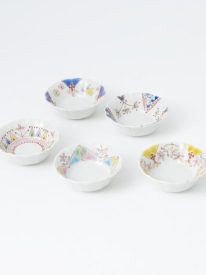
This set of five small kobachi bowls features colorful patterns painted by artisans of Ginshu Kiln, which is especially known as its romantic and playful pastel colored painting. It is suitable for serving side such as sunomono (vinegared food), aemono (seasoned or sauced food), nimono (simmered food) for one person. Furthermore, you may put a…
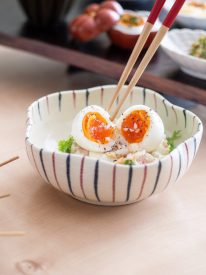
The meticulously adapted tokusa (horsetail) design, a masterpiece innovatively developed by craftsperson Taniguchi, adorns this bowl from Tosen Kiln. The tokusa pattern is vividly presented in two colors, imparting warmth and depth to the hand-drawn lines. These lines, initially penciled to ensure spacing, defy the impersonal touch of printing, thus infusing the bowl with…
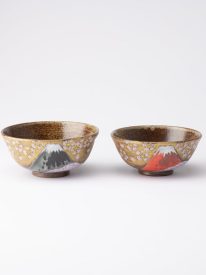
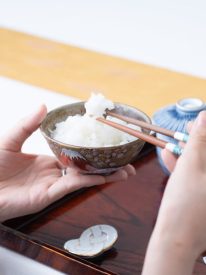
This beautiful pair of rice bowls depicts a spring scene of Mt. Fuji in springtime. It is painted by Kutani Ware artist Yoshinori Fukuda. The golden glow of the warm sunlight, the fluttering petals of the Sakura(cherry blossoms), and the majestic Mt Fuji will make you feel refreshed and special every time you use this…
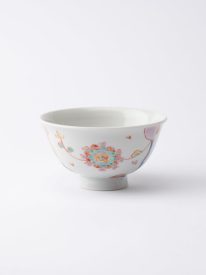
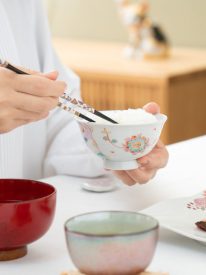
This rice bowl features flower shaped balloon delicately painted by artisans of Ginshu Kiln, which is especially known as its romantic and playful pastel colored painting. The painted areas have a slightly raised texture, a characteristic of Kutani ware, which is traditionally hand-painted using Japanese coloring pigments and a brush. With a diameter of 10.5 cm(4.1…
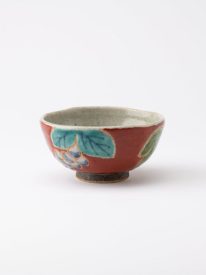
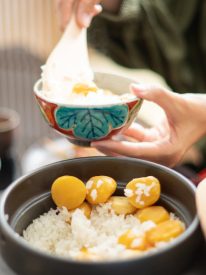
This is a Hasami ware rice bowl made by Kousai Kiln. It is hand-painted to bring out the warm texture of the clay. The base of the rice bowl is finished in red with a green grape and leaf design. The rough texture of the clay is coated with a glossy, bright glaze that offers different textures….
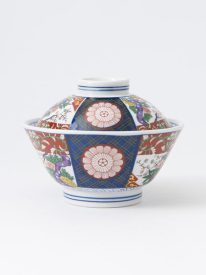
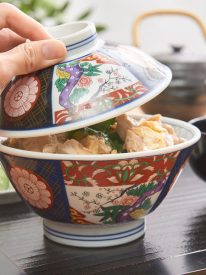
This small-sized Japanese donburi rice bowl features peonies, framed by dark blue, lattice-like patterns, all rendered in the traditional nishiki-e style. Nishiki-e, meaning “brocade picture,” is a multi-colored woodblock print technique that revolutionized ukiyo-e during the Edo period (1603-1868 CE), when most prints were in black and white. The lid helps keep the food warm and…
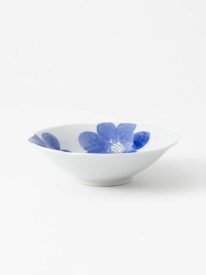
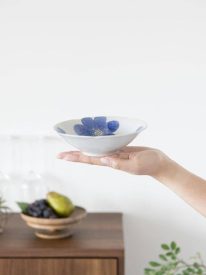
This beautiful bowl features soft blue flowers as if painted with watercolors. The bright design and shape of the rim resembles blooming flowers, bringing joyful atmosphere on the table. It is painted by the female artist, Alyne Ohigashi, who was born in Philippines. She uses a unique technique called washi-zome (Japanese paper dyeing) and continues her…

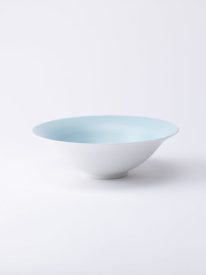 Japan Blue Pearl Blue Medium Bowl