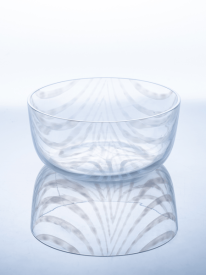
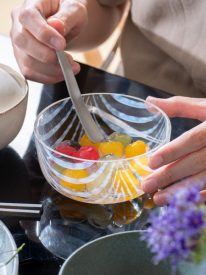
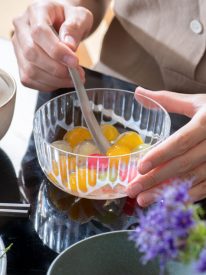
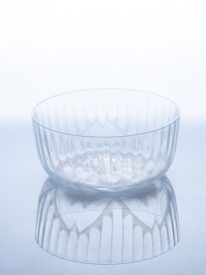
This is a glass bowl with makiage pattern from the Taisho Roman glass series by Hirota Glass, a long-established glass manufacturer in Tokyo. Makiage is a traditional tie-dyeing technique used in kimono making. This method creates intricate patterns that convey an aura of elegance and grace. This pattern is created by the aburidashi “invisible ink” technique,…
Enjoy delicious chawanmushi, Japanese steamed egg custard, in this beautiful Arita ware chawanmushi bowl. Painted with a straw pattern called mugiwarade, rendered here in several delicate colors creating a feeling that is both intriguing and subdued. Each brush stroke starts out thick and tapers out at the end, which adds a subtle interest to this…
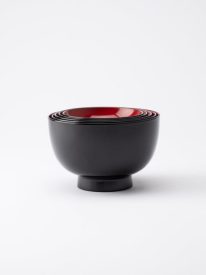
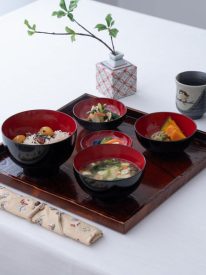
While utilizing Yamanaka lacquerware techniques, this product is made of resin, and is recommended for those who want to enjoy “Oryoki” in a casual manner. The combination of black on the outside and red on the inside is chic and glamorous, and is recommended not only for daily use but also when entertaining guests. In…
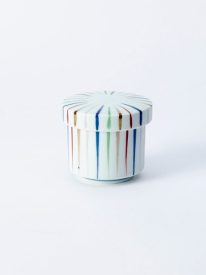
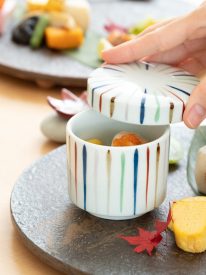
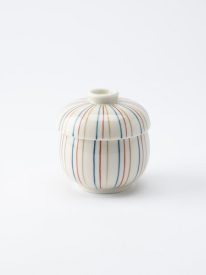
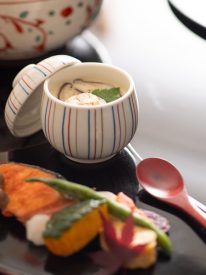
Enjoy delicious chawanmushi, Japanese steamed egg custard, in this beautiful Arita ware chawanmushi bowl. This Chawanmushi bowl is painted in the “Tokusa (Horsetail)” pattern which is a classic motif that has been beloved since the Edo period (1603 CE – 1867 CE). Its straight-growing appearance symbolizes wishes for growth and prosperity. And the three subdued colors…
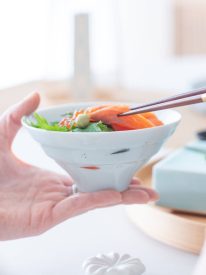
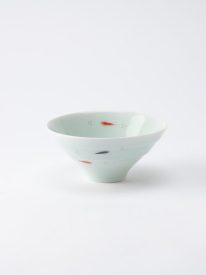
Enjoy the refined natural blue-green luster of celadon with this stylish Japanese rice bowl from Kosen Kiln. With its translucent glaze on the blue-jade hue of celadon, a tranquil atmosphere emanates from its glossy exterior, like the calm surface of a glistening pond. Adorning the surface of the rice bowl are Medaka rice fishes which are depicted…
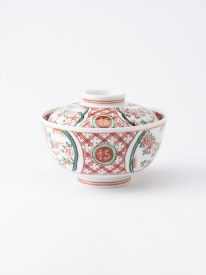
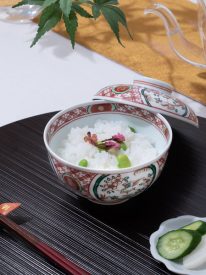
This is a kobachi small bowl with a lid, crafted from Arita ware porcelain. The bowl features a delicate design of flowers and grasses, decorated using the akae technique (overglaze red enamel), with red as the primary color, complemented by accents of green, purple, blue, and other shades. The same elegant pattern is painted on…
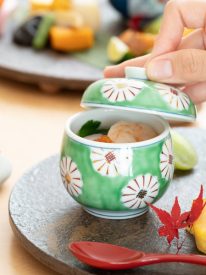
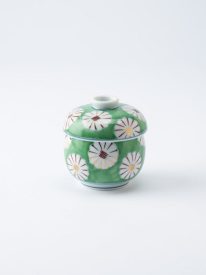
Enjoy delicious chawanmushi, Japanese steamed egg custard, in this beautiful Arita ware chawanmushi bowl. A scattering of golden chrysanthemums is carefully painted first, preserving their delicate beauty. A bright green sweeps in to fill the remaining space as the varied shades showcase exquisite hand-painted artistry. Versatile in size and shape, this piece can also hold…
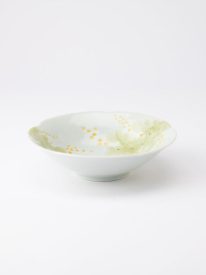
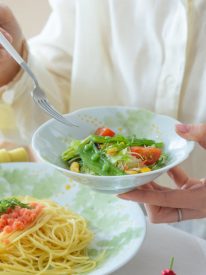
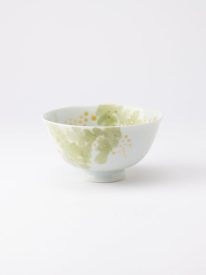
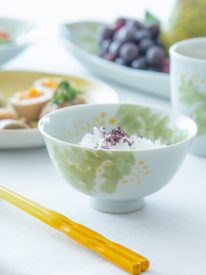
A beautiful mimosa design is painted on a white porcelain canvas. In places, small dots painted in gold are scattered throughout the design, adding a discreet accent to the overall design. The refreshing impression of this bowl will enlighten your table. It is painted by the female artist, Alyne Ohigashi, who was born in Philippines…
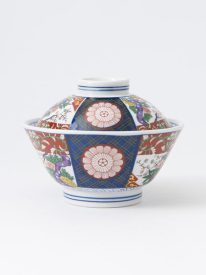
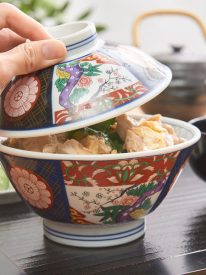
This small-sized Japanese donburi rice bowl features peonies, framed by dark blue, lattice-like patterns, all rendered in the traditional nishiki-e style. Nishiki-e, meaning “brocade picture,” is a multi-colored woodblock print technique that revolutionized ukiyo-e during the Edo period (1603-1868 CE), when most prints were in black and white. The lid helps keep the food warm and…
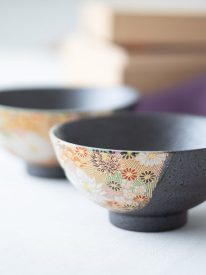
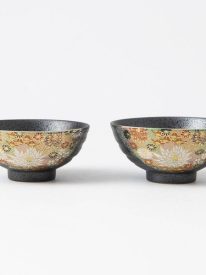
A pair of Japanese rice bowls decorated in beautiful Hanazume style, meaning filled with flowers, one of the most notable design of Kutani ware which has been handed down from the Taisho period (1912-26). In Japan, there is a culture of giving rice bowls as a gift to married couples to celebrate their marriage. It’s…
A beautiful mimosa design is painted on a white porcelain canvas. In places, small dots painted in gold are scattered throughout the design, adding a discreet accent to the overall design. The refreshing impression of this rice bowl will enlighten your table. It is painted by the female artist, Alyne Ohigashi, who was born in…
This is a glass bowl with a sakura “cherry blossom” design from the Taisho Roman glass series by Hirota Glass, a long-established glass manufacturer in Tokyo. Cherry blossoms, with their charming appearance and deep cultural significance, are beloved not only in Japan but also around the world. They symbolize both natural beauty and rich tradition. This pattern…

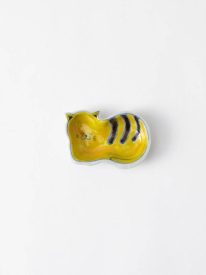 Yellow Cat-shaped Sauce Plate
 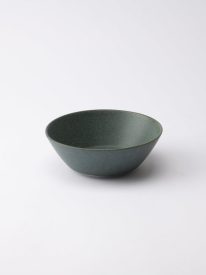 MERU Jade Mino Ware Bowl 5.2in
 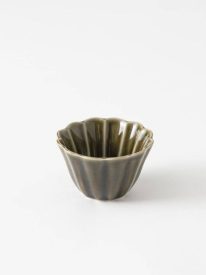 Kikuwari Khaki Kobachi Small Bowl 3in
 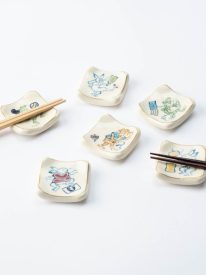 Tosen Kiln New Year Kiyomizu Ware Chopstick Rest Set
 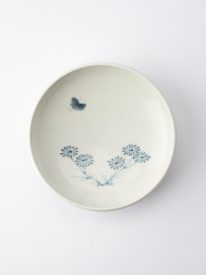 Le Sanpei Chrysanthemum And Butterfly Arita Bowl
 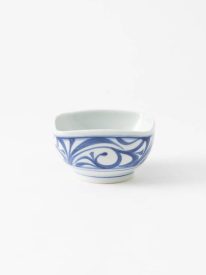 Arabesque Square Kobachi Bowl
 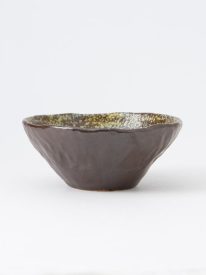 Shigara Donburi Bowl M