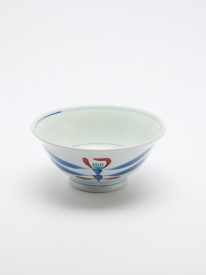
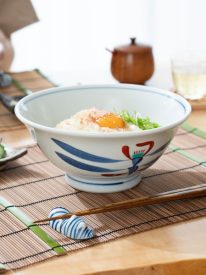
The hand-painted motif on this donburi bowl gracefully transitions between a flower and a dragonfly. The charming design is rendered in blue and red on white porcelain. Created using the tsuketate technique, where each stroke is applied without outlines, the design wins you over with its hand-painted touch and genuine creativity. The sturdy bowl is…
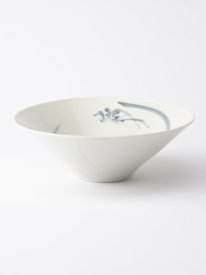
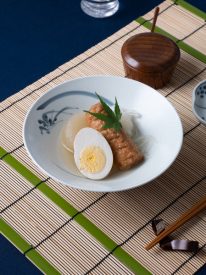
This is a serving bowl by Ri Sanpei (Yi Sam-pyeong) Kiln, a brand by the descendant of Yi Sam-Pyeong, the discoverer of white porcelain ore for Arita ware. The simple design with flowing orchids can be used for any menu. This is one of Ri Sanpei (Yi Sam-pyeong) Kiln’s most popular and classic products.Using the same Izumiyama…
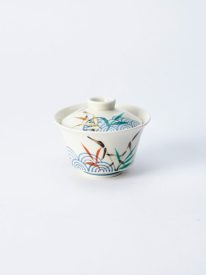
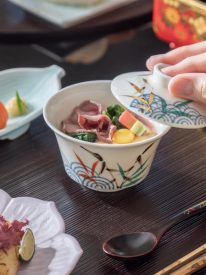
Enjoy delicious chawanmushi, Japanese steamed egg custard, in this beautiful Arita ware chawanmushi bowl. A symbol of good fortune, the traditional seigaiha “wave” pattern with its expanding, layered semi-circles graces the cup and lid of this chawanmushi bowl. Soft brushstrokes transition into slender stalks of reed grass. Its spouted shape can also accommodate other steamed…
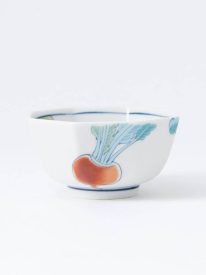
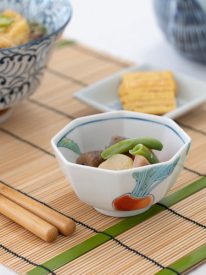
This small kobachi bowl features a red turnip, and one leaf of the turnip is also shown inside of the bowl. Turnip is one of the motifs that has long been regarded as a lucky charm in Japan, and is often used for tableware. The refreshing white-based small bowl is a handy size, durable and…
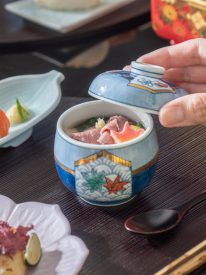
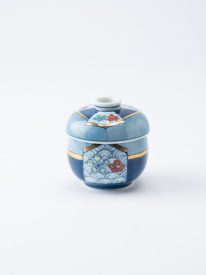
Enjoy delicious chawanmushi, Japanese steamed egg custard, in this beautiful Arita ware chawanmushi bowl. The pairing of deep navy blue reminiscent of the sea over a faint blue sky is punctuated with a thick gold accent that seems to express a bright horizon. An auspicious wave pattern is highlighted on each side by a double…
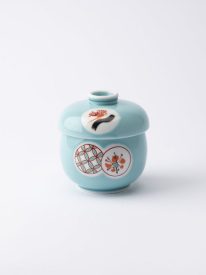
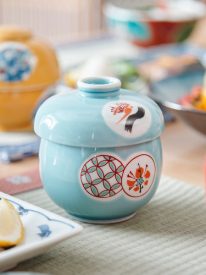
This chawanmushi (Japanese steamed egg custard) bowl has a traditional circle pattern called marumon. The transparent blue-green color unique to celadon porcelain is beautiful and contrasts elegantly with the red circle pattern. Tasei Kiln is a kiln that originally made chawanmushi bowls for restaurant use. If you make chawanmushi with it, you can enjoy authentic…
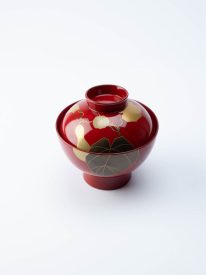
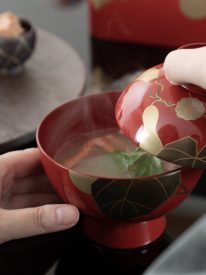
This Echizen lacquerware soup bowl, born from a collaboration with the Aizu lacquerware manufacturer YAMAKYU Japanware Co., captivates with its rich lacquer surface, beautifully showcasing a gourd design. Golden gourds, intertwined with graceful leaves and vines, are brought to life through the traditional maki-e technique, hand-painted lacquer designs adorned with shimmering gold leaf. A final coating…
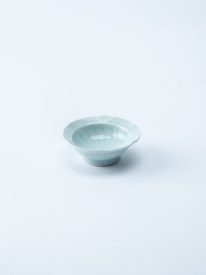
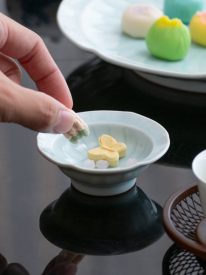
This celadon kobachi small bowl is well-suited for sauces and condiments, and can enrich your tea time with a refined touch when used for small sweets. Celadon, with its beautiful gradient from white to light blue, enhances dish presentation and imparts a cool, refreshing feel. The rim, designed with gentle curves that create a soft…
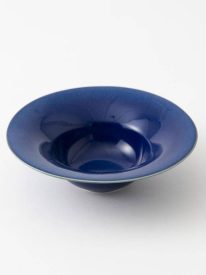
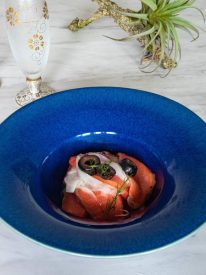
This deep side plate in a shiny dark blue color has an exquisite silhouette with wide rims and and a beautiful curve. The size is perfect for serving a salad, appetizers, sunomono “vinegared food,” aemono “seasoned or sauced food” and nimono “simmered food.” It is great for not only Japanese food, but also various food…
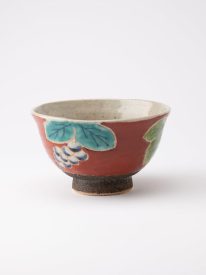
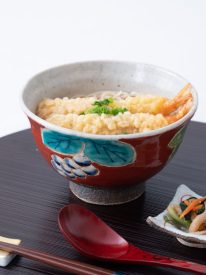
This regular-sized donburi bowl features a deep color scheme of dark red and vibrant green with a charming design of grapes and grape leaves. It showcases the striking kannyu texture, in which delicate, crack-like crazing patterns are formed beneath the glaze. Its depth and straight sides help retain the food’s warmth while adding a touch…
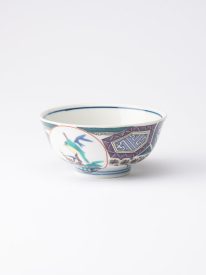
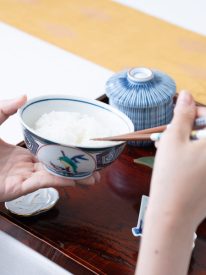
This Japanese rice bowl has a typical design of the Ko-Kutani (old Kutani) style dating back to mid-17th century, depicting the nature-themed motif and traditional patterns and distinctive bright colors of Kutani ware. It is painted with the five colors of red, yellow, green, purple and dark blue, known as “Go-Sai” in Japanese. Kutani ware uses…
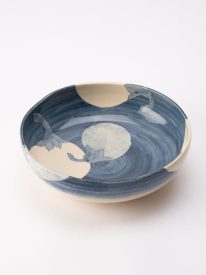
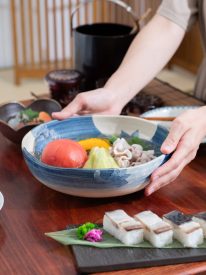
This bowl features round Kamo eggplants, a summer vegetable from Kyoto, in the serene blue and white of sometsuke. Kyoto vegetable designs are created by applying a water-resistant substance to outline the shapes. Then, gosu, a cobalt blue glaze, is hand-painted over the surface, leaving the protected areas untouched. After a second bisque-firing, delicate lines…

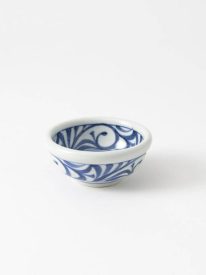 Arabesque Kobachi Small Bowl