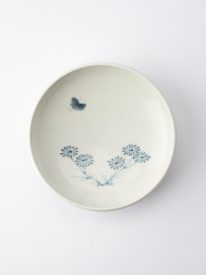
This is a serving bowl by Ri Sanpei (Yi Sam-pyeong) Kiln, a brand by the descendant of Yi Sam-Pyeong, the discoverer of white porcelain ore for Arita ware. It depicts a butterfly flying over a chrysanthemum flower, and the rim around it looks like a picture frame. The pattern is also drawn on the outside, making it…
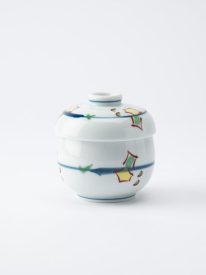
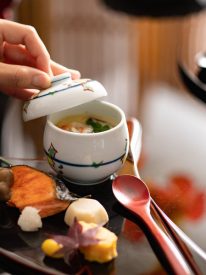
Enjoy delicious chawanmushi (Japanese steamed egg custard) with your favorite ingredients at home with this beautiful Arita ware chawanmushi bowl from Tasei Kiln. Lines painted in gosu, a cobalt blue pigment, across the lid and the bowl give accent to the soft round shape and enhance its warm and gentle impression. Diamond-shaped patterns evenly painted along…
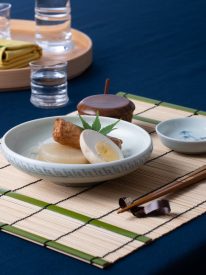
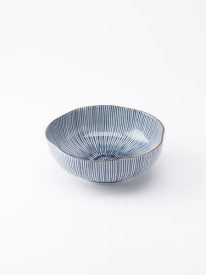
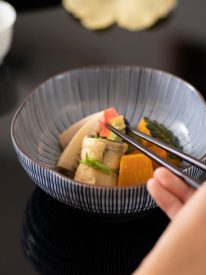
This bowl is designed with a “Tokusa” pattern drawn by hand with a broom-like brush to make the thin blue lines centering to the middle of the bowl. Originally made in the size to serve a single portion of sashimi or pickled vegetables in a traditional style meal at a tea ceremony, it can be…
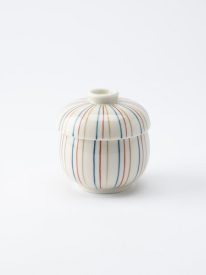
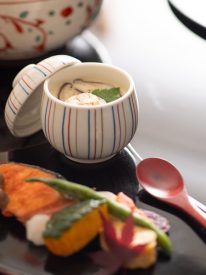
Enjoy delicious chawanmushi, Japanese steamed egg custard, in this beautiful Arita ware chawanmushi bowl. This Chawanmushi bowl is painted in the “Tokusa (Horsetail)” pattern which is a classic motif that has been beloved since the Edo period (1603 CE – 1867 CE). Its straight-growing appearance symbolizes wishes for growth and prosperity. And the three subdued colors…
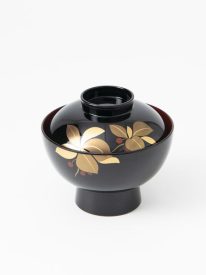
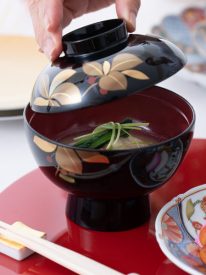
This is a large soup bowl with a lid. The glossy texture of the surface is beautiful, and the gold painting of spear flowers gives it an elegant feel. With its tall footing and lid, it is an ideal soup bowl for ceremonial occasions. At New Year’s in Japan, people enjoy zoni, also known as ozoni,…
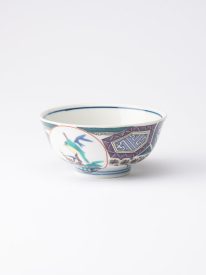
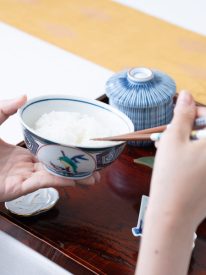
This Japanese rice bowl has a typical design of the Ko-Kutani (old Kutani) style dating back to mid-17th century, depicting the nature-themed motif and traditional patterns and distinctive bright colors of Kutani ware. It is painted with the five colors of red, yellow, green, purple and dark blue, known as “Go-Sai” in Japanese. Kutani ware uses…
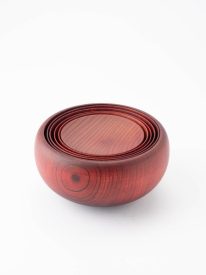
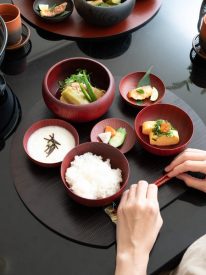
Oryoki is a functional set of bowls inspired by Zen Buddhist principles, designed to minimize waste with a functional, minimalist style that suits modern tables. The set stacks perfectly, with smaller bowls nesting neatly inside the largest, ensuring easy storage and portability. This compact design allows even a six-layer set to be stored effortlessly, making…
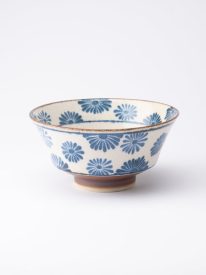
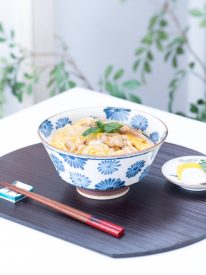
As suggested by its name nanpu, meaning “southern winds,” this bowl features a design that evokes the feeling of a warm breeze. Blue chrysanthemum flowers are scattered throughout the design, giving the design a natural comfort. The slightly warped rim allows for easy stacking with bowls of the same shape, making storage more convenient. This bowl is…
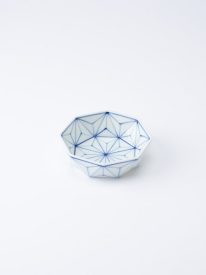
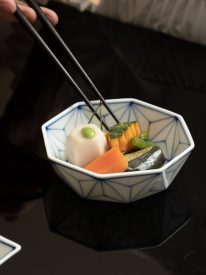
This Kobachi bowl features the traditional Japanese hemp leaf pattern. The hemp leaf is considered as a symbol of good luck meant to ward off evil and is commonly used on kimono and tableware. Employing a technique of “Sometsuke” (underglaze cobalt blue) painting on a base brilliantly fired to a pure white, each piece is…
The bowl features a beautiful contrast of soft colors on a white canvas, making the most of the distinctive texture of porcelain. The fine touch of flowers are hand-painted by an artisan, adding a touch of elegance to the space. Unlike other kilns from Kutani ware, Ginshu kiln is especially known as its romantic and…
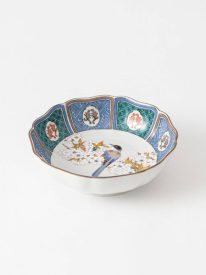
This Japanese bowl features a delicate painting of a bird perching on the Sakura branch. A traditional Japanese pattern is drawn around it, making it a gorgeous bowl. It is hand-painted by brush, using Japanese coloring paint which is one of the remarkable features of Kutani ware, as you can see the painted part is…
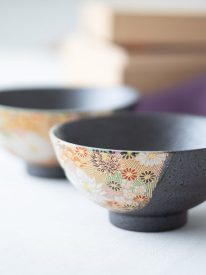
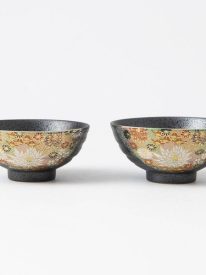
A pair of Japanese rice bowls decorated in beautiful Hanazume style, meaning filled with flowers, one of the most notable design of Kutani ware which has been handed down from the Taisho period (1912-26). In Japan, there is a culture of giving rice bowls as a gift to married couples to celebrate their marriage. It’s…

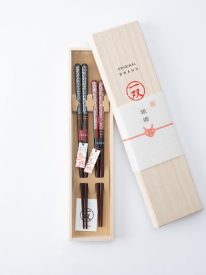 Ginkon Celebration Chopsticks Pair Set
 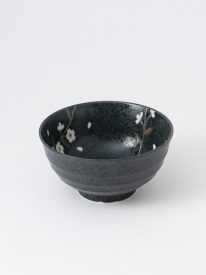 Sakura Donburi Bowl M
 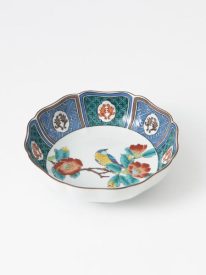 Camellia and Bird Kutani Bowl
 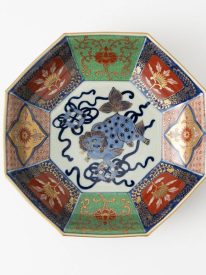 Old Imari Lion and Peony Large Bowl
 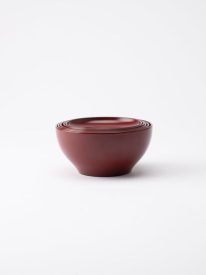 Ancient Red Lacquer Yamanaka Lacquerware Oryoki Bowl Set
 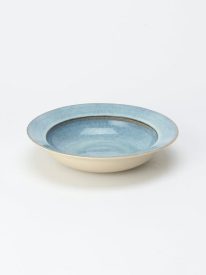 Blue Aohagi Deep Dinner Plate