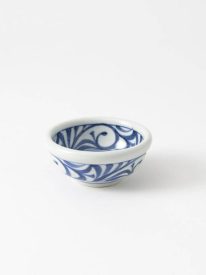
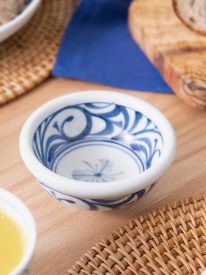
This small kobachi small bowl features a hand-painted arabesque pattern, a representative motif of Tobe ware. The deep indigo shade adds a hint of modern elegance. Its size is ideal for serving side dishes like tangy sunomono or gently simmered nimono. It’s also perfect for small portions of relishes, which can be placed on a…
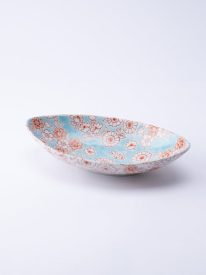
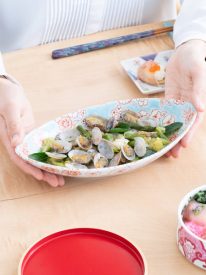
This oval bowl features a blossoming floral pattern, with a charming contrast between its interior and exterior. The inside is painted in a cute sky blue with expressive brushstrokes, while the outside remains white, highlighting the beauty of porcelain. Its shape and size make it perfect for serving pasta, salads, side menus, fruits, or sweets,…
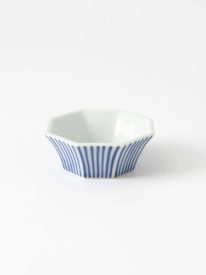
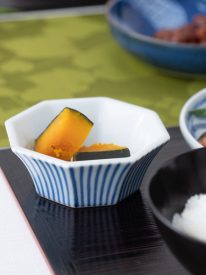
This octagonal kobachi small bowl features simple blue tokusa stripes shaded with delicate hand-painting. Tokusa, known as the horsetail plant, symbolizes longevity in Japanese culture. The indigo shade adds a modern touch, while the natural motif conveys the warmth of hand-painted craftsmanship. Perfect for serving small portions of side dishes like tangy sunomono or simmered nimono, it also…
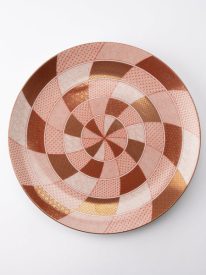
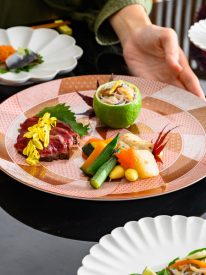
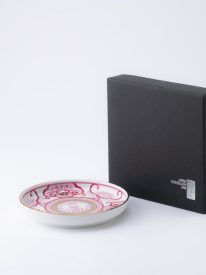
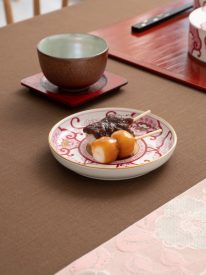
A simply stunning plate with finely detailed traditional patterns in various shades of red decorated with gold. Akae, or “red painting,” is one of the classic techniques of Kutani Ware. Detailed patterns with differing shades of a red pigment are added to the Kutani ware that fully cover the surface of the item. To add…
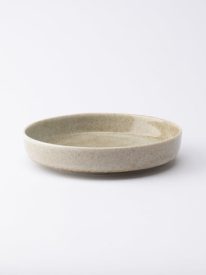
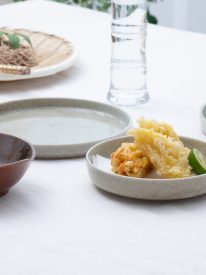
This is an easy-to-use plate that looks great in the dining room, as is typical of MERU, which specializes in dishes suitable for professional use. Measuring 16.4cm (6.5in), it is suitable for use as a serving dish for one person or for placing salads, appetizers, bread, fruit, etc. The rustic coloring often seen in Japanese…
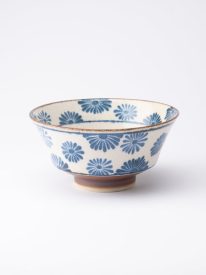
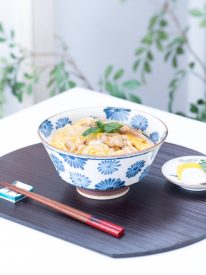
As suggested by its name nanpu, meaning “southern winds,” this bowl features a design that evokes the feeling of a warm breeze. Blue chrysanthemum flowers are scattered throughout the design, giving the design a natural comfort. The slightly warped rim allows for easy stacking with bowls of the same shape, making storage more convenient. This bowl is…
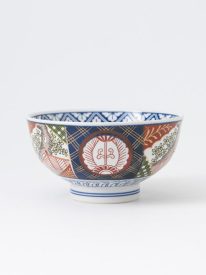
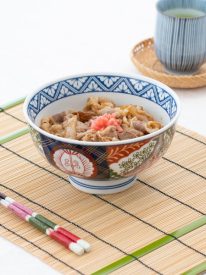
This regular-sized Japanese donburi rice bowl features sakura, or cherry blossoms, framed by dark blue, lattice-like patterns, all rendered in the traditional nishiki-e style. Nishiki-e, meaning “brocade picture,” is a multi-colored woodblock print technique that revolutionized ukiyo-e during the Edo period (1603-1868 CE), when most prints were in black and white. The bowl is perfect…
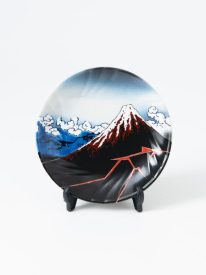
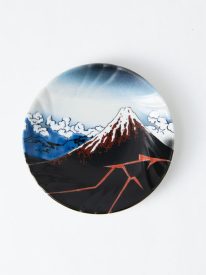
This plate features “Kuro(Black)Fuji”, said to be a twin of “Aka(Red)Fuji” by Katsushika Hokusai.Different from the majestic and generous Fuji in “Aka Fuji,” “Kuro Fuji” depicts a wild and stormy Mt Fuji with the summer cumulonimbus clouds and lightning, giving the impression of nature’s strength and dynamism. Hokusai draws many pictures with Mt. Fuji as…
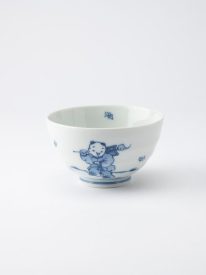
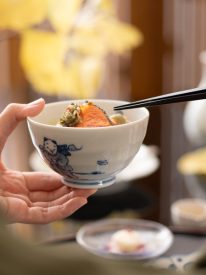
This splendid rice bowl, adorned with delicately painted karako, Chinese-style playful children, encapsulates the essence of playful elegance. Meanwhile, the interior features a single butterfly, displaying both a narrative quality and refined simplicity. Holding this charming bowl in your hand, you can feel the lightness and thinness characteristic of Mikawachi ware. It displays an exquisite gradation,…
A small side plate in burgundy, perfect for single servings. Although small in size, the old Imari floral patterns are painted with precision which shows the high quality craftsmanship of the Arita Porcelain Lab tableware. Part of the Japan Autumn series, this piece showcases the beauty of Japanese autumn leaves. All colors in this series are…
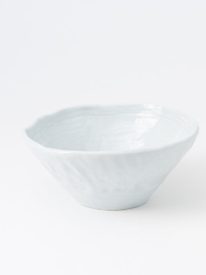
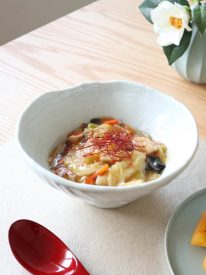
This donburi bowl boasts an attractive celadon finish. The combination of the undulating surface and the smooth, lustrous glaze provides a delightful tactile experience. Shaped using a potter’s wheel, this piece has a pleasant weight that makes it a pleasure to hold in one’s hands. The bowl is perfect for a variety of donburi dishes,…
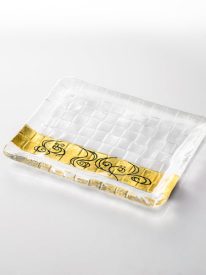
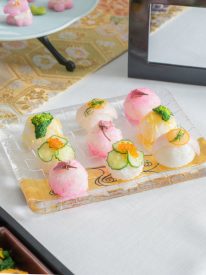
Meticulously handcrafted by adept artisans, the Yoshita Kasho Maki-e glass rectangular plate is a paragon of exquisite craftsmanship, effortlessly uniting the peerless quality of glass with a pioneering technique. This involves the integration of hand-painted Maki-e, employing natural lacquer, harmoniously combined with the esteemed Kanazawa gold leaf, presenting a piece where finesse and tradition resonate in…

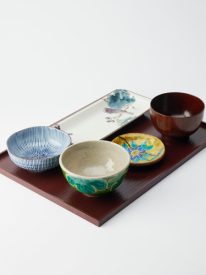 Emerald Orchard Dinnerware Set