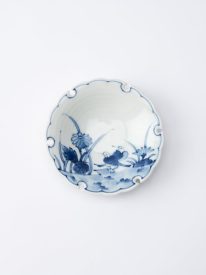
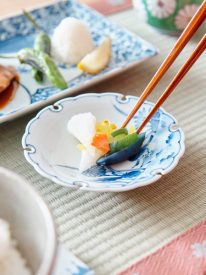
This elegant sauce plate is crafted by Takayama, renowned for Hasami porcelain. In the timeless blue and white of sometsuke, it features a classic pattern of kacho-sokaflowers, birds, and grass. The rim is delightfully formed into a snowflake, the delicate ripples and cut-outs representing the snow’s precious crystals. The gentle conical slope to the base…
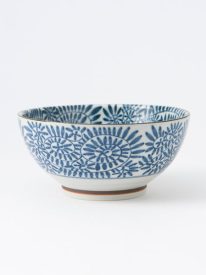
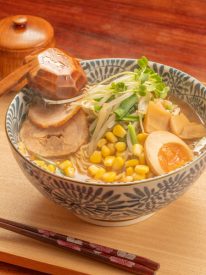
A multitude of leafy curlicues creates a stunning, deep indigo blue arabesque motif on this Japanese bowl. The design of simplified leaves over spiraling vines fills not only the outside, but also the inside the bowl, for a playful ornamental effect. Due to their natural tendency to keep growing, vines are considered to be a…
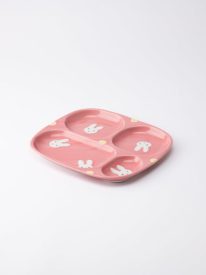
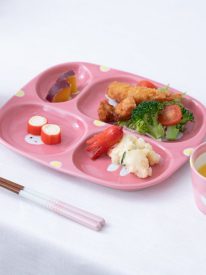
Children will loving eating from this adorable Hasami ware plate designed with little rabbit faces. The rabbits have a slightly differing expression with their dotted eyes and cute mouth and nose. The base of the plate is in a soft pink color with yellow polka-dots. The polka-dots are drawn in a thicker paint that gives…
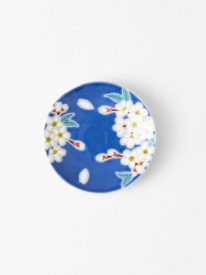
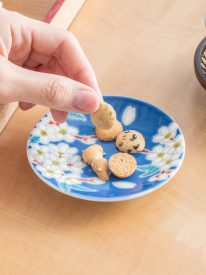
This is a Japanese small sauce plate featuring sakura (cherry blossoms). Cherry blossoms are the most popular flower among Japanese people. Nowadays it is a flower used for celebratory occasions such as passing exams, weddings, etc. Perfect size as a sauce plate. It is also versatile to serve cheese, nuts, condiments, and other small food….
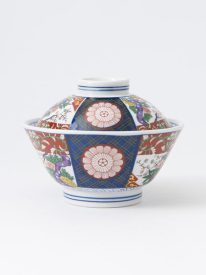
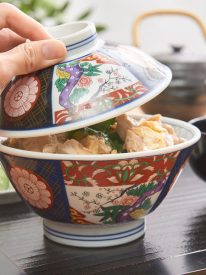
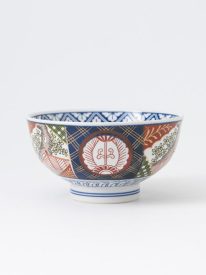
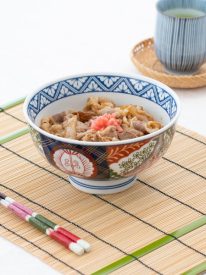
This small-sized Japanese donburi rice bowl features peonies, framed by dark blue, lattice-like patterns, all rendered in the traditional nishiki-e style. Nishiki-e, meaning “brocade picture,” is a multi-colored woodblock print technique that revolutionized ukiyo-e during the Edo period (1603-1868 CE), when most prints were in black and white. The lid helps keep the food warm and…
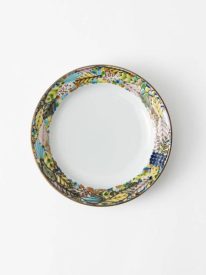
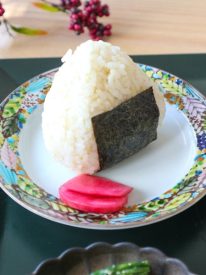
This nature-themed side plate is part of the Hamorebi series, meaning “sunlight filtering through leaves.” Each piece is beautifully hand-painted by female artisan Sakurai Chie. Using traditional Japanese coloring paintsa hallmark of Kutani warethe painted areas have a slightly raised texture, adding depth and character to the design. Perfect for serving small desserts, fruits, or…
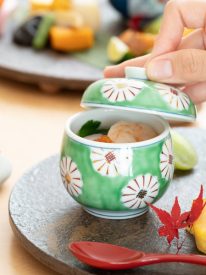
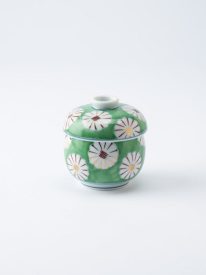
Enjoy delicious chawanmushi, Japanese steamed egg custard, in this beautiful Arita ware chawanmushi bowl. A scattering of golden chrysanthemums is carefully painted first, preserving their delicate beauty. A bright green sweeps in to fill the remaining space as the varied shades showcase exquisite hand-painted artistry. Versatile in size and shape, this piece can also hold…
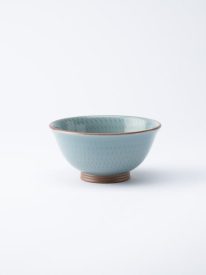
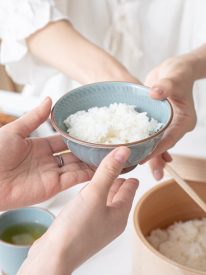
The meditative depth of celadon blue allures us into even forgetting that this a bowl of daily tableware. The bowl’s base is clear and smooth with its luminous shine, while the upper surface has delicately carved grooves of the technique of “Tobikanna” (chattered pottery). The rim exposes the outlines of the red clay, an exquisite…
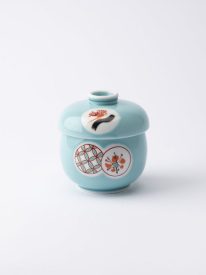
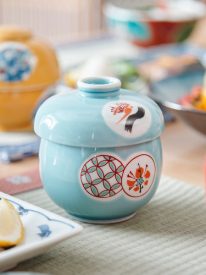
This chawanmushi (Japanese steamed egg custard) bowl has a traditional circle pattern called marumon. The transparent blue-green color unique to celadon porcelain is beautiful and contrasts elegantly with the red circle pattern. Tasei Kiln is a kiln that originally made chawanmushi bowls for restaurant use. If you make chawanmushi with it, you can enjoy authentic…
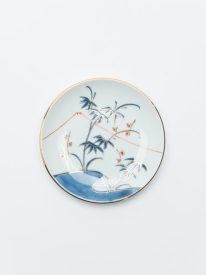
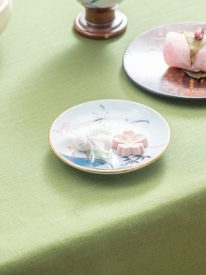
This sauce plate features a refined bamboo motif alongside an iconic depiction of Mount Fuji. In Japanese culture, bamboo is esteemed as an auspicious emblem that signifies longevity, and robust health. The technique displayed in this plate is called somenishiki where the plate is first glazed with white and blue patterns and then is further…
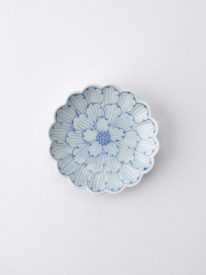
This easy-to-use chrysanthemum-shaped sauce plate showcases a boldly painted peony in blue. The chrysanthemum shape creates a gorgeous atmosphere. This plate is available in different designs, so you collect them for a more enjoyable table setting. Perfectly sized as a sauce plate, it is also versatile to serve cheese, nuts, condiments, and other small foods….
This regular-sized Japanese donburi rice bowl features sakura, or cherry blossoms, framed by dark blue, lattice-like patterns, all rendered in the traditional nishiki-e style. Nishiki-e, meaning “brocade picture,” is a multi-colored woodblock print technique that revolutionized ukiyo-e during the Edo period (1603-1868 CE), when most prints were in black and white. The bowl is perfect…

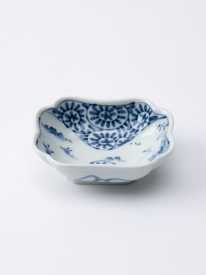 Rectangular Landscape and Vines Kobachi Small Bowl
 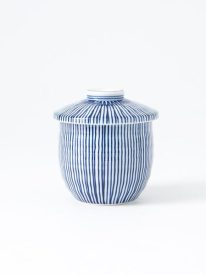 Fukuhou Kiln Tokusa Hasami Chawanmushi Bowl