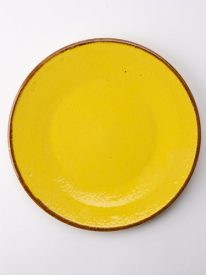
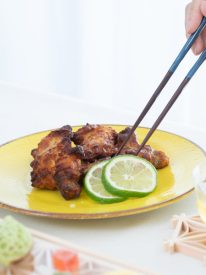
This yellow stoneware plate is eye-catching. The bumpy surface is unique to stoneware which has a rustic, warm, and chunky texture. The brown glazed rim enhances the vividness of the yellow color. in size is the perfect for a main plate for one person. It can also be served as a salad or appetizer for 2-3…
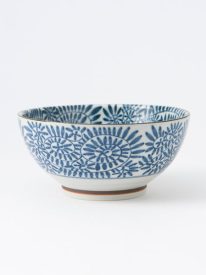
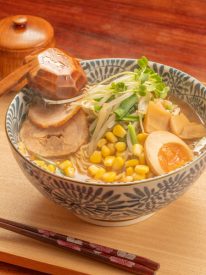
A multitude of leafy curlicues creates a stunning, deep indigo blue arabesque motif on this Japanese bowl. The design of simplified leaves over spiraling vines fills not only the outside, but also the inside the bowl, for a playful ornamental effect. Due to their natural tendency to keep growing, vines are considered to be a…
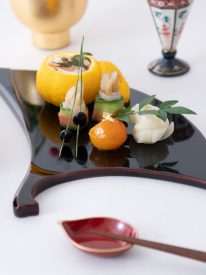
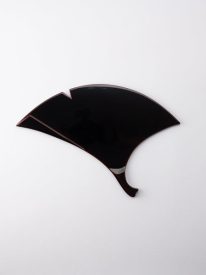
This beautiful glossy plate features a shape of a ginkgo leave that is finished with a lacquered technique called “Tame-nuri.” Tame-nuri is a lacquering technique in which the red color can be seen through the translucent lacquer by applying a coat of translucent black lacquer on top of a middle coat of red lacquer….
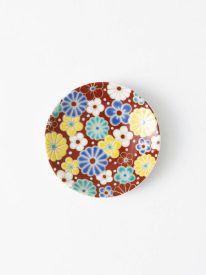
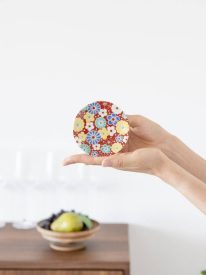
This Japanese sauce plate features an elegant pattern of plum blossoms and chrysanthemums, an auspicious combination in Japanese culture. Plum blossoms symbolize vitality as they bloom early, even in the cold of winter, while chrysanthemums are revered as one of the most noble and auspicious flowers, often referred to as the “king of a hundred…
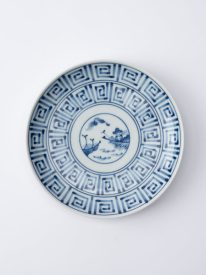
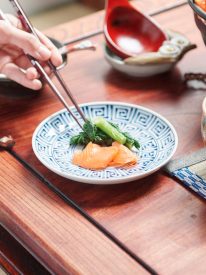
This round side plate is crafted by Takayama, a renowned maker of Hasami porcelain, and dyed with seitan, a kind of indigo. The bold geometric swirl patterns around the rim are complemented by a central design featuring ships and exotic landscapes, evoking the spirit of overseas trade and cultural exchange. In traditional Japanese culture, this…
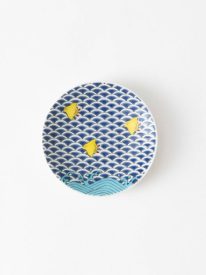
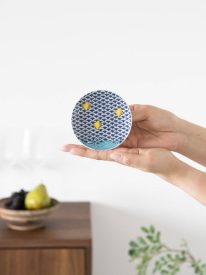
This sauce plate features a nami-chidori motifs, one of the traditional patterns in Japan. Each piece is hand-painted by brush, using Japanese coloring paint which is one of the remarkable features of Kutani ware, as you can see the painted part is slightly thickened. The size is perfect as a sauce plate, condiments plate, relish…
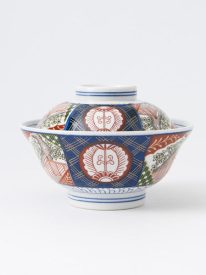
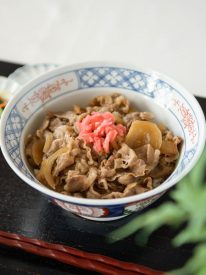
This regular-sized Japanese donburi rice bowl features sakura, or cherry blossoms, framed by dark blue, lattice-like patterns, all rendered in the traditional nishiki-e style. Nishiki-e, meaning “brocade picture,” is a multi-colored woodblock print technique that revolutionized ukiyo-e during the Edo period (1603-1868 CE), when most prints were in black and white. The lid helps keep the…
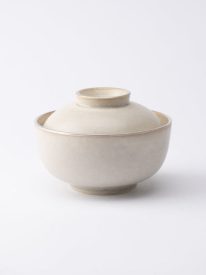
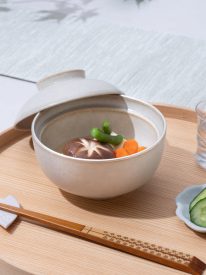
Kobachi bowl with a lid by MERU, a Mino ware brand.The shape used decades ago as traditional Japanese restaurant tableware has been rearranged in a modern way. The expression of soft ivory color and ingenious design give it a refined impression.Luxurious genuine silver is used for the overglaze painting, and the high quality silver…
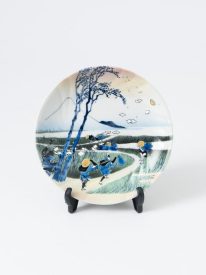
The plate depicts Hokusai’s famous Ukiyoe work, “Sunshu Ejiri“. “Ejiri” is located in what is now Shimizu City, Shizuoka Prefecture. This work shows Hokusai’s talent to capture the moment, such as the lively motion of wayfarer withstanding the wind. With the combination of Kutani ware with the masterpiece of the genius artist Hokusai Katsushika, the…
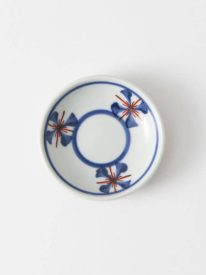
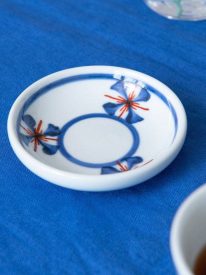
This sauce plate features a hand-painted abstract flower pattern in indigo and red colors adding the warmth and charm of hand-painting. Its compact size and slight depth makes it ideal for serving sauces, garnishes, or small snacks like nuts and candies. You can also use it to present small portions of food or relishes, placing it…
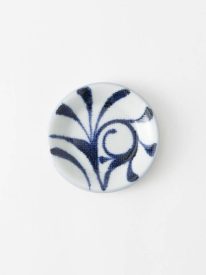
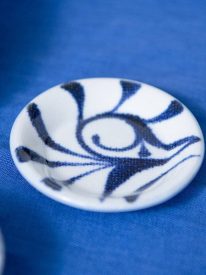
This sauce plate features a hand-painted arabesque pattern, a classic motif of Tobe ware. The deep indigo shade adds a modern touch, while the textured surface, reminiscent of woven cloth, brings warmth and a unique tactile charm to the piece. Its compact size makes it ideal for serving sauces, condiments, or small snacks. You can…
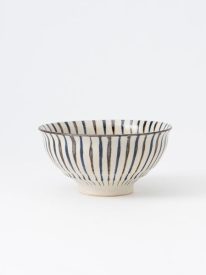
This small-sized donburi bowl features the traditional Japanese tokusa “horsetail” pattern with vertical stripes in dark blue and earthy brown. The rich, rusty hue of the brown, due to its high iron content, gives the bowl a warm, inviting finish. Beloved since the Edo period (1603-1868 CE), this pattern of straight vertical lines is inspired by…


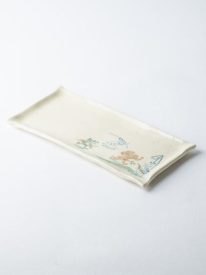 Tosen Kiln Kozan-ji Temple Choju Giga Kiyomizu Ware Rectangle Plate 10.4in
 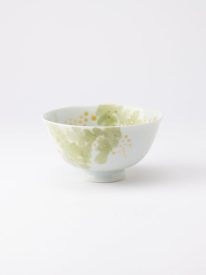 Mimosa Japanese Rice Bowl