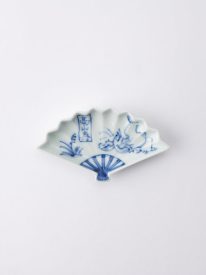
This unique fan-shaped sauce plate features anthropomorphic animals from the famous caricature scroll “Choju-Giga,” painted between the mid-12th and mid-13th centuries which is designated as a national treasure. Next to the anmials, Kozan-ji, the name of a World Heritage temple in Kyoto that owns this scroll is written in Japanese. The plates are available in different…
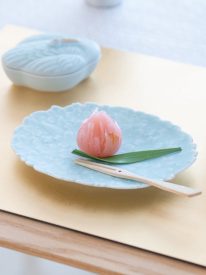
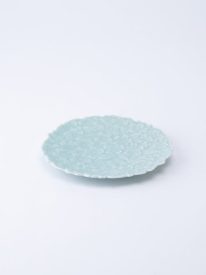
The graceful matte celadon texture of this sakura, or cherry blossom, side plate conveys tenderness the moment you touch it. Cherry blossoms are delicately engraved with varying depths, creating a harmonious interplay of deep and shallow patterns, beautifully enhanced by the magnificent shading of the celadon porcelain. It is perfect as an additional plate for…
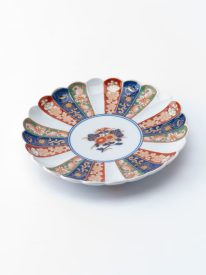
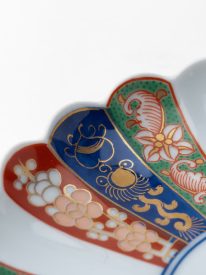
This gorgeous side plate showcases a modern interpretation of classic old Imari patterns. A harmonious blend of vivid colors, gold, and white lends it a refined appealperfect for everyday use or as a special gift for anyone who loves Japanese arts and crafts. Its versatile size suits main dishes, sides, and desserts alike. Thanks to…
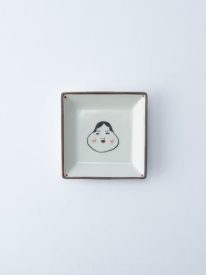
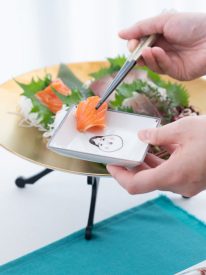
This square sauce plate features a playful depiction of okame, a traditional Japanese mask motif known for its cheerful expression and association with good fortune. Characterized by a round face, short hair, and rosy cheeks, okame is depicted here with a warm smile and full red lips, bringing charm and lightheartedness to the design. Perfect…
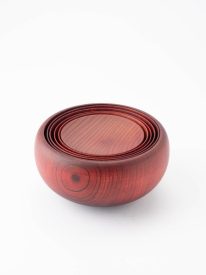
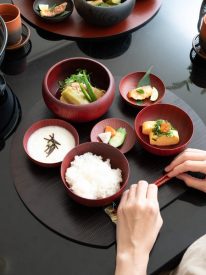
Oryoki is a functional set of bowls inspired by Zen Buddhist principles, designed to minimize waste with a functional, minimalist style that suits modern tables. The set stacks perfectly, with smaller bowls nesting neatly inside the largest, ensuring easy storage and portability. This compact design allows even a six-layer set to be stored effortlessly, making…
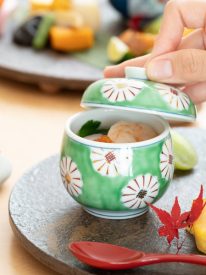
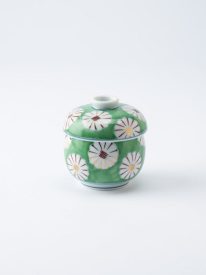
Enjoy delicious chawanmushi, Japanese steamed egg custard, in this beautiful Arita ware chawanmushi bowl. A scattering of golden chrysanthemums is carefully painted first, preserving their delicate beauty. A bright green sweeps in to fill the remaining space as the varied shades showcase exquisite hand-painted artistry. Versatile in size and shape, this piece can also hold…
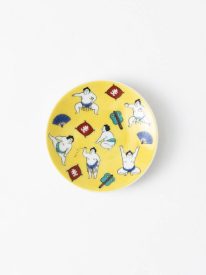
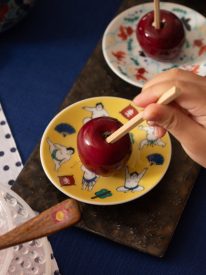
This is a sauce plate featuring sumo wrestlers, a symbol of good luck in Japan since the Edo period (1603 -1868 CE). It’s the perfect size for use as a sauce plate, and it’s also versatile enough to serve cheese, nuts, condiments, and other small foods. Each piece is uniquely hand-painted by a dedicated artisan…
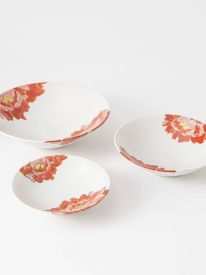
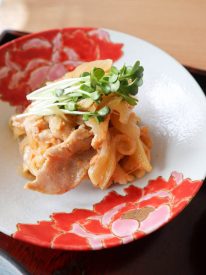
This gorgeous Japanese bowl set adorned with a bright red peony is made by Sato Tsuyoshi, a Kutani ware artisan known for his use of bright colors and florals. With brush painting, which is a characteristic of Kutani ware, a thick peony motif is drawn as if it bloomed on bowls, and the center is…
This sauce plate has the design of Katsushika Hokusai’s iconic print, “Under the Wave Off Kanagawa.” Katsushika Hokusai is one of the most renowned ukiyo-e artists of the late Edo Period (1603-1868). While Kutani Ware is loved for its vibrant colors, the hachi-kutani series features sauce plates all in white. They are made at Seikou Kiln. Seikou Kiln…
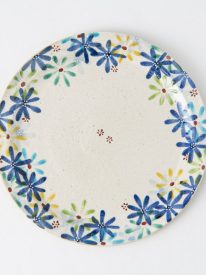
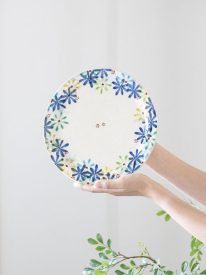
This plate has a warm texture of stoneware and is decorated with lovely hand-painted blue flowers around the rim. It is made by Kokuzou Kiln, known for its gentle and warm stoneware, and features beautiful water color-like paintings and elegant designs which blend in well with our modern life style. The large size of this…
This small porcelain plate has auspicious design patterns: “Nami Chidori,” plovers and waves, and “Karakusa,” an arabesque design. Nami Chidori, a combination of a plover and a wave, means “to overcome rough seas together.” Arabesque designs are considered a symbol of longevity and prosperity of offsprings, as arabesque, the vine, extends its stems in all directions….
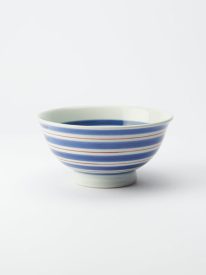
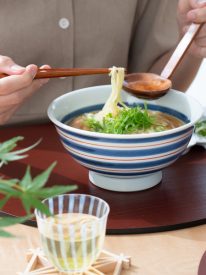
Thick blue and fine red lines alternate around the whole exterior of snow-white porcelain of this donburi bowl. The blue lines are drawn using the traditional gosu pigment, while the red accents enhance the design. The hand-painted blue patterns are made using the tsuketate technique, where each stroke is applied without outlines. This gives the bowl…

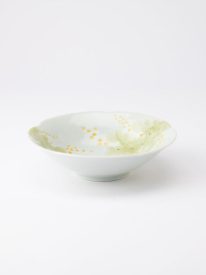 Mimosa Bowl
 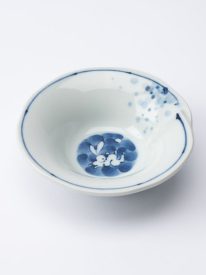 Swirled Rim Rabbit Kobachi Small Bowl