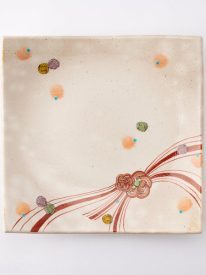
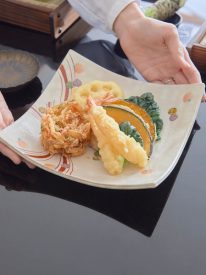
This square plate is decorated with gorgeous and lovely mizuhiki motifs. The square dish with warped edges is stylish yet soft, and matches the graceful knot pattern. The festive motif is perfect for New Year and celebratory occasions. Kanazawa, the birthplace of Kutani ware, is known for its unique and rare traditional craft called Kaga Mizuhiki. Made…
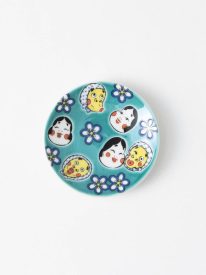
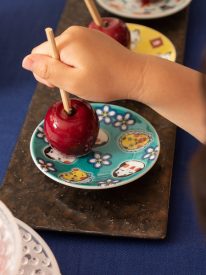
This Japanese sauce plate features the humorous okame (female) and hyottoko (male) masks, traditionally used as clown-like characters in kaguraa sacred dance and song dedicated to the gods at Shinto shrines. These masks are believed to bring good fortune and ward off evil. With its perfect size for sauces, this plate is also versatile for…
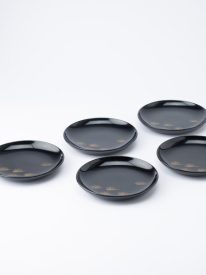
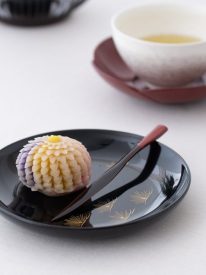
These Echizen Lacquerware side plates are exquisite items combining the elegant black shine of lacquer with the detailed gold designs made with “Chinkin.” “Chinkin” is a traditional technique used to create detailed designs with gold and silver on lacquerware surfaces. Unlike Maki-e, where gold leaves and powder are directly applied to a surface, for Chinkin, shallow…
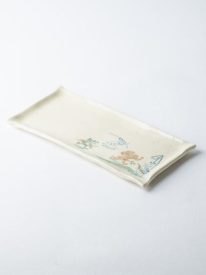
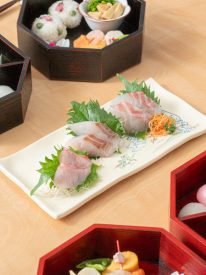
Featuring the distinctive “nami-yu” glaze, which is made from the ashes of the Kyoto forest, this rectangle plate has a natural base color in yellowish cream-white. It depicts the famous illustrated scroll named “Choju Giga” which is a caricature picture scroll depicting anthropomorphic animals and their playfulness, dating from the 12th to 13th centuries. Founded in…
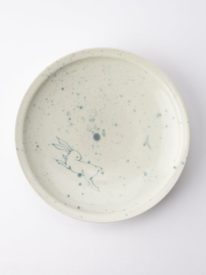
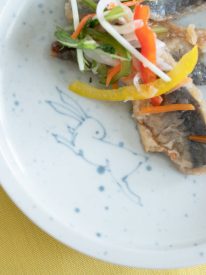
This is a Arita ware plate by Ri Sanpei (Yi Sam-pyeong) Kiln, a brand by the descendant of Yi Sam-Pyeong. The plate is represented as the moon, with a rabbit hopping around on top of the crater-like spots painted on it. This design is created by using a paper pattern in the shape of a rabbit and…
This small porcelain plate has auspicious design patterns: “Nami Chidori,” plovers and waves, and “Karakusa,” an arabesque design. Nami Chidori, a combination of a plover and a wave, means “to overcome rough seas together.” Arabesque designs are considered a symbol of longevity and prosperity of offsprings, as arabesque, the vine, extends its stems in all directions….
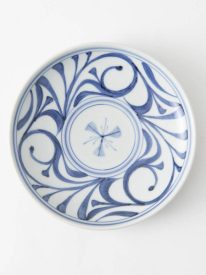
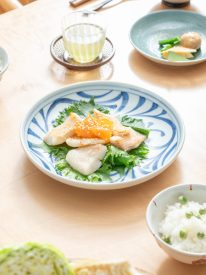
This beautiful dinner plate features a hand-painted arabesque pattern, a signature motif of Tobe ware. The indigo shade adds a contemporary touch to the traditional design. With its thick, rounded rim, this plate brings a soft, welcoming feel to your table. Durable and crafted for long-term use, it’s ideally sized for serving salads, appetizers, sushi…
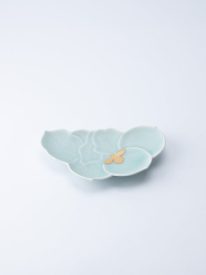
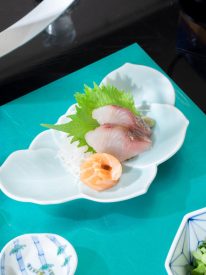
The graceful matte celadon texture of this persimmon-shaped plate conveys tenderness the moment you touch it. Accented with gold, the combination with the pale blue is graceful and sophisticated. The persimmon is a familiar fall delicacy that has been cultivated throughout Japan since ancient times because it is suited to the Japanese climate. With its…
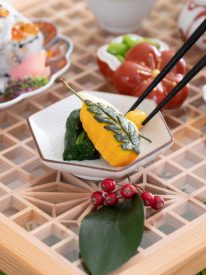
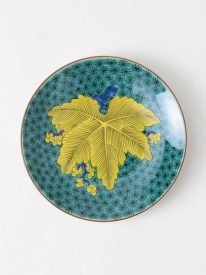
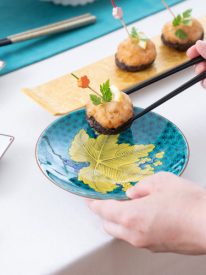
The side plate features a large yellow sycamore leaf in ko-Kutani (old Kutani) style, dating back to mid-17th century, depicting the nature-themed daring design and distinctive bright colors of Kutani ware. With a diameter of 15 cm (5.9 in), it is perfect as an extra plate for the side dishes or desserts. You can use…
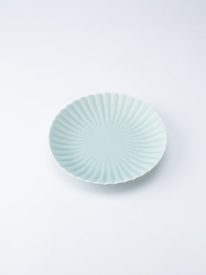
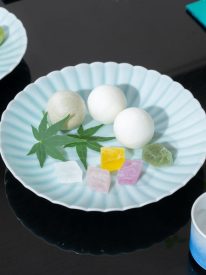
The graceful matte celadon texture of this chrysanthemum-shaped main plate conveys tenderness the moment you touch it. The chrysanthemum petals are intricately engraved with varying depths, creating a harmonious interplay of detailed patterns beautifully enhanced by the exquisite shading of the celadon porcelain. Perfect for serving main courses in a Japanese meal or desserts, this…
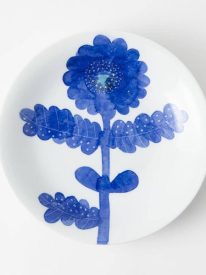
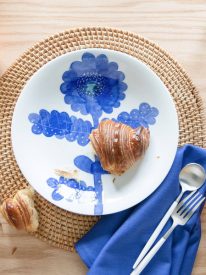
This beautiful round plate features blue flowers as if painted with watercolors. The bright design resembles blooming flowers, bringing a joyful atmosphere to the table. It is painted by the female artist, Alyne Ohigashi, who was born in the Philippines. She uses a unique technique called washi-zome (Japanese paper dyeing) and continues her ideal stoneware-making in…
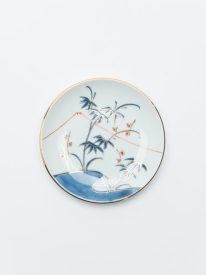
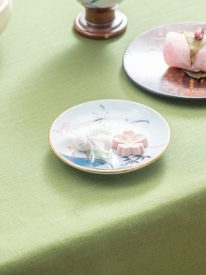
This sauce plate features a refined bamboo motif alongside an iconic depiction of Mount Fuji. In Japanese culture, bamboo is esteemed as an auspicious emblem that signifies longevity, and robust health. The technique displayed in this plate is called somenishiki where the plate is first glazed with white and blue patterns and then is further…

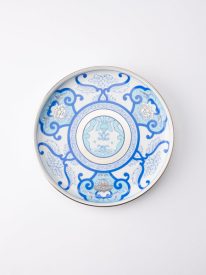 Japan Blue Old Imari Floral Pattern Side Plate 7.5 in
 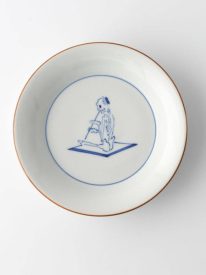 Skeleton Round Side Plate