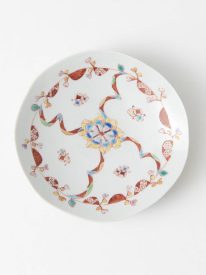
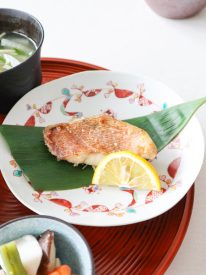
This side plate features a beautiful contrast of brilliant colors on a white canvas, making the most of the distinctive texture of porcelain. The fine touch of flowers are hand-painted by an artisan from Ginshu kiln, which is especially known as its romantic and playful painting. The painted areas have a slightly raised texture, a…
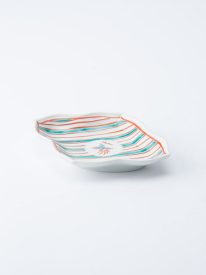
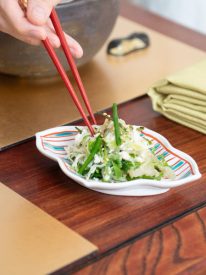
This is a side plate with vibrant colors, featuring hand-painted images that leave a lasting impression and evoke a soft, comforting atmosphere. The unique silhouette of this plate is called “Hishi-gata” in Japanese, inspired by the leaves of the diamond-shaped plant called “Hishi.” It is known for its robust vitality, has been favored as a…
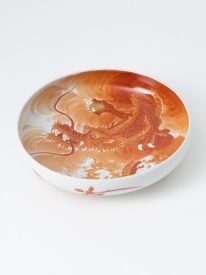
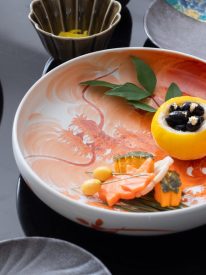
This Japanese bowl showcases a stunning depiction of a Japanese dragon, meticulously painted by Kutani ware artist Fukuda Yoshinori. Its size makes it ideal for use as a serving bowl. Fukuda Yoshinori, a designated Traditional Craftsman, has received numerous awards in prestigious art exhibitions and is highly esteemed both in Japan and internationally. He has…
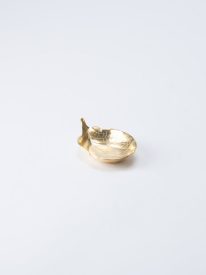
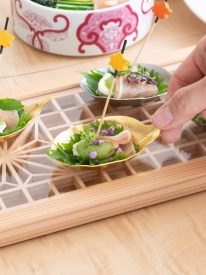
This gold amuse bouche spoon rests in the shape of a delicate persimmon leaf. It has a depth of 1.5cm(0.5in)perfect for carrying food without worries of spillage. The tapered base of the leaf is easy to hold and serves as a handle for the spoon. The veins of a persimmon leaf are recreated faithfully, a…
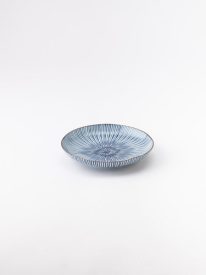
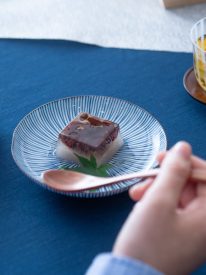
This small side plate features a “Tokusa” line extending from the center and a petal-like design. The 5.1in diameter is just right for serving appetizers small snacks and desserts. The “Tokusa” series by the Hasami ware company Fukuhou Kiln was first produced in 1976. Since then, it has become a long seller as a standard…
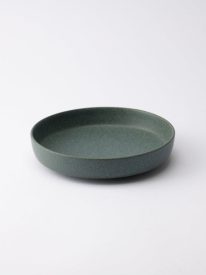
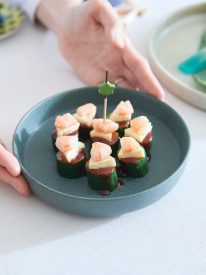
This is an easy-to-use plate characterized by a moody green color, reminiscent of a deep forest. Instead of shiny, bright gems, the design is chic and modern, featuring subdued tones and matte textures like Jade gemstones. Measuring D16.4cm (6.5in), it is suitable for use as a serving dish for one person or for placing salads, appetizers,…
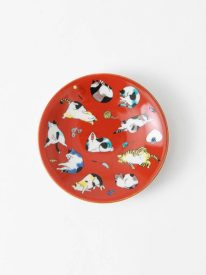
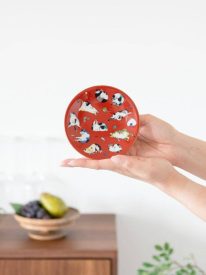
This sauce plate features the Mokubei-style painting of lovely cats, just relaxing and sleeping in a nonchalant posture. Such daily lives of cats and their favorite things like fish, balls of yarn, and toys are playfully depicted on this plate. Perfectly sized as a sauce plate, it is also versatile to serve cheese, nuts, condiments,…
This sauce plate features a refined pine, bamboo, and plum motif alongside an iconic depiction of Mount Fuji. In Japanese culture, pine, bamboo, and plum are regarded as auspicious symbols that herald both good fortune and longevity The technique displayed in this plate is called somenishiki where the plate is first glazed with white and…
This dinner plate features a stunning blue gradient reminiscent of the tranquil shallows of the sea, bringing a serene and refreshing ambiance to your table setting. Designed for durability and practicality, it is a preferred choice in restaurants across Japan and internationally. Its generous size makes it ideal for serving main dishes, enhancing the presentation…
This small porcelain plate has auspicious design patterns: “Nami Chidori,” plovers and waves, and “Karakusa,” an arabesque design. Nami Chidori, a combination of a plover and a wave, means “to overcome rough seas together.” Arabesque designs are considered a symbol of longevity and prosperity of offsprings, as arabesque, the vine, extends its stems in all directions….
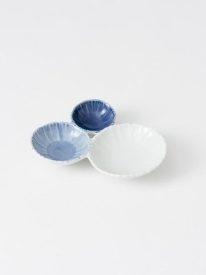
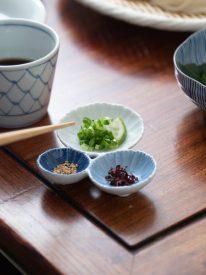
This unique plate is shaped like three flowers connected together, each in a different color: white, light blue, and blue. Its shape and design make it perfect for serving soy sauce and small relishessuch as spring onions, wasabi, ground ginger, and sesame seedswhich are commonly served alongside soy sauce when enjoying sashimi or sushi.
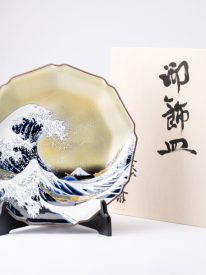
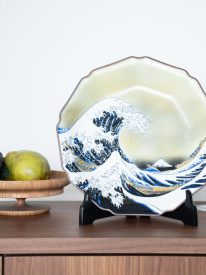
The large plate features the Japanese artist Katsushika Hokusai’s ukiyo-e painting The Great Wave, which depicts surging waves and three boats, and silently standing Mount Fuji in the distant background under the golden sky. Throughout his life, Hokusai painted waves as the main subject of his paintings along with Mount Fuji. Hokusai’s expression of the…

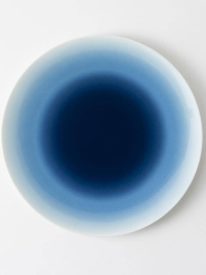
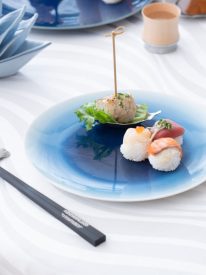
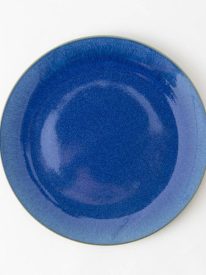 Grand Bleu Dinner Plate 9.2 in
 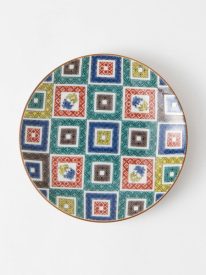 Color Tiles Side Plate
 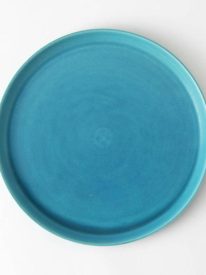 Tabal Dinner Plate