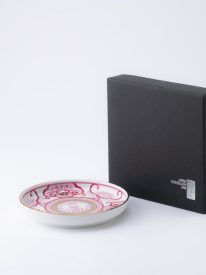
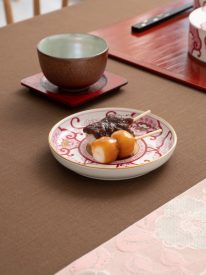
A small side plate in burgundy, perfect for single servings. Although small in size, the old Imari floral patterns are painted with precision which shows the high quality craftsmanship of the Arita Porcelain Lab tableware. Part of the Japan Autumn series, this piece showcases the beauty of Japanese autumn leaves. All colors in this series are…
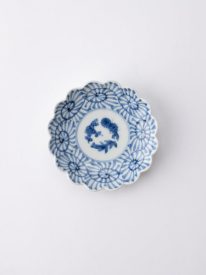
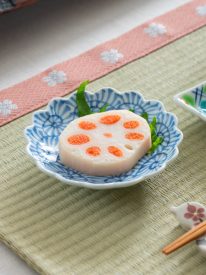
This easy-to-use chrysanthemum-shaped sauce plate showcases a design called an octopus arabesque pattern among arabesque patterns. The name “octopus arabesque” comes from the fact that the shape of the spiraling vine with leaves on the outside resembles the octopus’s legs. It is one of the classic patterns and is found on many Japanese tableware. The plates…
This small plate is shaped like a sword guard (tsuba), a traditional motif that carries a sense of history and craftsmanship. The design is refreshed with vibrant coloring, giving it a modern and stylish impression. Perfectly sized as a sauce plate, it is also versatile enough to serve cheese, nuts, condiments, and other small bites….
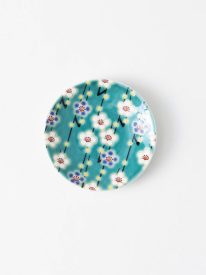
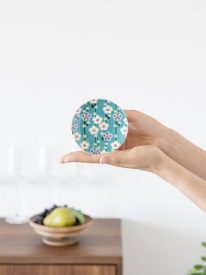
This is a Japanese small plate with a plum blossom pattern on a beautiful blue-green background. Plum blossoms have been a favorite flower in Japan for a long time, and are a motif often used in kimonos and tableware. The plum blossoms are considered to be auspicious, as they are the first to bloom…
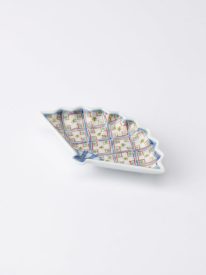
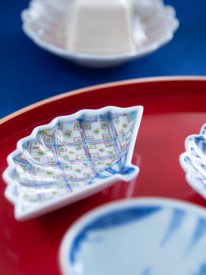
This unique fan-shaped sauce plate features a classic, colorful geometric pattern. Sarasa refers to fabric products made of cotton dyed with multi-colored patterns, which originated in India. This plate is available in different designs, so you can collect them for a more enjoyable table setting. Perfectly sized as a sauce plate, it is also versatile to…
This deep dinner plate in a shiny dark blue color has an exquisite silhouette with wide rims and and a beautiful curve. The size is perfect for serving a salad, appetizers, sunomono “vinegared food,” aemono “seasoned or sauced food” and nimono “simmered food.” It is great for not only Japanese food, but also various food…
This cute flower-shaped white sauce plate has Ishidatami (cobblestone) designs which are believed to bring good luck in terms of eternity, development, expansion and prosperity because of its continuity pattern. This cobblestone pattern was also adopted as the emblem for the 2020 Tokyo Olympics. While Kutani ware is loved for its vibrant colors, the hachi-kutani series…
This beautiful white plate is in the shape of a guard on the Japanese sword with many good luck charms such as birds, flowers, Shippou pattern and Takeda-bishi pattern. The pattern has a design of a bird perched on a three with blossoms, giving an image of beautiful scenery. Shippou is a pattern of circles…
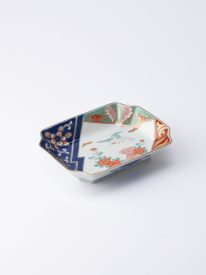
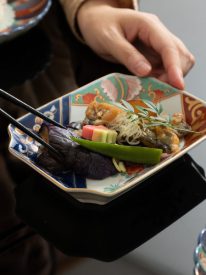
This beautiful rectangular plate offers a modern interpretation of traditional old Imari patterns. Reviving a design from 250 years ago, it depicts peonies in full bloom against a fence, alongside a bird about to land on a stack of hay once used to protect plants from heavy winter snow. The authentic feel of old Imari…
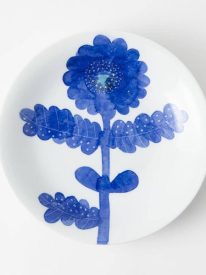
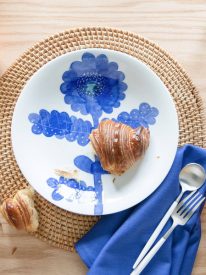
This beautiful round plate features blue flowers as if painted with watercolors. The bright design resembles blooming flowers, bringing a joyful atmosphere to the table. It is painted by the female artist, Alyne Ohigashi, who was born in the Philippines. She uses a unique technique called washi-zome (Japanese paper dyeing) and continues her ideal stoneware-making in…
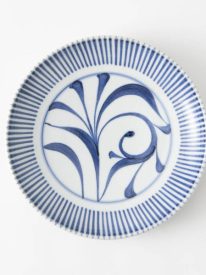
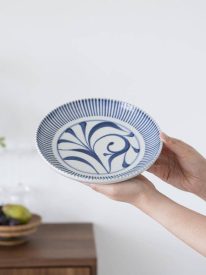
This round dinner plate features an arabesque pattern, a signature motif of Baizan Kiln, accented by a tokusa striped edge that frames the design with elegance. The hand-painted nature motifs add a warm, personal touch, showcasing the artisan’s skill. Perfectly sized for serving salads and main dishes, its traditional, refreshing blue pattern and smooth porcelain…
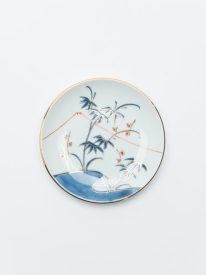
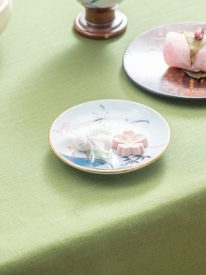
This sauce plate features a refined bamboo motif alongside an iconic depiction of Mount Fuji. In Japanese culture, bamboo is esteemed as an auspicious emblem that signifies longevity, and robust health. The technique displayed in this plate is called somenishiki where the plate is first glazed with white and blue patterns and then is further…

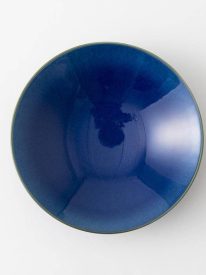
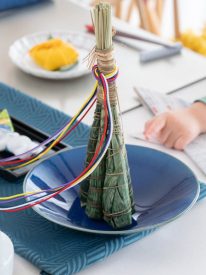
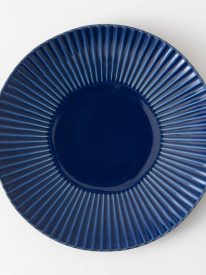 SHINOGI Lapis Lazuli Dinner Plate
 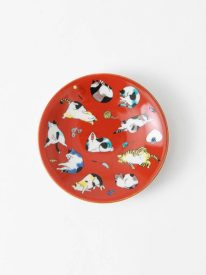 Sprawling Cats Sauce Plate
 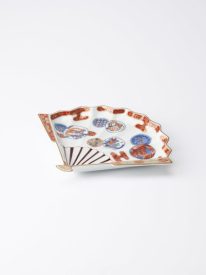 Old Imari Akadami Phoenix Fan-shaped Dinner Plate
 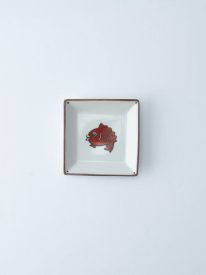 Sea Bream Square Sauce Plate