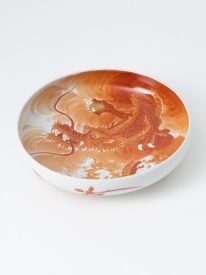
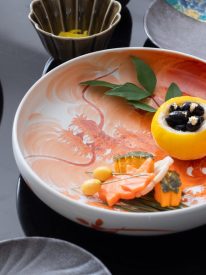
This Japanese bowl showcases a stunning depiction of a Japanese dragon, meticulously painted by Kutani ware artist Fukuda Yoshinori. Its size makes it ideal for use as a serving bowl. Fukuda Yoshinori, a designated Traditional Craftsman, has received numerous awards in prestigious art exhibitions and is highly esteemed both in Japan and internationally. He has…
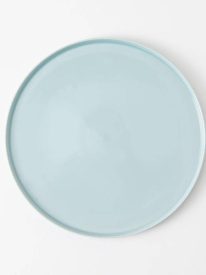
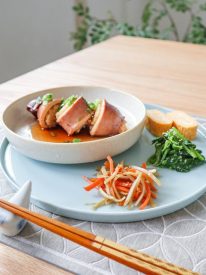
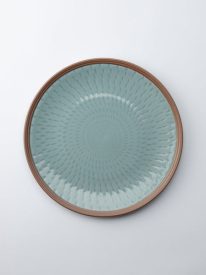
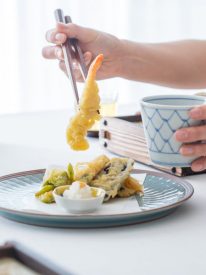
This Japanese plate has light shades of celadon glaze that looks like a white porcelain covered with thin ice. It is 24 cm (9.4 in) diameter and the refreshing look is perfect as sashimi platter and sushi platter. With the combination of their deep knowledge about clay and the technique of skilled craftsmen, this plate…
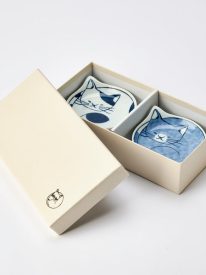
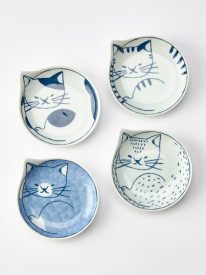
This charming set features four Japanese sauce plates adorned with beautifully detailed, hand-drawn cat illustrations. Each plate showcases a different cat with unique fur patterns, all in an endearing curled-up position. The raised ears of the cats bring personality to each feline friend and add a playful touch to the plate’s design. The smooth porcelain…
Featuring a round plate exposing the outlines of the red clay, an exquisite balance between the elegance of emerald celadon and the rustic red soil. The glazed surface is smooth with shallow grooves characteristic of “Tobikanna” (chattered pottery). A combination of a century old tradition of Kyoto Celadon pottery, and the folk craft of Kyushu Koishikawara ware,…
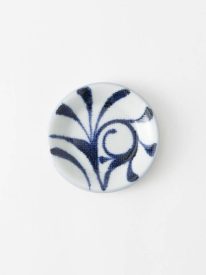
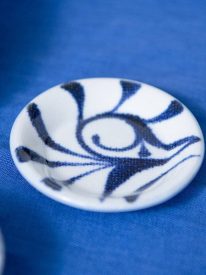
This sauce plate features a hand-painted arabesque pattern, a classic motif of Tobe ware. The deep indigo shade adds a modern touch, while the textured surface, reminiscent of woven cloth, brings warmth and a unique tactile charm to the piece. Its compact size makes it ideal for serving sauces, condiments, or small snacks. You can…
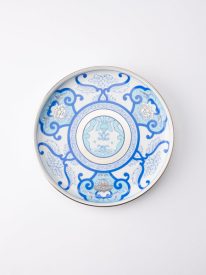
This is a beautiful side plate decorated in an old Imari floral pattern painted with precision.The blue tones are arranged in a modern way, and each piece is individually brushed by craftsmen to create an incomparable elegance. Many of the designs are arranged with traditional auspicious designs, making the tableware suitable for the modern dining…
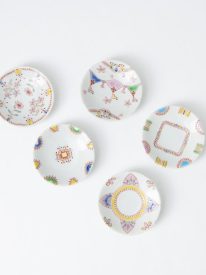
This set of five Japanese sauce plates features colorful patterns painted by artisans of Ginshu Kiln, which is especially known as its romantic and playful pastel colored painting. The painted areas have a slightly raised texture, a characteristic of Kutani ware, which is traditionally hand-painted using Japanese coloring pigments and a brush. Perfect size as…
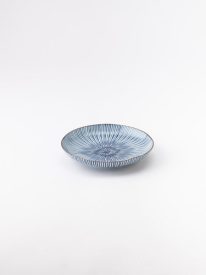
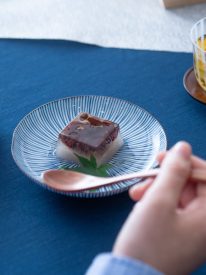
This small side plate features a “Tokusa” line extending from the center and a petal-like design. The 5.1in diameter is just right for serving appetizers small snacks and desserts. The “Tokusa” series by the Hasami ware company Fukuhou Kiln was first produced in 1976. Since then, it has become a long seller as a standard…
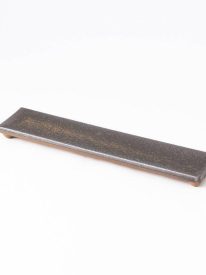
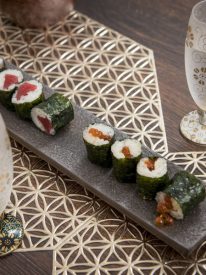
This long rectangular platter has a beautiful matte and rough texture, and the chic colors mixed with gray and brown give a sense of wabi sabi and create a high-quality dining table. It is suitable for serving appetizers. It is also recommended to serve a few pieces of sushi or sashimi. With its slim shape, you…
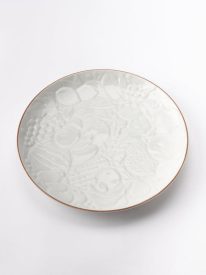
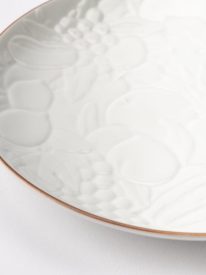
This fruit relief plate is crafted using pressure molding, finished with a glossy white glaze, and accented by a hand-painted brown rim. Fruits have long been featured in traditional patterns as symbols of immortality and the prosperity of future generations. In Kutani ware, motifs like melons and grapes have been passed down through the ages….
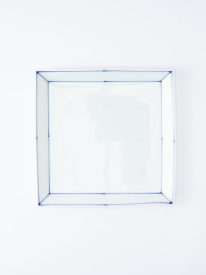
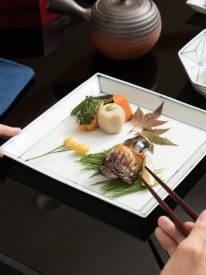
This square plate is perfectly suited for serving main dishes. The lines drawn along the rim accentuate the dish elegantly. Employing a technique of “Sometsuke” (underglaze cobalt blue) painting on a base brilliantly fired to a pure white, each piece is meticulously crafted, embodying the essence of Seto Sometsuke ware. Since the painting is done…
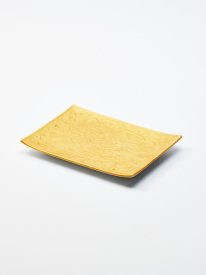
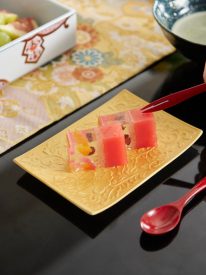
With its delicate, almost lace-like monochromatic elegance, this gold-colored plate is a unique take on a floral pattern from a dyeing technique originally imported to Japan from India. Sarasa, better known in the West as chintz or calico, is presented here in a luxurious and sophisticated style. Sarasa patterns were seen in dyed cotton textiles…


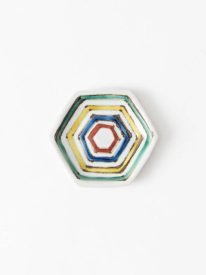 Geometric Shape Sauce Plate