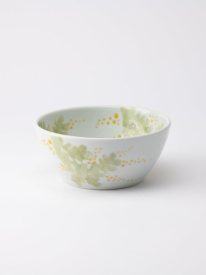
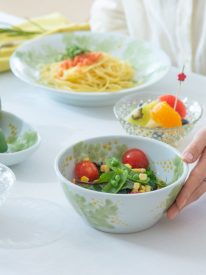
A beautiful mimosa design is painted on a white porcelain canvas. Small dots painted in gold are scattered throughout the design, adding a discreet accent to the overall design. The refreshing impression of this donburi bowl will enlighten your table. Suitable for rice bowl recipes using about 1 cups (1 gou) of rice. This size…
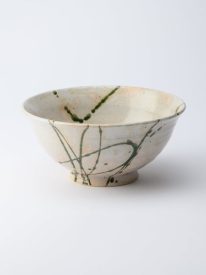
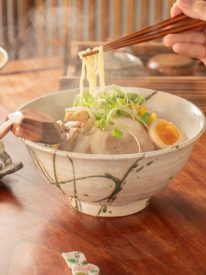
This donburi fascinates with its elegant water plant motif, highlighted with brown splashes. The green glaze and abstract brushstrokes are characteristic of Yashichida Oribe ware. Tsujii Musashi, inspired by nature, infuses his creations with a subtle, rustic charm. The bowl’s refined beauty is further enhanced by gohondedelicate pinkish spots that appear naturally after the firing…
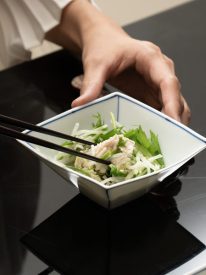
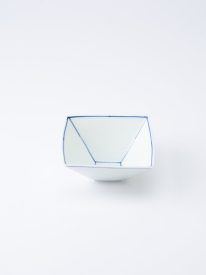
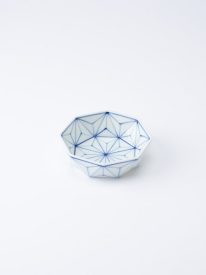
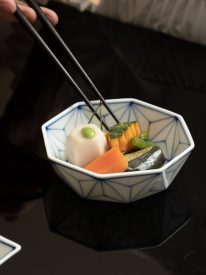
This kobachi bowl is perfectly suited for serving side dishes. The lines drawn along the rim accentuate the bowl elegantly. Employing a technique of “Sometsuke” (underglaze cobalt blue) painting on a base brilliantly fired to a pure white, each piece is meticulously crafted, embodying the essence of Seto Sometsuke ware. Though square, the form exhibits…
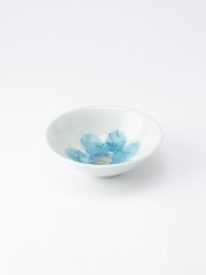
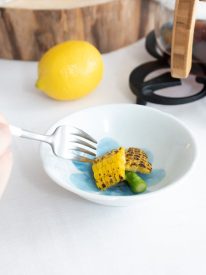
This charming Tobe ware kobachi bowl features a beautiful flower in gentle light blue color. The subtle color decorates the blooming flower painted on a white porcelain canvas. Small dots painted in gold are scattered, adding a discreet accent to the overall design. The detailed design of the rim adds to the floral motif of this kobachi…
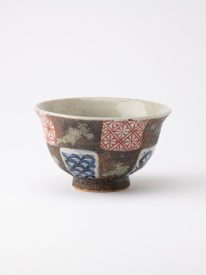
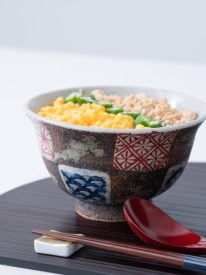
This regular-sized donburi bowl features a charming checkered pattern over an unglazed rustic brown background. Adorned with various traditional designs like the asanoha “hemp leaf” pattern and seigaiha “wave” pattern, each symbolizes continuity and prosperity, carrying the auspicious wish that good fortune will last forever. Its depth helps retain the food’s warmth while adding a…
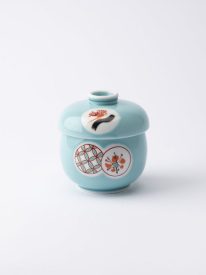
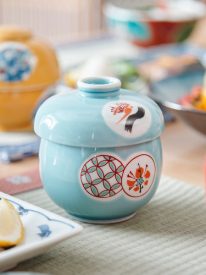
This chawanmushi (Japanese steamed egg custard) bowl has a traditional circle pattern called marumon. The transparent blue-green color unique to celadon porcelain is beautiful and contrasts elegantly with the red circle pattern. Tasei Kiln is a kiln that originally made chawanmushi bowls for restaurant use. If you make chawanmushi with it, you can enjoy authentic…
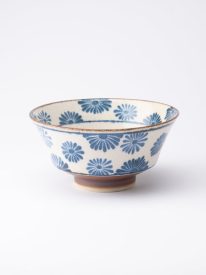
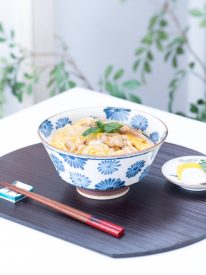
As suggested by its name nanpu, meaning “southern winds,” this bowl features a design that evokes the feeling of a warm breeze. Blue chrysanthemum flowers are scattered throughout the design, giving the design a natural comfort. The slightly warped rim allows for easy stacking with bowls of the same shape, making storage more convenient. This bowl is…
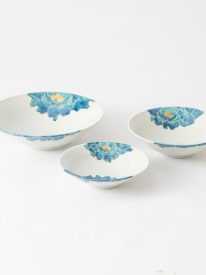
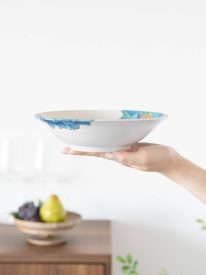
This gorgeous Japanese bowl set adorned with a bright blue peony is made by Mr. Tsuyoshi Sato, a Kutani ware artisan known for his use of bright colors and florals. With brush painting, which is a characteristic of Kutani ware, a thick peony motif is drawn as if it bloomed on bowls, and the center…
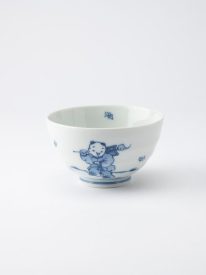
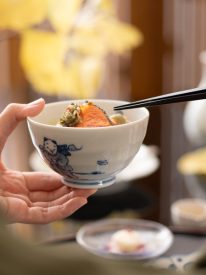
This splendid rice bowl, adorned with delicately painted karako, Chinese-style playful children, encapsulates the essence of playful elegance. Meanwhile, the interior features a single butterfly, displaying both a narrative quality and refined simplicity. Holding this charming bowl in your hand, you can feel the lightness and thinness characteristic of Mikawachi ware. It displays an exquisite gradation,…
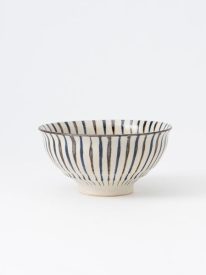
This small-sized donburi bowl features the traditional Japanese tokusa “horsetail” pattern with vertical stripes in dark blue and earthy brown. The rich, rusty hue of the brown, due to its high iron content, gives the bowl a warm, inviting finish. Beloved since the Edo period (1603-1868 CE), this pattern of straight vertical lines is inspired by…
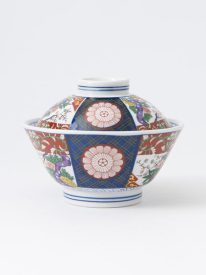
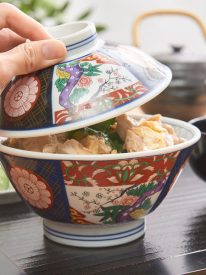
This small-sized Japanese donburi rice bowl features peonies, framed by dark blue, lattice-like patterns, all rendered in the traditional nishiki-e style. Nishiki-e, meaning “brocade picture,” is a multi-colored woodblock print technique that revolutionized ukiyo-e during the Edo period (1603-1868 CE), when most prints were in black and white. The lid helps keep the food warm and…
This Kobachi bowl features the traditional Japanese hemp leaf pattern. The hemp leaf is considered as a symbol of good luck meant to ward off evil and is commonly used on kimono and tableware. Employing a technique of “Sometsuke” (underglaze cobalt blue) painting on a base brilliantly fired to a pure white, each piece is…


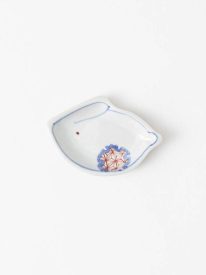 Rabbit Sauce Plate
 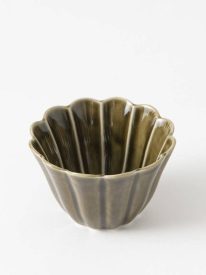 Kikuwari Khaki Kobachi Small Bowl 3.9in