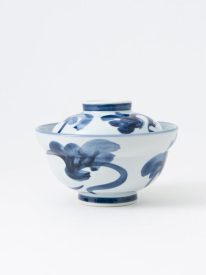
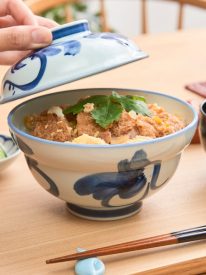
This small-sized Japanese donburi rice bowl features hand-painted turnips in indigo blue. The skilled brushwork exudes a sense of dynamism, perfectly capturing a blend of charm and grace. The lid ensures the dish remains flavorful by keeping the food warm and steaming the ingredients. The bowl is perfect for a variety of donburi dishes, such…
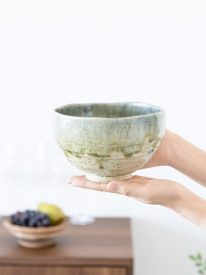
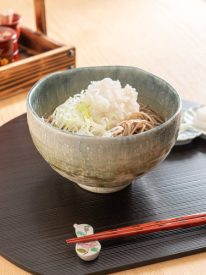
With its captivating green ash glaze and natural stoneware texture, this large donburi bowl exudes an organic charm and a comforting warmth, perfectly reflecting the artistry of the handmade process. The bowl is perfect for a variety of donburi dishes, such as gyudon and oyakodon, and for noodle dishes like udon or soba. With its…
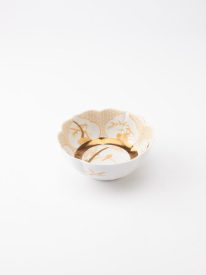
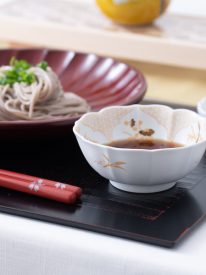
Hundreds of years of skill and technique are carefully crafted in this hand-size kobachi small bowl in golden yellow. The design is arranged with traditional auspicious patterns, making the tableware suitable for the modern dining scene. The sides of the bowl are shaped like the petals of a flower giving the bowl an elegant look….
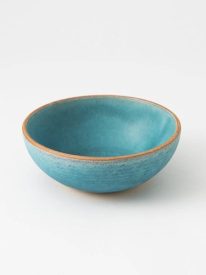
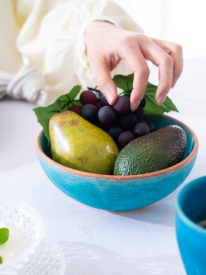
This simple and modern bowl features a beautiful turquoise color. The glaze’s appearance varies uniquely with each piece according to the conditions during firing, resulting in a naturally exquisite shade of blue. The 17.8 cm (7 in) size is perfect for smaller servings of salads, appetizers, aemono (seasoned dishes), or nimono (simmered dishes). Its shallow shape…
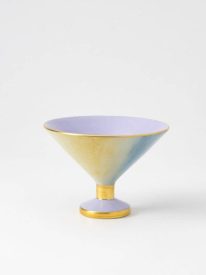
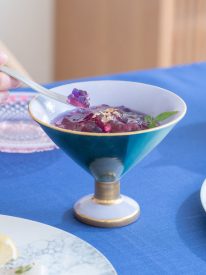
This elegant kobachi small bowl with leg is suitable for serving appetizers, cold dishes, and other small foods and makes them look more beautiful. It is also a great home decoration as it brings a sophisticated atmosphere to your room. The beautiful gradation expands your imagination, such as the sky’s azure, the cosmic blue, the…
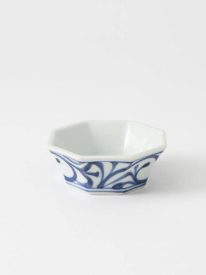
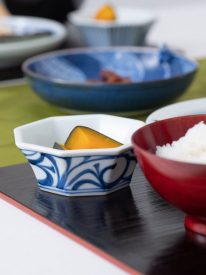
This octagonal kobachi small bowl features a hand-painted arabesque pattern, a representative motif of Tobe ware. The deep indigo shade adds a hint of modern elegance. Perfect for serving small portions of side dishes like tangy sunomono or simmered nimono, it’s also suited for a scoop of ice cream or fresh fruit. The octagonal rim…
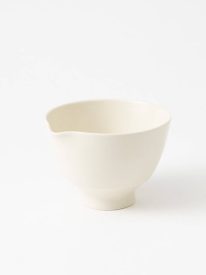
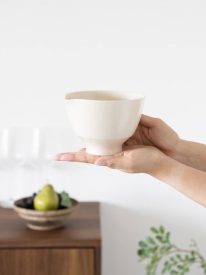
This Japanese bowl with spout from the “Une” series is made by Taniguchi Seidojo, which has been making Kutani ware clay for three generations. The carefully selected clay of Kutani ware, known as Hanasaka ceramic stone, is inevitably discarded during the clay making process. The silky, transparent, beautiful beige glaze was created to make the…
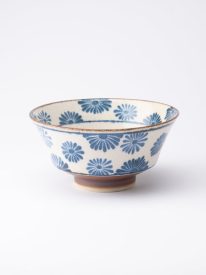
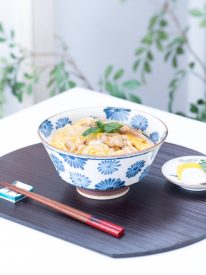
As suggested by its name nanpu, meaning “southern winds,” this bowl features a design that evokes the feeling of a warm breeze. Blue chrysanthemum flowers are scattered throughout the design, giving the design a natural comfort. The slightly warped rim allows for easy stacking with bowls of the same shape, making storage more convenient. This bowl is…
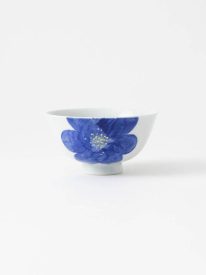
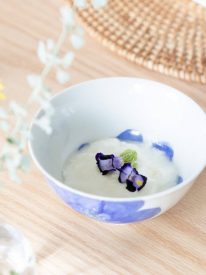
This beautiful rice bowl features soft blue flowers as if painted with watercolors. The bright design resembles blooming flowers, bringing joyful atmosphere on the table. It is painted by the female artist, Ohigashi Alyne, who was born in Philippines. She uses a unique technique called washi-zome (Japanese paper dyeing) and continues her ideal stoneware-making in Higashi…
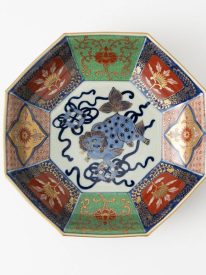
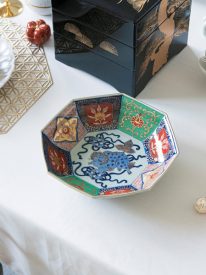
The gorgeous bowl features a lion and peony with a modern interpretation of the traditional classic patterns of old Imari. In Japanese arts, the combination of splendid peony and the imposing tiger is often depicted as regarded as a symbol of bravery and wealth. This gorgeous pattern, expressed by the colorful colors using gold is…
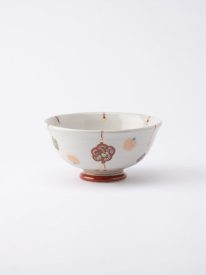
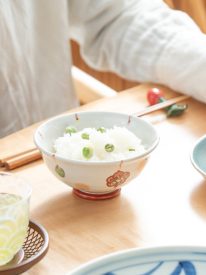
This small rice bowl is decorated with gorgeous and lovely mizuhiki motif. The colorful knots give the bowl a nostalgic and graceful feeling.Kanazawa, the birthplace of Kutani ware, is known for its unique and rare traditional craft called Kaga Mizuhiki. Made by Kokuzou Kiln, known for the gentle and warm stoneware with beautiful colors and elegant…
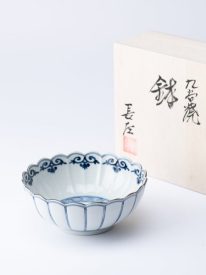
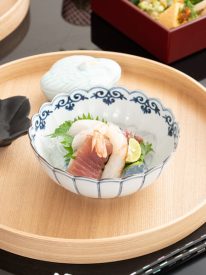
This bowl features exquisite sometsuke designs hand-painted by master craftsman Yamamoto Choza. At the bottom of the bowl lies a botanical and bird motif highlighted with circular patterns in fine lines of blue. The intricacies of each design invite a closer look. The porcelain base is formed using the katauchi technique, where a smooth layer…

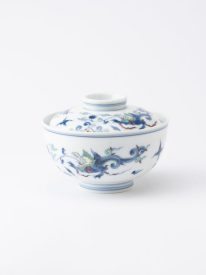 Dragon and Arabesque Kobachi Small Bowl With Lid