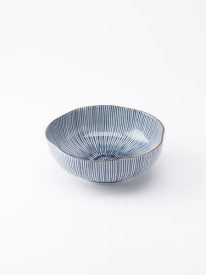
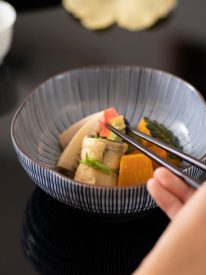
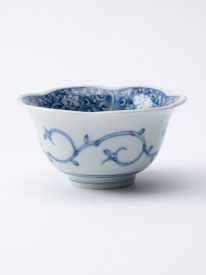
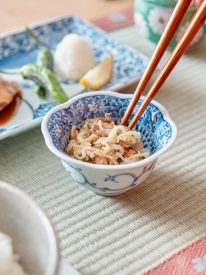
This bowl is designed with a “Tokusa” pattern drawn by hand with a broom-like brush to make the thin blue lines centering to the middle of the bowl. Originally made in the size to serve a single portion of sashimi or pickled vegetables in a traditional style meal at a tea ceremony, it can be…
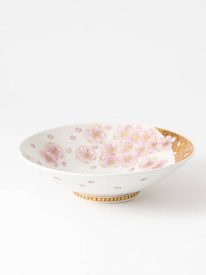
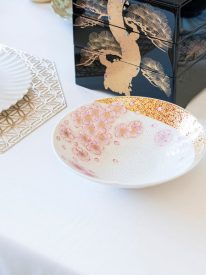
This beautiful plate is decorated with a cherry blossom pattern, handcrafted by an artisan of Kutani ware, Mr. Yoshinori Fukuda, who specializes in golden decoration known as “Kinrande”(literally “gold brocade”). It is a perfect size for serving side dishes such as Sunomono(vinegared food), Aemono(seasoned and sauced food), and Nimono(simmered food, or snacks like nuts and…
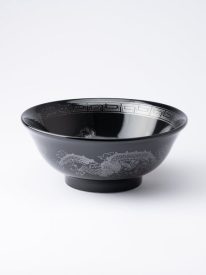
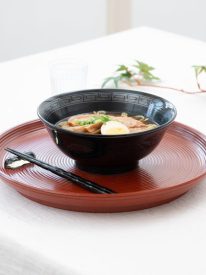
This regular-sized Mino ware ramen bowl features a glossy black background with an elegant silver dragon painted on the sides and bottom. In Asian cultures, the dragon is an auspicious creature, symbolizing nobility and good fortune. Inside the bowl, the square spiral pattern, known as raimon in Japanese, is a traditional Chinese lightning design symbolizing…
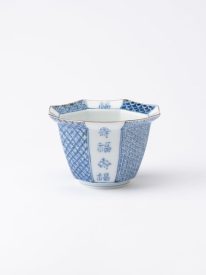
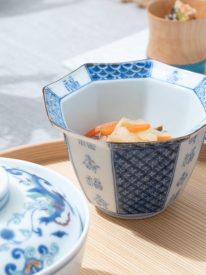
This kobachi small bowl is adorned with a fukuju pattern in the style of old Imari. Fukuju symbolizes happiness and longevity, with the design rooted in this auspicious character. The bowl has an octagonal shape with an outward-extending rim. Its depth makes it ideal for serving soupy dishes, as well as appetizers and desserts.
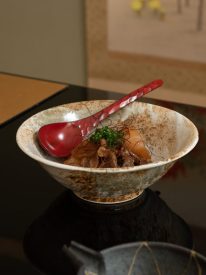
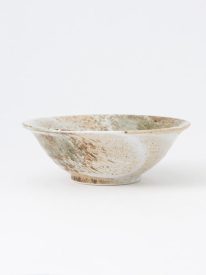
The beautiful white hue of this small ramen bowl is a hallmark of Shino ware. The speckled glaze creates a design that feels both liberating and sophisticated. Shino ware is a type of Mino ware, originally fired in Mino, Gifu Prefecture, during the Azuchi-Momoyama period (1573-1603 CE). While most of the bowl is glazed, offering…
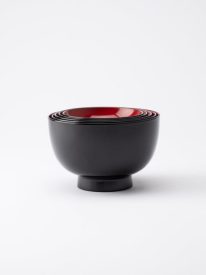
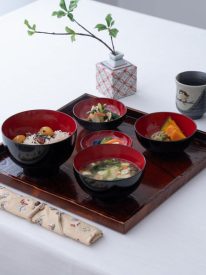
While utilizing Yamanaka lacquerware techniques, this product is made of resin, and is recommended for those who want to enjoy “Oryoki” in a casual manner. The combination of black on the outside and red on the inside is chic and glamorous, and is recommended not only for daily use but also when entertaining guests. In…
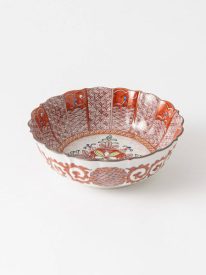
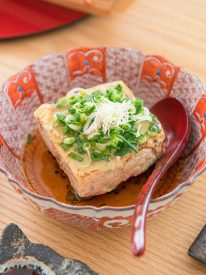
This stunning Akae-style Japanese bowl showcases intricate hand-painted details, characteristic of the Iidaya/Akae style of Kutani ware. The finely detailed artwork is truly remarkable, with not only an elaborate pattern adorning the inside but also a gracefully wavy rim and beautifully decorated exterior, making it a captivating piece from every angle. Its size is ideal…
This elegant kobachi small bowl is crafted by Takayama, renowned for Hasami porcelain. In the classic blue and white of sometsuke, it features an interior pattern of richly swirling scrollwork, with additional vine-like arabesques toward the rim. This beautifully contrasts with a simple exterior of simple karakusa budding vines. Vine motifs have long been cherished…
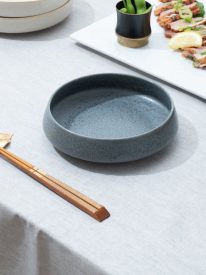
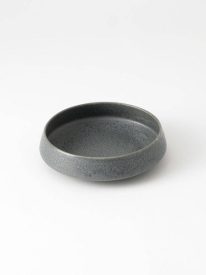
This modern deep side plate showcases a beautiful slate gray color, designed to enhance the presentation of any dish with understated elegance. Durable and easy to use, this bowl is a practical choice for both everyday meals and special occasions, making it popular in restaurants across Japan and beyond. Its versatile design makes it perfect…
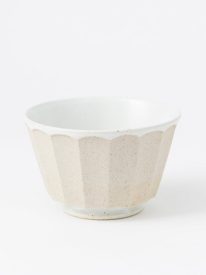
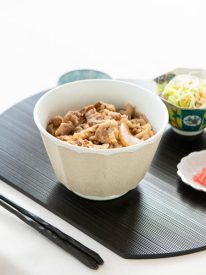
This regular-sized donburi bowl features a smooth, matte white glaze on the outer rim and inner surface, creating a striking contrast with the textured, natural clay on the faceted exterior. This combination of materials offers both a refined tactile experience and a contemporary appeal. Its depth and straight sides help retain the food’s warmth while…
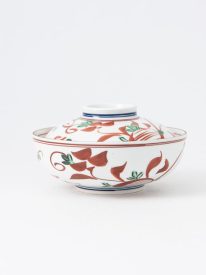
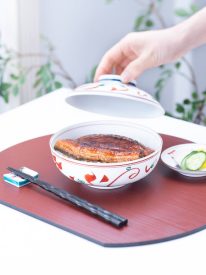
This Japanese bowl features a painting in the style of banreki, a five-color porcelain protected by the Emperor of the Ming Dynasty in China. It is characterized by gorgeous and exquisite brushwork in red. In Japan, it is called “banreki akae” and has been respected. It’s gorgeous and perfect for celebrations and entertaining guests. The…
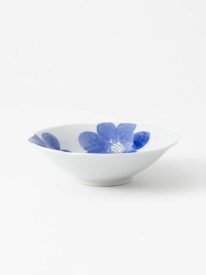
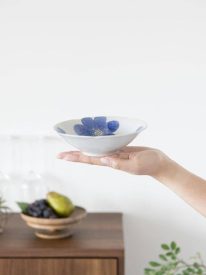
This beautiful bowl features soft blue flowers as if painted with watercolors. The bright design and shape of the rim resembles blooming flowers, bringing joyful atmosphere on the table. It is painted by the female artist, Alyne Ohigashi, who was born in Philippines. She uses a unique technique called washi-zome (Japanese paper dyeing) and continues her…

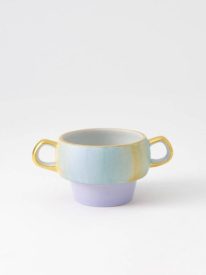 Ukiyo Blue and Yellow Soup Bowl