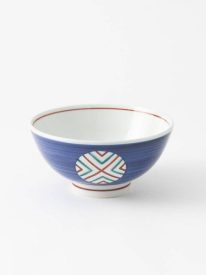
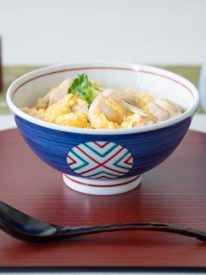
Featuring a sharp red and green pattern peeking out from a large round cut-out shape, called marunuki, this large donburi bowl makes a strong visual impression. The pattern stands out against a striking indigo blue background. The bright red is echoed on the foot of the bowl and the inner rim, creating a beautifully balanced design…
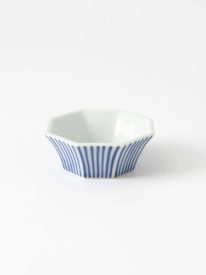
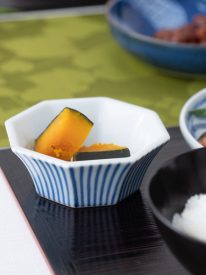
This octagonal kobachi small bowl features simple blue tokusa stripes shaded with delicate hand-painting. Tokusa, known as the horsetail plant, symbolizes longevity in Japanese culture. The indigo shade adds a modern touch, while the natural motif conveys the warmth of hand-painted craftsmanship. Perfect for serving small portions of side dishes like tangy sunomono or simmered nimono, it also…
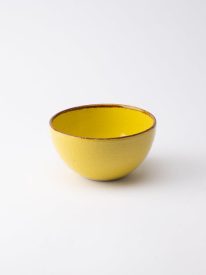
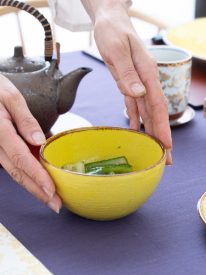
This beautiful yellow stoneware bowl is eye-catching. The bumpy surface is unique to stoneware which has a rustic, warm, and chunky texture. The brown glazed rim enhances the vividness of the yellow color. Measuring D12.3cm(4.8in), it is suitable for rice, fruit, soup, yogurt, etc. Flamenco is a series born from an exploration of “color”. The characteristic yellow…
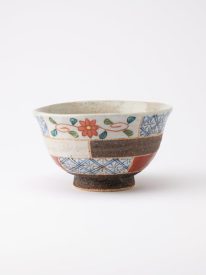
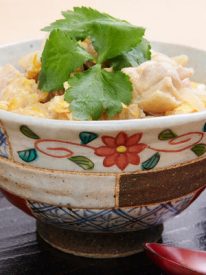
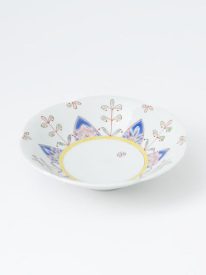
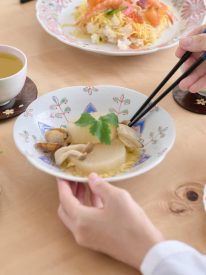
This regular-sized donburi bowl features charming floral and geometric patterns composed in an inventive tile-like design. Adorned with various auspicious patterns, each symbolizing continuity and prosperity, the design carries the hopeful wish for everlasting good fortune. Its depth and straight sides help retain the food’s warmth while adding a touch of style and practicality. Handcrafted…
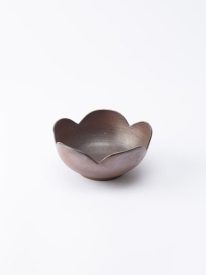
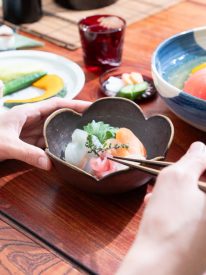
The Hozan Kiln’s Flower-Shaped Kobachi Bowl embodies the earthy textures and colors characteristic of Bizen ware. Its coarse texture, exquisite hues, and intricate patterns, shaped by the kiln’s flames, exemplify Bizen warethe art of clay and fire. Without any artificial decorations, the bowl stands out with its bold presence. The petal-shaped rim displays natural hues…
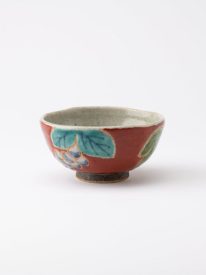
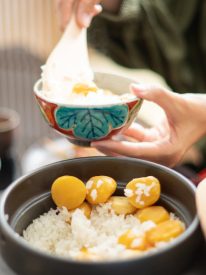
This is a Hasami ware rice bowl made by Kousai Kiln. It is hand-painted to bring out the warm texture of the clay. The base of the rice bowl is finished in red with a green grape and leaf design. The rough texture of the clay is coated with a glossy, bright glaze that offers different textures….
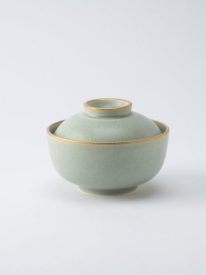
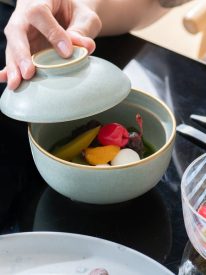
Kobachi bowl with a lid by MERU, a Mino ware brand.The shape used decades ago as traditional Japanese restaurant tableware has been rearranged in a modern way. The expression of light green color and ingenious design give it a refined impression.Luxurious pure gold is used for the overglaze painting, and the high quality gold allows…
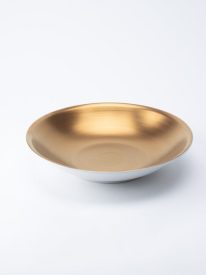
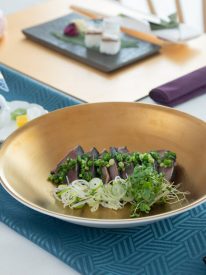
This large serving bowl is colored in gorgeous gold on the inside and a clear white on the outside. This deep plate can be used to serve a salad or a main course. It is perfect for parties to lavishly display a leafy salad in bright green colors or to plate sashimi. The slightly grainy…
This bowl showcases dreamy patterns delicately painted by the artisans of Ginshu Kiln, renowned for its romantic and playful pastel-colored designs. The painted areas have a slightly raised texture, a characteristic of Kutani ware, which is traditionally hand-painted using Japanese coloring pigments and a brush. Its versatile size makes it perfect for serving salads, appetizers,…
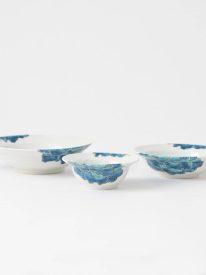
This gorgeous Japanese bowl set adorned with a bright blue peony is made by Mr. Tsuyoshi Sato, a Kutani ware artisan known for his use of bright colors and florals. With brush painting, which is a characteristic of Kutani ware, a thick peony motif is drawn as if it bloomed on the rim and outer…
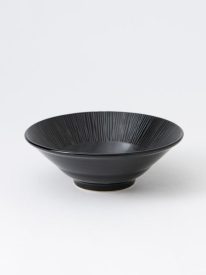
This small-sized Japanese ramen bowl offers an appreciation for the depth of the color black. The inner rim features a chic, textured rendering of the traditional Japanese pattern called tokusa “horsetail.” The simple yet powerful design will leave a lasting impression as part of your table setting. The bowl is perfect for a variety of noodle…
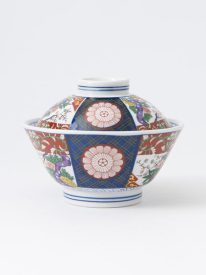
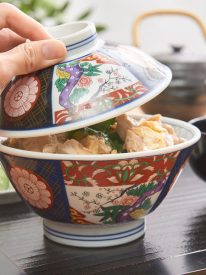
This small-sized Japanese donburi rice bowl features peonies, framed by dark blue, lattice-like patterns, all rendered in the traditional nishiki-e style. Nishiki-e, meaning “brocade picture,” is a multi-colored woodblock print technique that revolutionized ukiyo-e during the Edo period (1603-1868 CE), when most prints were in black and white. The lid helps keep the food warm and…

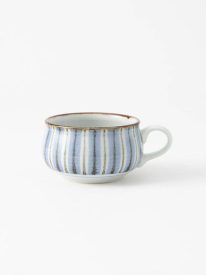 Blue Stripe Soup Bowl
 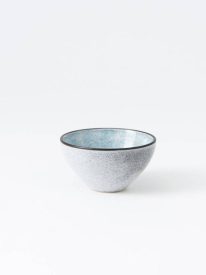 Raska Marin Modern Kobachi Small Bowl 3.1 in