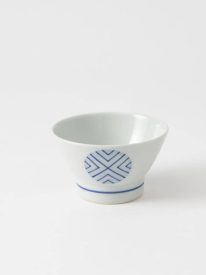
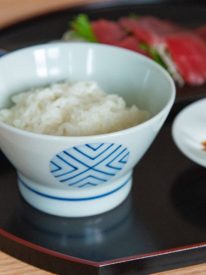
This rice bowl showcases the traditional marunuki pattern. Its indigo shade adds a modern touch, while the hand-painted nature motifs bring warmth and character to each piece. The high footing makes it easy to hold, adding practicality to its charm. Perfectly sized for a single serving of rice, its simple yet classic design makes white…
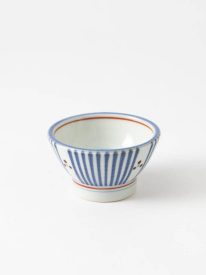
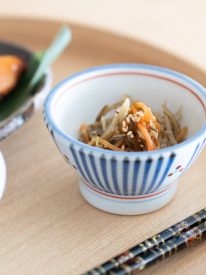
This kobachi small bowl features a stripe pattern with an accent of red and green dots. The shade of indigo adds a modern touch, while the rustic motif reflects the warmth of hand-painted craftsmanship. It is ideal for serving small portions of various side dishes, such as tangy sunomono and slowly simmered nimono. The shape stands out with…
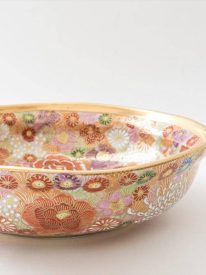
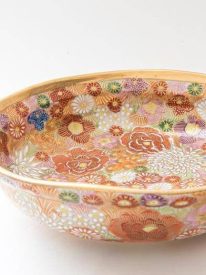
This elegant bowl features a delicate Hanazume style, meaning filled with flowers, one of the most notable design of Kutani ware which has been handed down the Taisho period (CE 1912-1926). Filled with colorful flowers all over the body with gold trimming, it has a timeless elegance and sophistication created by hand drawn technique; there…
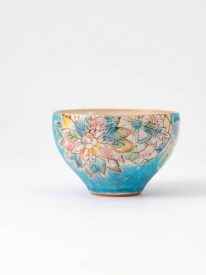
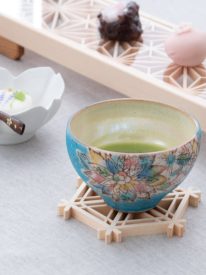
This kobachi small bowl features a vibrant turquoise glaze, with floral patterns in shades of blue, green, yellow, and pink decorating its surface. The delicate hand-painted details and subtle kannyu crackles add depth and texture, creating a design reminiscent of flowers blooming along a water’s edge. The interior is finished with a luxurious champagne gold glaze,…
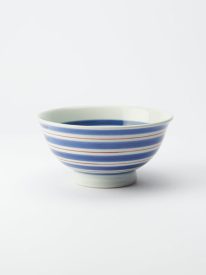
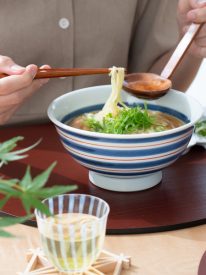
Thick blue and fine red lines alternate around the whole exterior of snow-white porcelain of this donburi bowl. The blue lines are drawn using the traditional gosu pigment, while the red accents enhance the design. The hand-painted blue patterns are made using the tsuketate technique, where each stroke is applied without outlines. This gives the bowl…
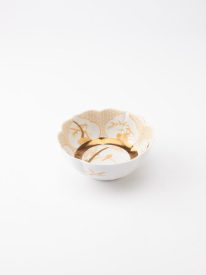
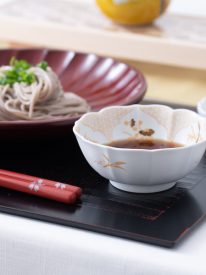
Hundreds of years of skill and technique are carefully crafted in this hand-size kobachi small bowl in golden yellow. The design is arranged with traditional auspicious patterns, making the tableware suitable for the modern dining scene. The sides of the bowl are shaped like the petals of a flower giving the bowl an elegant look….
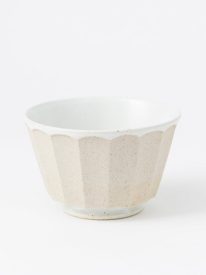
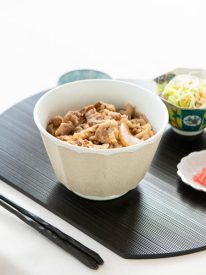
This regular-sized donburi bowl features a smooth, matte white glaze on the outer rim and inner surface, creating a striking contrast with the textured, natural clay on the faceted exterior. This combination of materials offers both a refined tactile experience and a contemporary appeal. Its depth and straight sides help retain the food’s warmth while…
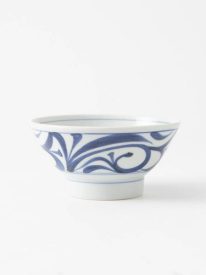
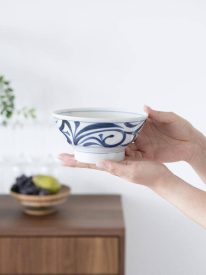
This small donburi bowl features one of the signature motifs of Tobe ware. The graceful arabesque design comes alive with the warmth of its dynamic hand-painted brushstrokes, inspired by nature and the striking contrast of indigo on porcelain white. The bowl is suited for smaller servings of gyudon, oyakodon, and other donburi dishes. It can…
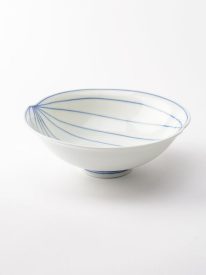
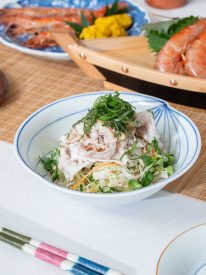
On this bowl, lines in sometsuke “Blue and White” style form smooth and elegant curves, representing leaf veins. These lines are hand-painted by artisans, with subtle variations in thickness and shade making each unique. When using this plate, you can feel a closeness to nature. Sometsuke is a technique that applies indigo color onto a base…
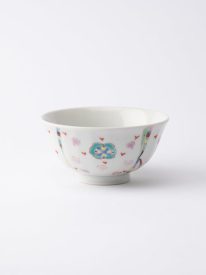
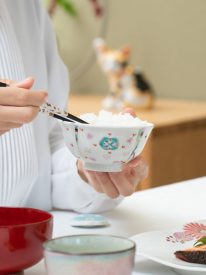
This rice bowl features flower petals delicately painted by artisans of Ginshu Kiln, which is especially known as its romantic and playful pastel colored painting. The painted areas have a slightly raised texture, a characteristic of Kutani ware, which is traditionally hand-painted using Japanese coloring pigments and a brush. With a diameter of 11 cm…
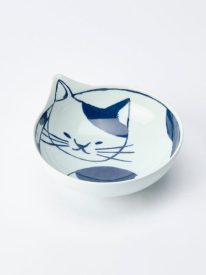
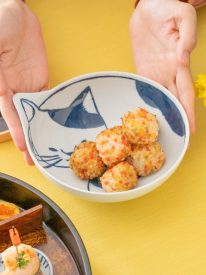
This Hasami ware bowl features a lovely spotted cat. The cat is depicted with slightly pointed ears in an adorable curled-up pose, giving the bowl a unique and charming design. The smooth porcelain texture and indigo color create a refreshing impression. Its rounded shape not only enhances its aesthetic appeal but also makes it highly…
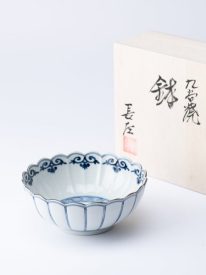
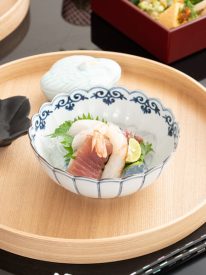
This bowl features exquisite sometsuke designs hand-painted by master craftsman Yamamoto Choza. At the bottom of the bowl lies a botanical and bird motif highlighted with circular patterns in fine lines of blue. The intricacies of each design invite a closer look. The porcelain base is formed using the katauchi technique, where a smooth layer…

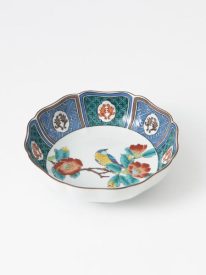 Camellia and Bird Kutani Bowl