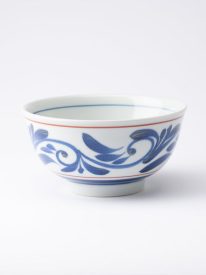
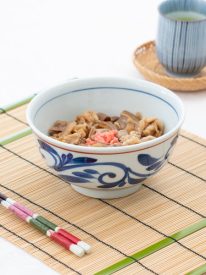
Featuring a hand-painted arabesque pattern, this regular-sized donburi bowl showcases a classic motif of Tobe ware. The horizontal red lines bring a striking touch to the design. It’s perfect for serving noodles such as ramen, udon, or soba. Using this bowl to savor different kinds of noodles will undoubtedly add a touch of traditional charm…
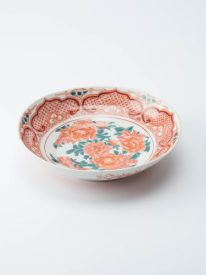
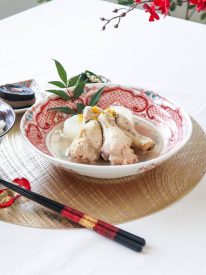
A gorgeous Japanese bowl with intricate paintings by hand. The detailed drawings in the Iidaya/Akae style of Kutani ware are truly remarkable. Not only does it have a beautifully detailed pattern on the inside, but also the patterns on the outside make it a beautiful bowl from every angle. The size is suitable for serving…
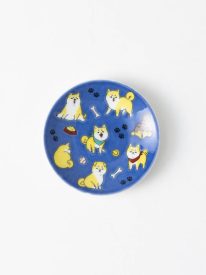
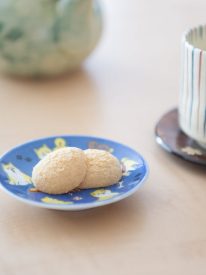
This Japanese small plate features adorable shiba inu, a type of dog native to Japan. It is the only small dog among Japanese native dogs and the most numerous and popular of all dogs bred in Japan. Perfect size as a sauce plate. It is also versatile to serve cheese, nuts, condiments, and other small…
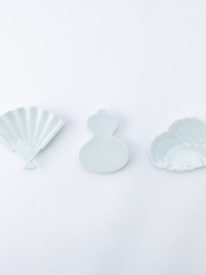
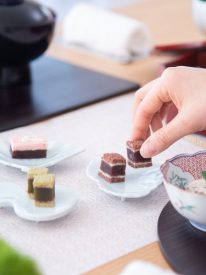
This set includes three small celadon three-footed plates in the shapes of a pine tree, a fan, and a gourd. These shapes are auspicious patterns and are beloved by many in Japan. These small plates are useful for serving small amounts of condiments, delicacies, or dried sweets, and can also double as chopstick rests. They…
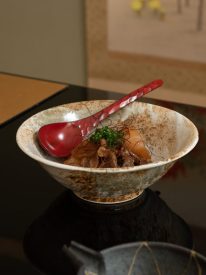
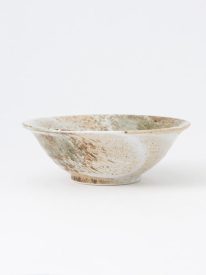
The beautiful white hue of this small ramen bowl is a hallmark of Shino ware. The speckled glaze creates a design that feels both liberating and sophisticated. Shino ware is a type of Mino ware, originally fired in Mino, Gifu Prefecture, during the Azuchi-Momoyama period (1573-1603 CE). While most of the bowl is glazed, offering…
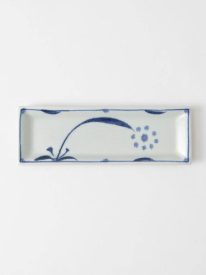
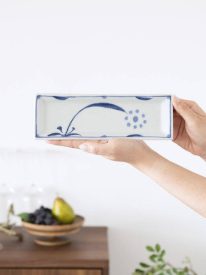
This rectangular plate has a warm, hand-painted motif of an abstract sun, which symbolizes hope and glory. The textured surface, reminiscent of woven cloth, adds a tactile charm and uniqueness to the piece. It works beautifully as a sushi plate, sashimi plate, tempura plate, or grilled fish plateand is equally suited for serving appetizers. Designed…
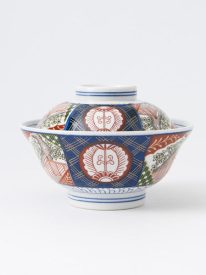
This regular-sized Japanese donburi rice bowl features sakura, or cherry blossoms, framed by dark blue, lattice-like patterns, all rendered in the traditional nishiki-e style. Nishiki-e, meaning “brocade picture,” is a multi-colored woodblock print technique that revolutionized ukiyo-e during the Edo period (1603-1868 CE), when most prints were in black and white. The lid helps keep the…
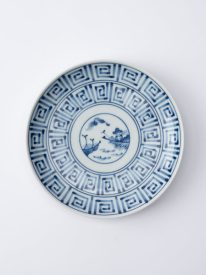
This round side plate is crafted by Takayama, a renowned maker of Hasami porcelain, and dyed with seitan, a kind of indigo. The bold geometric swirl patterns around the rim are complemented by a central design featuring ships and exotic landscapes, evoking the spirit of overseas trade and cultural exchange. In traditional Japanese culture, this…
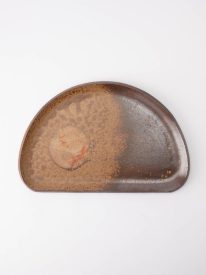
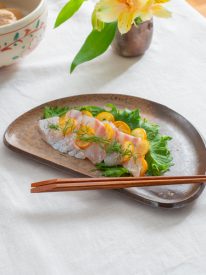
The Hozan Kiln Half Round Plate embodies the earthy textures and colors characteristic of Bizen ware. The term “botamochi” in the product name refers to a traditional round-shaped Japanese confectionery and is also one of the classic patterns found on Bizen ware pieces. This pattern is created by inserting round pieces of refractory clay between…
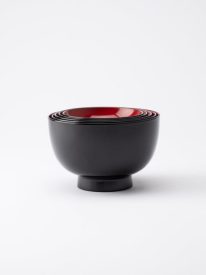
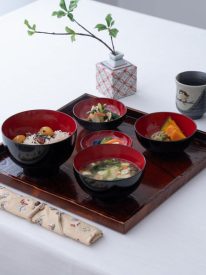
While utilizing Yamanaka lacquerware techniques, this product is made of resin, and is recommended for those who want to enjoy “Oryoki” in a casual manner. The combination of black on the outside and red on the inside is chic and glamorous, and is recommended not only for daily use but also when entertaining guests. In…
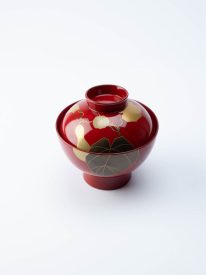
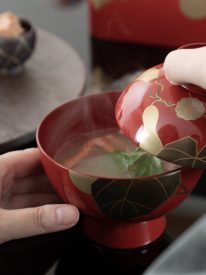
This Echizen lacquerware soup bowl, born from a collaboration with the Aizu lacquerware manufacturer YAMAKYU Japanware Co., captivates with its rich lacquer surface, beautifully showcasing a gourd design. Golden gourds, intertwined with graceful leaves and vines, are brought to life through the traditional maki-e technique, hand-painted lacquer designs adorned with shimmering gold leaf. A final coating…
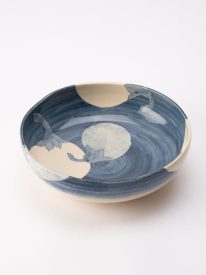
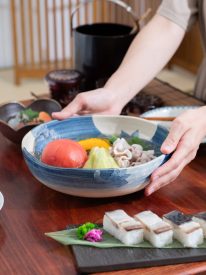
This bowl features round Kamo eggplants, a summer vegetable from Kyoto, in the serene blue and white of sometsuke. Kyoto vegetable designs are created by applying a water-resistant substance to outline the shapes. Then, gosu, a cobalt blue glaze, is hand-painted over the surface, leaving the protected areas untouched. After a second bisque-firing, delicate lines…

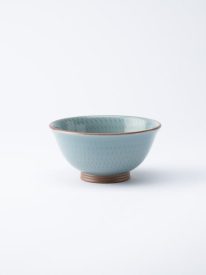 Soryu Kiln Celadon Tobikanna Kiyomizu Ware Rice Bowl
 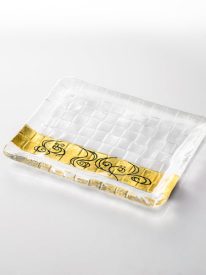 Yoshita Kasho Water Stream Maki-e Glass Rectangle Plate
 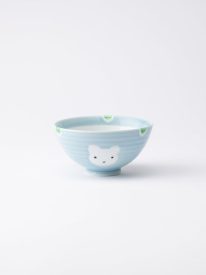 Oshin Kiln Blue Bear Hasami Children's Japanese Rice Bowl