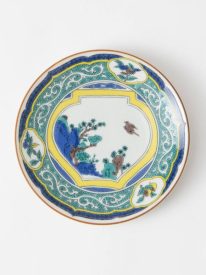
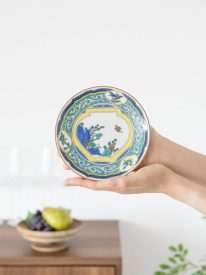
This versatile side plate features a flying bird in mountains, using an art style of ko-Kutani. Kutani ware uses a brush for painting with Japanese coloring paint, as you can see the painted part is slightly thickened. It is great for meal and teatime as it can be used as an extra plate for side…
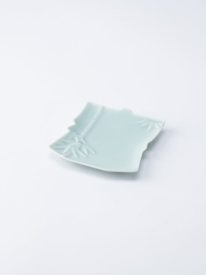
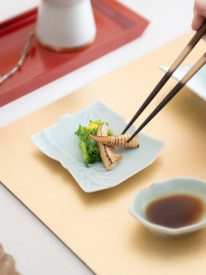
This celadon sauce plate features a graceful matte texture that conveys tenderness the moment you touch it, enhanced by a moist, gentle surface finish. Bamboo leaves are intricately depicted, creating a three-dimensional effect that highlights their delicate form. The soft celadon shades bring out the natural beauty of the design, adding depth and texture to…
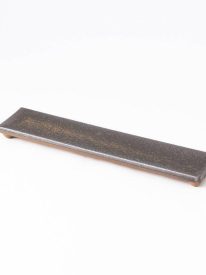
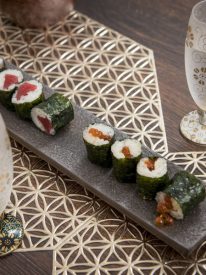
This long rectangular platter has a beautiful matte and rough texture, and the chic colors mixed with gray and brown give a sense of wabi sabi and create a high-quality dining table. It is suitable for serving appetizers. It is also recommended to serve a few pieces of sushi or sashimi. With its slim shape, you…
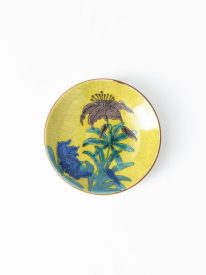
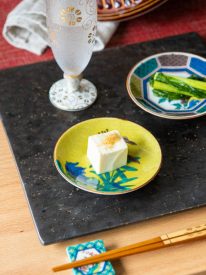
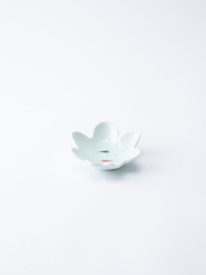
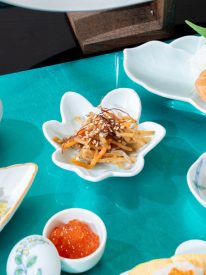
This sauce plate features a lily in Yoshidaya style, a famous traditional style of Kutani ware that combines bright colors that makes this small yet powerful piece stand out. Perfect as a sauce plate, it is versatile to serve any small food such as cheese, nuts, and condiments. You may also place a small portion of…
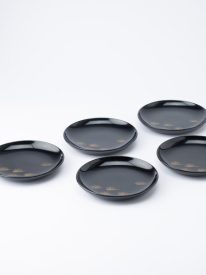
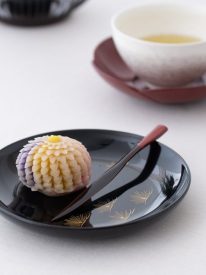
These Echizen Lacquerware side plates are exquisite items combining the elegant black shine of lacquer with the detailed gold designs made with “Chinkin.” “Chinkin” is a traditional technique used to create detailed designs with gold and silver on lacquerware surfaces. Unlike Maki-e, where gold leaves and powder are directly applied to a surface, for Chinkin, shallow…
Enjoy the elegant design of a Japanese maple leaf adorned with the refined beauty of natural blue-green lustered celadon in this stylish sauce plate from Kosen Kiln. With its translucent glaze on the blue-jade hue of celadon, a tranquil atmosphere emanates from its glossy exterior, like the calm surface of a glistening pond. Adorning the surface of…
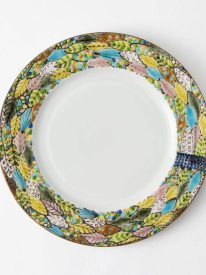
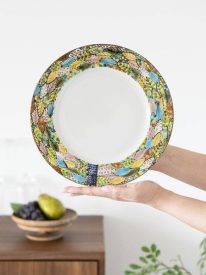
This beautiful dinner plate is part of the Hamorebi series, meaning “sunlight filtering through leaves.” The delicate painting along the rim is hand-painted by female artisan Sakurai Chie. Each piece is carefully adorned using traditional Japanese color paints, a distinctive feature of Kutani ware. The painted areas are slightly raised, adding texture and depth to…
This sauce plate features fan-shaped motifs alongside an iconic depiction of Mount Fuji. In Japanese culture, the fan motif is regarded as an auspicious symbol that heralds both prosperity and the arrival of good fortune. The technique displayed in this plate is called somenishiki where the plate is first glazed with white and blue patterns…
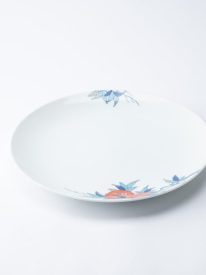
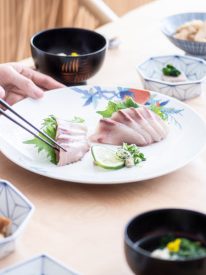
This plate has a beautiful pomegranate design in the iro-Nabeshima (colored Nabeshima) style on stunning white porcelain. The pomegranate pattern is one of the most representative patterns of Nabeshima ware. As bright orange-red flowers bloom in early summer, the pomegranate fruit ripens in autumn, its thick outer skin breaking open to reveal numerous seeds inside….
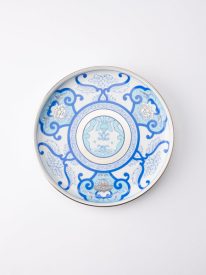
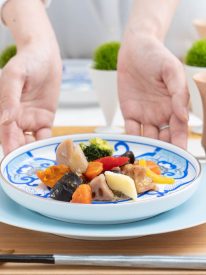
This is a beautiful side plate decorated in an old Imari floral pattern painted with precision.The blue tones are arranged in a modern way, and each piece is individually brushed by craftsmen to create an incomparable elegance. Many of the designs are arranged with traditional auspicious designs, making the tableware suitable for the modern dining…
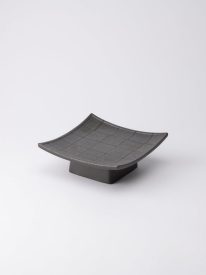
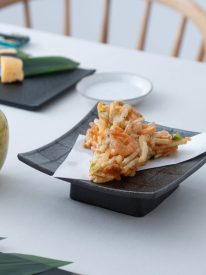
This modern Japanese footed plate features a beautiful checkered pattern in a soft, lustrous silver. The color is achieved using a technique called ginsai, with a charcoal-smoked finish. The high foot design adds a sense of elegance and rhythm to the dining table. Ideal for serving appetizers, main dishes, and side dishes, it’s also perfect…
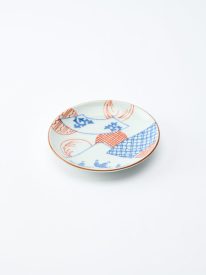
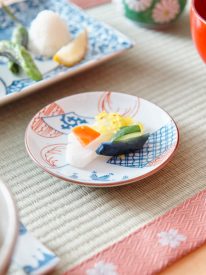
This small porcelain plate has auspicious design patterns: “Nami Chidori,” plovers and waves, and “Karakusa,” an arabesque design. Nami Chidori, a combination of a plover and a wave, means “to overcome rough seas together.” Arabesque designs are considered a symbol of longevity and prosperity of offsprings, as arabesque, the vine, extends its stems in all directions….