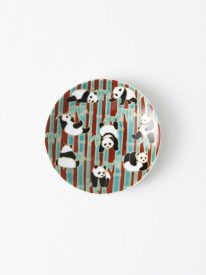
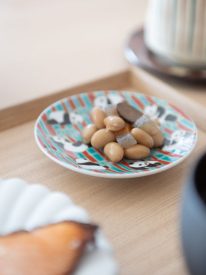
This playful Japanese sauce plate features adorable pandas relaxing in various poses. The vibrant combination of bright red and green, along with the thick, glossy glaze, makes this piece truly eye-catching. With its perfect size for sauces, it is also versatile enough to serve cheese, nuts, condiments, and other small bites. For a stylish and…
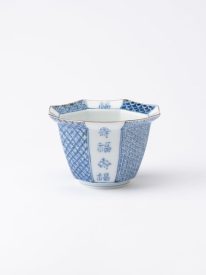
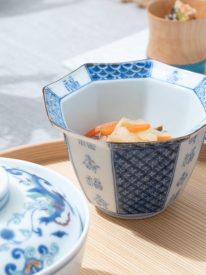
This kobachi small bowl is adorned with a fukuju pattern in the style of old Imari. Fukuju symbolizes happiness and longevity, with the design rooted in this auspicious character. The bowl has an octagonal shape with an outward-extending rim. Its depth makes it ideal for serving soupy dishes, as well as appetizers and desserts.
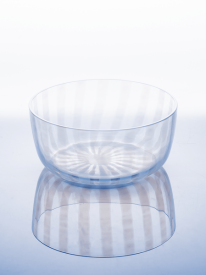
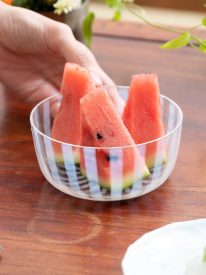
This is a glass bowl with the tokusa “horsetail” pattern from the Taisho Roman glass series by Hirota Glass, a long-established glass manufacturer in Tokyo. The tokusa motif, cherished since the Edo period (1603 CE-1868 CE), symbolizes growth and prosperity. Its straight, upward-reaching lines embody aspirations for success and flourishing, making it a beloved design through…
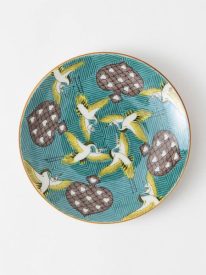
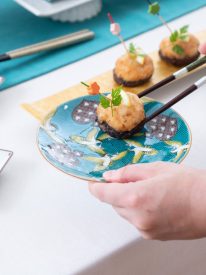
A sauce plate features flying Japanese cranes as if they are dancing. Kutani ware uses a brush for painting with Japanese coloring paint, as you can see the painted bird is slightly thickened and standing out. The crane is known to be a symbol of longevity and prosperity. The size is great as an extra plate….
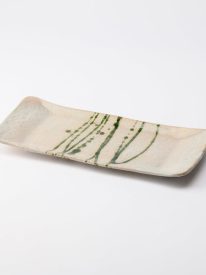
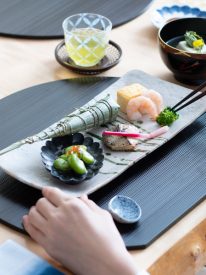
This long plate features a light grayish hue and an elegant abstract motif of water plants, a hallmark of Yashichida Oribe ware, characterized by its green glaze and abstract brushstrokes. The expressive green design extends onto the bottom of the plate, where Tsujii has created a repeating pattern with his fingertips. Drawing inspiration from nature,…
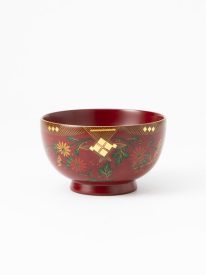
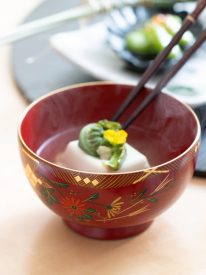
This soup bowl is hollowed out from Japanese horse chestnut, which is the best material for wood bowls. It has a slightly matte texture in calm vermilion color.The lacquering process, from the base coat to the top coat, has been inspected for designation as a traditional Aizu lacquerware craft.Aizu-e, the traditional design of Aizu lacquerware, is…
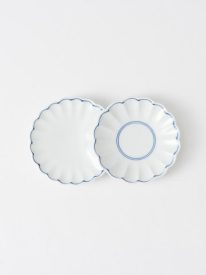
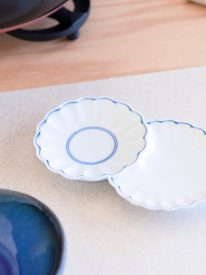
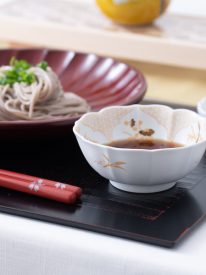
This unique small plate is shaped like two chrysanthemums joined together. One of them features a circle at the center, colored in indigo blue. Its shape and design make it perfect for serving soy sauce and small relishessuch as spring onions, wasabi, ground ginger, and sesame seedswhich are commonly served alongside soy sauce when enjoying…
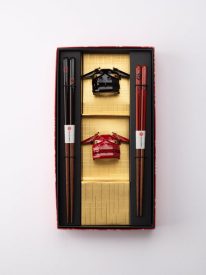
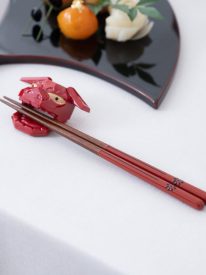
This striking gift set includes two pairs of Wakasa lacquerware chopsticks with chrysanthemum designs and two chopstick rests shaped like lion masks from the traditional shishi-mai “lion dance.” Each chopstick is decorated with a single chrysanthemum flower. The chrysanthemum flower holds deep significance in Japan as it serves as the emblem of the Imperial Family….
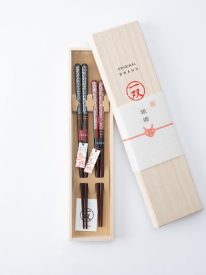
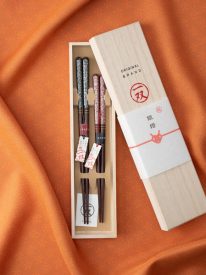
Mark happy moments together with the Ginkon Celebration chopstick set. Named after ginkon, meaning silver anniversary, this set includes two pairs of dark brown-lacquered wood chopsticks with silver-decorated tops. They combine the elegant sheen of traditional lacquerware with a sophisticated design. The longer pair measures 23 cm (9 in) and features a black and silver…
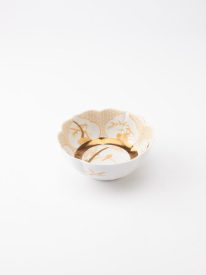
Hundreds of years of skill and technique are carefully crafted in this hand-size kobachi small bowl in golden yellow. The design is arranged with traditional auspicious patterns, making the tableware suitable for the modern dining scene. The sides of the bowl are shaped like the petals of a flower giving the bowl an elegant look….
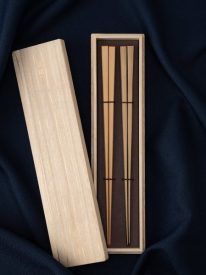
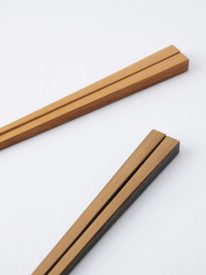
This set of bamboo chopsticks features the intricately crafted beauty of shiratake bamboo from Kyoto. A smooth and light-colored shine adorns one side of each chopstick, lending a traditional and elegant appeal. Enjoy their rustic natural charm in two subtle shades of brown. The bamboo comes from Muko City in Kyoto Prefecture, a renowned bamboo-producing…
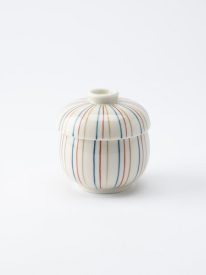
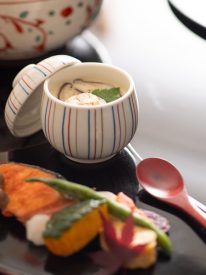
Enjoy delicious chawanmushi, Japanese steamed egg custard, in this beautiful Arita ware chawanmushi bowl. This Chawanmushi bowl is painted in the “Tokusa (Horsetail)” pattern which is a classic motif that has been beloved since the Edo period (1603 CE – 1867 CE). Its straight-growing appearance symbolizes wishes for growth and prosperity. And the three subdued colors…

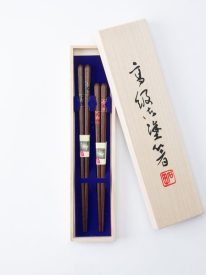 Sakura Dark Brown Chopsticks Pair Set