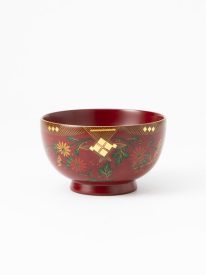
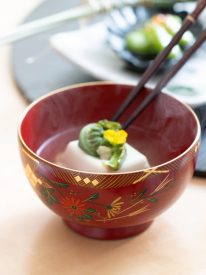
This soup bowl is hollowed out from Japanese horse chestnut, which is the best material for wood bowls. It has a slightly matte texture in calm vermilion color.The lacquering process, from the base coat to the top coat, has been inspected for designation as a traditional Aizu lacquerware craft.Aizu-e, the traditional design of Aizu lacquerware, is…
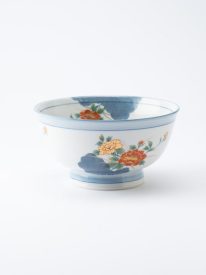
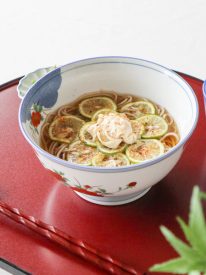
This large donburi bowl is beautifully adorned with delicately drawn peonies and a fabric-like pattern called nunome. In Japanese culture, peonies symbolize nobility, prosperity, and good fortune. The addition of gold accents enhances the bowl’s traditional elegance. The interior of the bowl is also decorated with peonies, allowing you to enjoy a visual feast while savoring…
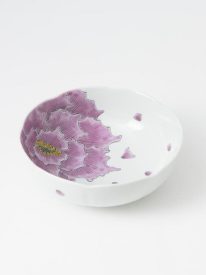
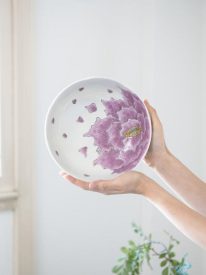
The large bowl features a beautiful pink peony, hand-painted by artist Fukuda Yoshinori. A large peony is designed to fit the round bowl, with scattered petals drawn around it and on the outside of the bowl. Rooted in the rich tradition of Kutani ware, Fukuda Yoshinori brings his mastery of akae, Yoshidaya, and ko-kutani styles…
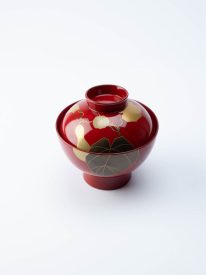
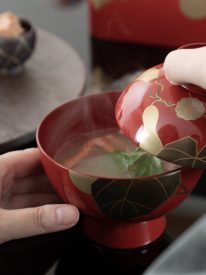
This Echizen lacquerware soup bowl, born from a collaboration with the Aizu lacquerware manufacturer YAMAKYU Japanware Co., captivates with its rich lacquer surface, beautifully showcasing a gourd design. Golden gourds, intertwined with graceful leaves and vines, are brought to life through the traditional maki-e technique, hand-painted lacquer designs adorned with shimmering gold leaf. A final coating…
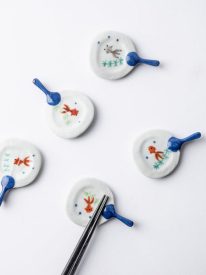
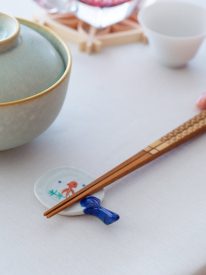
These five paper fan-shaped chopstick rests all feature different designs of goldfish in the water. One of the designs is of an inky black goldfish and the other four are brilliant red fish. According to Feng Shui beliefs, the red goldfish bestows good luck while the black goldfish absorbs negative energy. Furthermore, the water plants…
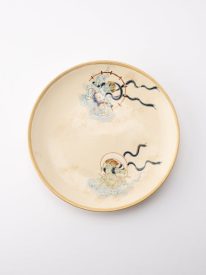
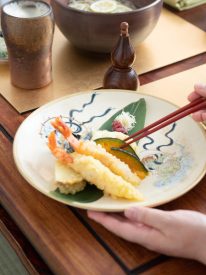
Featuring the distinctive “nami-yu” glaze, which is made from the ashes of the Kyoto forest, the plate has a natural base color in yellowish cream-white. Founded in 1868 as a Kiyomizu ware wholesaler in Kyoto, Tosen Kiln uses its own blend of soil and glaze, preserving the methods and quality of the works of Nonomura…
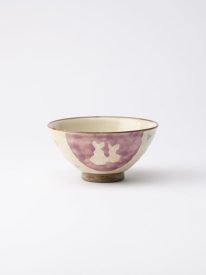
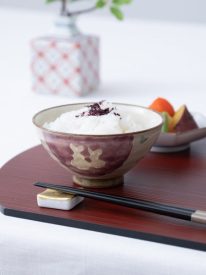
A beautifully handcrafted children’s rice bowl with an authentic Japanese feel. The charm of this rice bowl is in the hand-painted drawings.Two bunnies sitting side-by-side on a pink semi-circle with an Arabesque design are hand drawn on each piece. And differing shades of pink can be enjoyed with the watercolor painting style. The bunnies and…
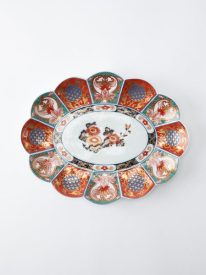
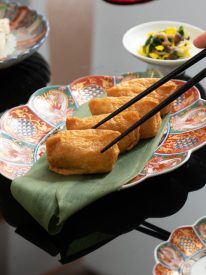
This exquisite plate beautifully combines the intricate patterns of Imari style with a modern aesthetic suitable for everyday tableware. Lightweight and durable, it features a wave-patterned rim that strikes an elegant balance between vibrant colors and pristine white. The rim boasts a diverse array of motifs, culminating in a captivating and imaginative display. Prominently, the…
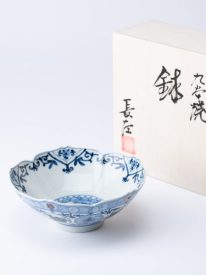
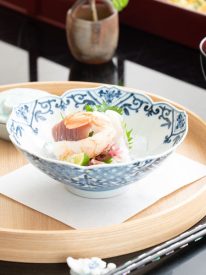
This bowl features exquisite sometsuke designs with colored details hand-painted by master craftsman Yamamoto Choza. The bottom of the bowl is adorned with a flower and bird motif, while the exterior is lavishly decorated with traditional auspicious patterns across its entirety. The intricacies of each design invite a closer look. The porcelain base is crafted…
This small porcelain plate has auspicious design patterns: “Nami Chidori,” plovers and waves, and “Karakusa,” an arabesque design. Nami Chidori, a combination of a plover and a wave, means “to overcome rough seas together.” Arabesque designs are considered a symbol of longevity and prosperity of offsprings, as arabesque, the vine, extends its stems in all directions….
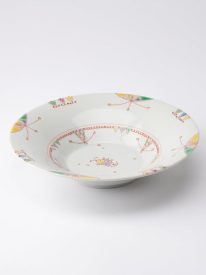
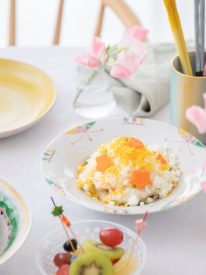
This large bowl features a unique design of fish and the circus, hand-painted with a delicate touch by artisans. The painted areas have a slightly raised texture, a characteristic of Kutani ware, which is traditionally hand-painted using Japanese coloring pigments and a brush. Perfect size as a serving bowl for salad, appetizers, side dish, pasta,…
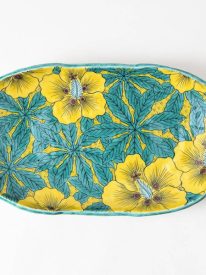
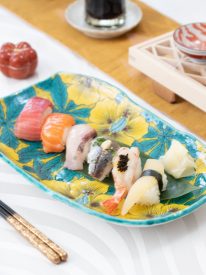
The gorgeous platter features hibiscus flowers painted on its entire surface. The blooming large yellow blooms and spreading green leaves create a beautiful contrast. It is hand-painted by brush, using Japanese paint called wa-enogu which is one of the remarkable features of Kutani ware, as you can see the painted part is slightly thickened. This…

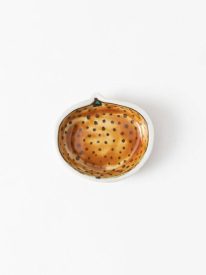 Mandarin Orange Sauce Plate