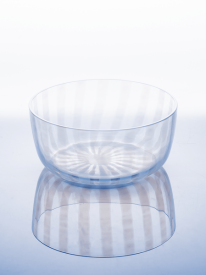
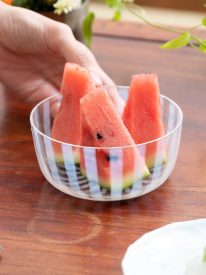
This is a glass bowl with the tokusa “horsetail” pattern from the Taisho Roman glass series by Hirota Glass, a long-established glass manufacturer in Tokyo. The tokusa motif, cherished since the Edo period (1603 CE-1868 CE), symbolizes growth and prosperity. Its straight, upward-reaching lines embody aspirations for success and flourishing, making it a beloved design through…
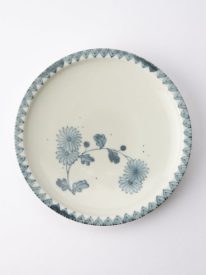
This is a Arita ware plate by Ri Sanpei (Yi Sam-pyeong) Kiln, a brand by the descendant of Yi Sam-Pyeong, the discoverer of white porcelain ore for Arita ware. This dish is simple, yet dignified and powerful. This design itself is from the early Imari period, about 400 years ago. Chrysanthemums are characterized not only by their beauty…
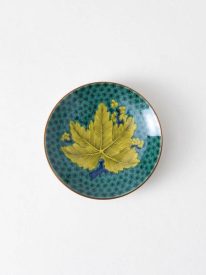
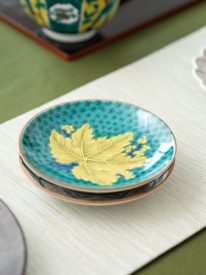
The Japanese sauce plate features a large yellow sycamore leaf in Ko-Kutani (old Kutani) style, dating back to mid-17th century, depicting the nature-themed daring design and distinctive bright colors of Kutani ware. Perfect size as a sauce plate. It is also versatile to serve cheese, nuts, condiments, and other small food. Furthermore, you may also…
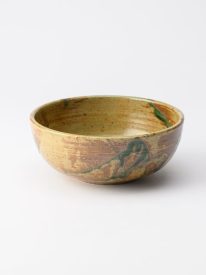
This bowl fascinates with its elegant water plant motif, highlighted with brown splashes. The green glaze and abstract brushstrokes are characteristic of Yashichida Oribe ware. Hand-crafted, this bowl reflects nature’s rustic beauty by accentuating the rokurome, or the rhythmic marks made by the potter’s wheel, which add a special texture and warmth. Its lightweight design…
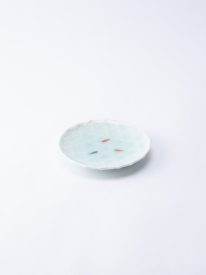
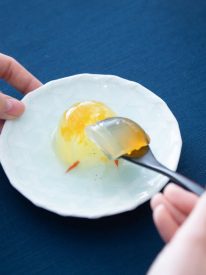
Enjoy the refined natural blue-green luster of celadon with this stylish side plate from Kosen Kiln. This porcelain piece captivates with its intricately woven basket-like design on both sides. The translucent glaze on the blue-jade hue of celadon, creates a tranquil atmosphere emanating from the plate’s glossy surface. Medaka rice fishes are depicted with such realism…
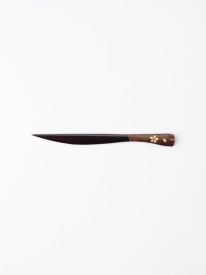
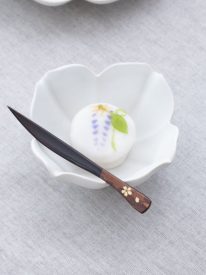
A chic lacquered Wagasi knife by Yatsuyanagi. The handle is made of wild cherry bark work and painted with a golden cherry blossom motif. Although small, the combination of different traditional techniques gives it a sophisticated appearance. The 12.5cm(4.9in) size is especially suitable as a Wagashi knife. It also makes an elegant impression when used for fruits and…
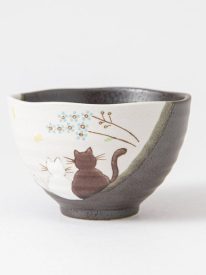
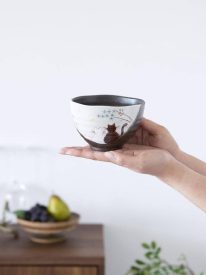
This Japanese rice bowl is from the popular “Cats in Sunny Spot” series by Atelier Yu. It features a drawing of two cats snuggled up together. The shape is crafted by potter’s wheel and you can feel the warmth and comfort to hold it in your hand. The contrast of the soft and relaxing…
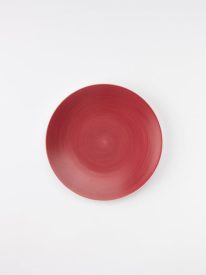
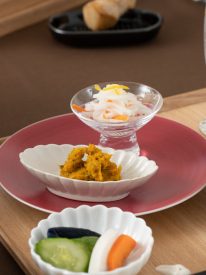
This side plate, with its artisan brushed texture, gives it a sense of dignity and complements all kinds of dishes. It can be used as an extra plate for any types of dish. Appetizers, salad, bread and desserts are the perfect match. The gorgeous colors make it a great choice for layering with plates from…
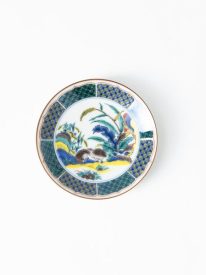
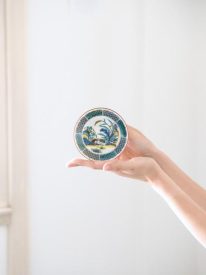
This sauce plate features two quails in the grass, painted in the traditional ko-Kutani style. Perfectly sized as a sauce plate, it is also versatile to serve cheese, nuts, condiments, and other small foods. You may also set small portions of food or relishes, place it on a larger plate or into a bento box…
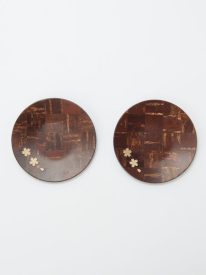
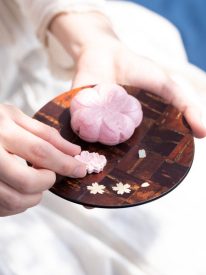
This charming set of two round side plates is crafted from cherry bark, showcasing the natural beauty of this material. Each plate features a checked pattern with cherry blossom detailing. Although small in size, these plates are big in character. The cherry bark has a beautiful natural luster, a deep sheen that seems to shift…
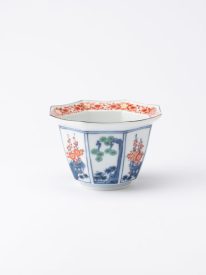
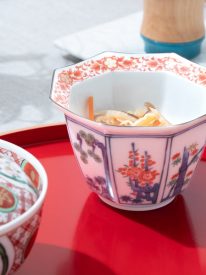
This kobachi small bowl is decorated in the Kakiemon style. The Kakiemon style is known for its elegant compositions that use blank spaces to highlight the porcelain’s beautiful milky white color, with delicate depictions of flowers and birds in natural landscapes. The bowl has an octagonal shape with an outward-extending rim. Its depth makes it…
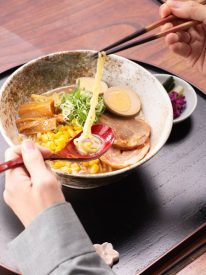
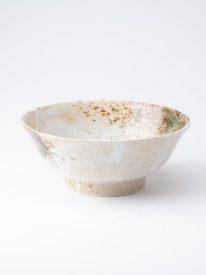
This regular-sized ramen bowl showcases the soft, earthy tones of Shino ware, with shades of brown and green blending seamlessly into a white base. It features a generous application of white glaze, creating a speckled appearance, while the unglazed areas highlight a beautifully rough texture. Originating in Gifu Prefecture during the Azuchi-Momoyama period (1573 CE-1603…



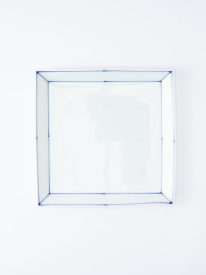 SINGAMA Blue Line Seto Ware Square Plate 8.4in