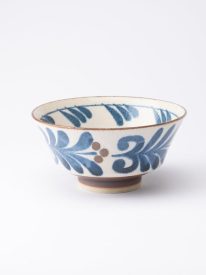
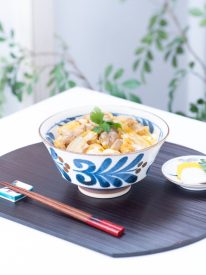
As suggested by its name nanpu, meaning “southern winds,” this bowl features a design that evokes the feeling of a warm breeze. The brush works in blue and brown symbolizing the wind blowing, give the design a natural comfort. The slightly warped rim allows for easy stacking with bowls of the same shape, ensuring convenient storage….
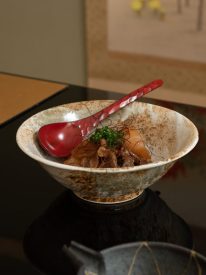
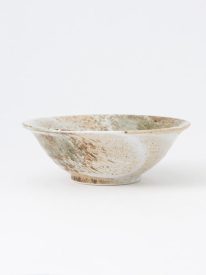
The beautiful white hue of this small ramen bowl is a hallmark of Shino ware. The speckled glaze creates a design that feels both liberating and sophisticated. Shino ware is a type of Mino ware, originally fired in Mino, Gifu Prefecture, during the Azuchi-Momoyama period (1573-1603 CE). While most of the bowl is glazed, offering…
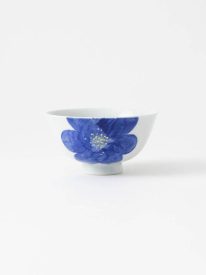
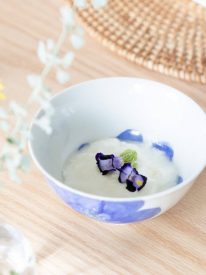
This beautiful rice bowl features soft blue flowers as if painted with watercolors. The bright design resembles blooming flowers, bringing joyful atmosphere on the table. It is painted by the female artist, Ohigashi Alyne, who was born in Philippines. She uses a unique technique called washi-zome (Japanese paper dyeing) and continues her ideal stoneware-making in Higashi…
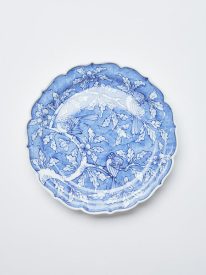
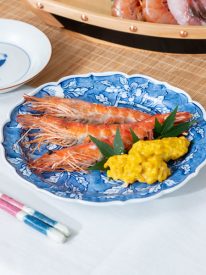
This Flower and Birds Bellflower Rim Dinner Plate is a splendid piece showcasing the artistry of hand-painted blue drawings on fine durable Mikawachi porcelain. The rim is made in the shape of petals of bellflowers and the dynamic curves of branches are a sign of sophistication. As the flowers and leaves elegantly sprout across the…
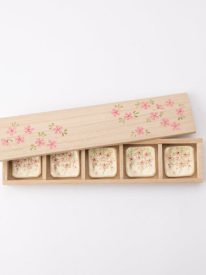
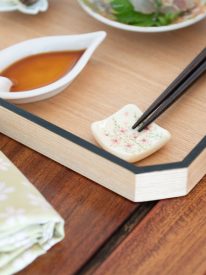
The image of graceful weeping sakura, cherry blossoms, of Gion, Kyoto is depicted on these chopstick rests from Tosen Kiln. Weeping cherry blossoms are one of the representative flowers of Kyoto, and express Kyoto’s unique atmosphere. The pink and pale green of the cherry blossoms beautifully decorate the yellowish cream white color of the Kiyomizu ware…
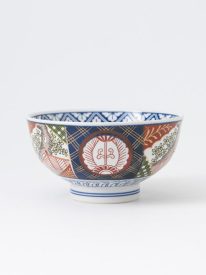
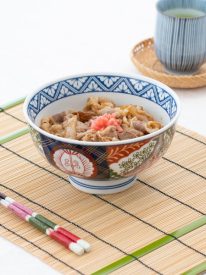
This regular-sized Japanese donburi rice bowl features sakura, or cherry blossoms, framed by dark blue, lattice-like patterns, all rendered in the traditional nishiki-e style. Nishiki-e, meaning “brocade picture,” is a multi-colored woodblock print technique that revolutionized ukiyo-e during the Edo period (1603-1868 CE), when most prints were in black and white. The bowl is perfect…
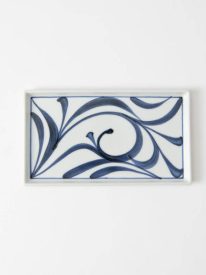
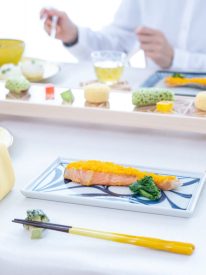
This rectangular dinner plate features a hand-painted arabesque pattern, one of the representative motifs of Tobe ware. The bold indigo design adds an elegant touch. The traditional yet refreshing blue pattern, combined with the smooth texture of porcelain, enhances the appeal of every dish. It works beautifully as a sushi plate, sashimi plate, tempura plate,…
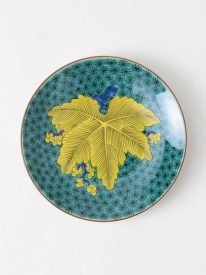
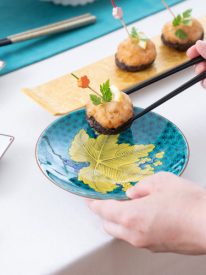
The side plate features a large yellow sycamore leaf in ko-Kutani (old Kutani) style, dating back to mid-17th century, depicting the nature-themed daring design and distinctive bright colors of Kutani ware. With a diameter of 15 cm (5.9 in), it is perfect as an extra plate for the side dishes or desserts. You can use…
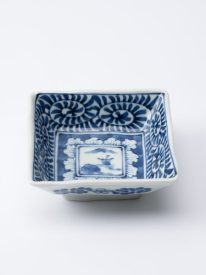
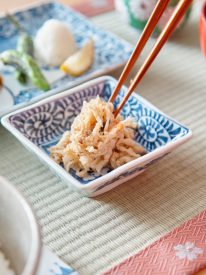
This elegant square kobachi small bowl is crafted by Takayama, a renowned maker of Hasami porcelain, and is dyed with seitan, a kind of indigo. The center of the plate features a traditional sansui landscape painting depicting the grandeur of nature, surrounded by a delicate yet bold karakusa arabesque pattern. In Japanese culture, sansui art symbolizes the…
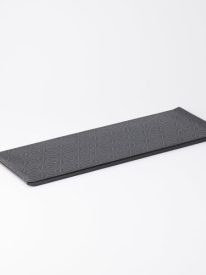
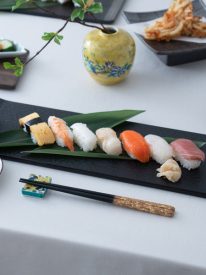
This is a serving tray made by Mr. Kiyoteru Morita, a renowned undercoat craftsman of Echizen lacquerware. This tray is a stunning item that can be used to plate sushi and tempura. It can also be used to serve appetizers, main dishes, and desserts, or can be combined with small plates, bowls, and ochoko (sake…
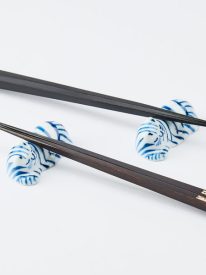
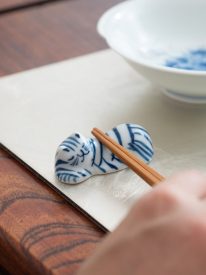
This charming chopstick rest embodies the elegance and whimsy of cats. Hand-painted blue lines depict the adorable sleeping faces of two cats, each slightly different from the other, creating a sense of serenity and humor. It is not just a functional piece, but a conversation starter at any dining setting. This rest boasts a stable weight ensuring…
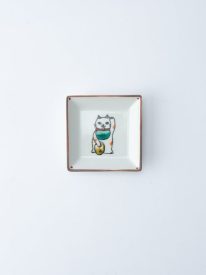
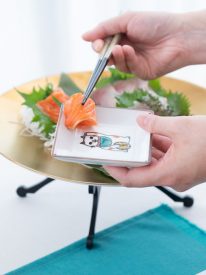
This square sauce plate features an auspicious design of a lucky cat, or maneki neko in Japanese. The delightful illustration showcases an adorable lucky cat raising its left paw in an inviting gesture while holding a golden koban coin in its right. The koban symbolizes prosperity, and the raised left paw is believed to beckon…

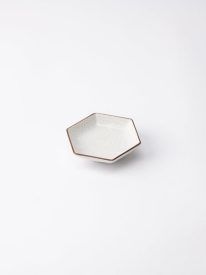 Hachi-Kutani Plover Hexagonal Sauce Plate