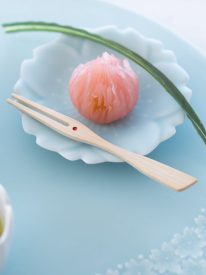
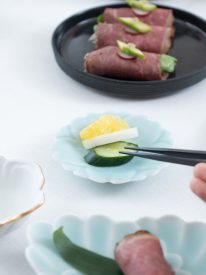
The matte celadon texture of this sauce plate conveys tenderness the moment you touch it. Crafted in a sakura, or cherry blossom, motif, the pale blue adds a graceful appeal to the delicate shape of the petals. The petal-like rims creates a stunnning frame for small sweets and slices of fruit. Pair with your favorite…
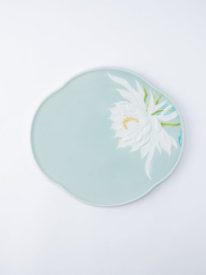
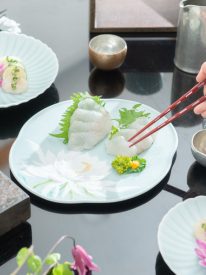
This quince-shaped plate, with its smooth, flowing lines, features the stunning orchid cactus, also known as the epiphyllum. The graceful matte celadon texture of this plate conveys tenderness the moment you touch it, enhanced by a moist and gentle surface finish. The layered pure white petals of the epiphyllum are exquisitely displayed on the plate,…
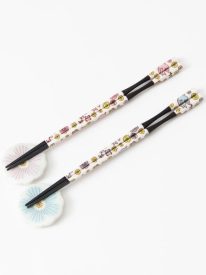
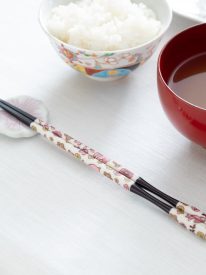
This Japanese chopsticks and chopstick rests set showcases a charming design of birds amidst a colorful floral pattern. When aligned, the patterns on each chopstick come together to complete a harmonious scene. The chopsticks are crafted for easy holding with indented handles. Place the chopsticks on their matching rests for a perfectly coordinated setting right…
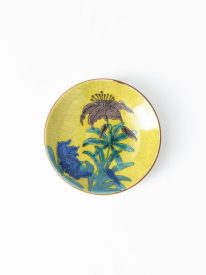
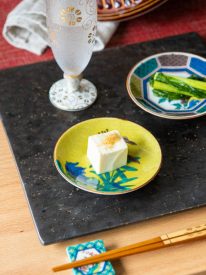
This sauce plate features a lily in Yoshidaya style, a famous traditional style of Kutani ware that combines bright colors that makes this small yet powerful piece stand out. Perfect as a sauce plate, it is versatile to serve any small food such as cheese, nuts, and condiments. You may also place a small portion of…
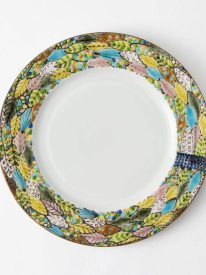
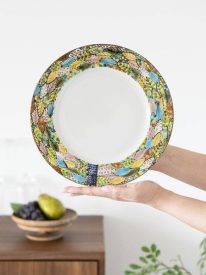
This beautiful dinner plate is part of the Hamorebi series, meaning “sunlight filtering through leaves.” The delicate painting along the rim is hand-painted by female artisan Sakurai Chie. Each piece is carefully adorned using traditional Japanese color paints, a distinctive feature of Kutani ware. The painted areas are slightly raised, adding texture and depth to…
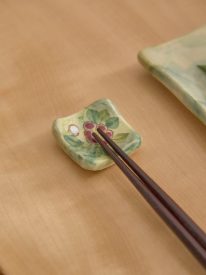
The image of the delicate camellia flower is vividly captured on these chopstick rests from Tosen Kiln. Camellia flowers, passionately adored by Taniguchi, reflect the serene beauty and tradition of Kyoto. The intricate blend of dark and light green shades of the leaves beautifully contrasts the white and red glossy petals that sit upon…
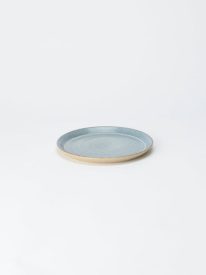
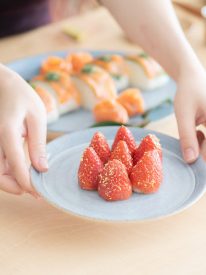
This versatile plate beautifully features the natural textures and hues of Shigaraki pottery. It’s offered by Homeland, a brand dedicated to providing kitchen items that become cherished tools in everyday life, and crafted in collaboration with Hissan Pottery, a renowned Shigaraki ware kiln. The delicate variations of blue in aohagifrom the soft light of a…
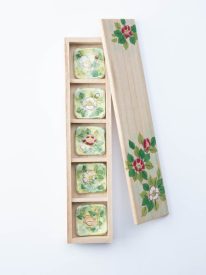
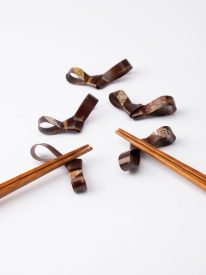
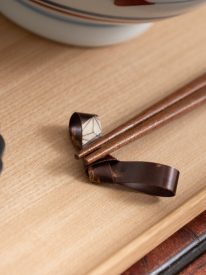
These ribbon-shaped chopstick rests (5 pieces) are made of wild cherry bark and knotted with a single piece of cherry bark. The marquetry gives an elegant atmosphere. Recommended for those who want to casually incorporate craftwork into their daily dining. This popular product is also used in many restaurants. The cherry trees used for Akita…
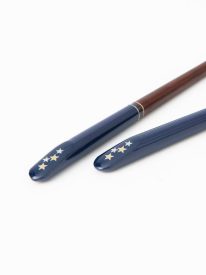
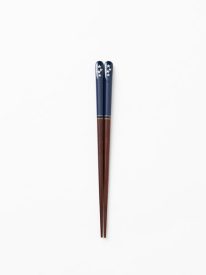
These are children’s chopsticks made of natural wood and lacquer, embellished with maki-e, a traditional lacquerware technique. The top ends are cut diagonally with a charming star pattern. Perfect for children from around five to nine years old, these chopsticks feature square tips for easy handling. The joy children experience using them makes this pair…
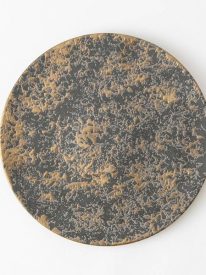
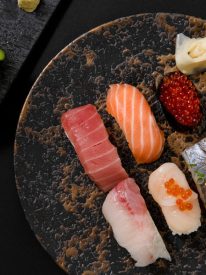
This stunning dinner plate combines matte black with muted gold tones, creating an eye-catching and modern design. Its sophisticated color palette makes it a versatile choice for any table setting. Durable and practical, it’s favored by restaurants in Japan and beyond. Ideal for serving sashimi, sushi, or tempura, it also works beautifully for generous servings…
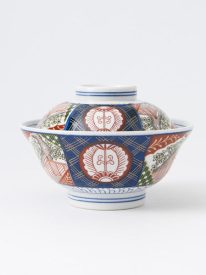
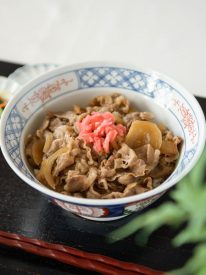
This regular-sized Japanese donburi rice bowl features sakura, or cherry blossoms, framed by dark blue, lattice-like patterns, all rendered in the traditional nishiki-e style. Nishiki-e, meaning “brocade picture,” is a multi-colored woodblock print technique that revolutionized ukiyo-e during the Edo period (1603-1868 CE), when most prints were in black and white. The lid helps keep the…
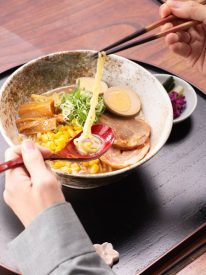
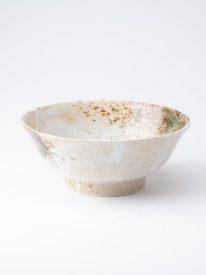
This regular-sized ramen bowl showcases the soft, earthy tones of Shino ware, with shades of brown and green blending seamlessly into a white base. It features a generous application of white glaze, creating a speckled appearance, while the unglazed areas highlight a beautifully rough texture. Originating in Gifu Prefecture during the Azuchi-Momoyama period (1573 CE-1603…

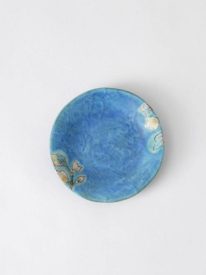 Wind's Path Sauce Plate
 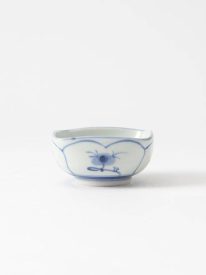 Shepherd's Purse Kobachi Small Bowl
 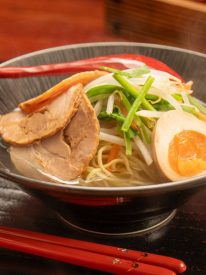 Black Tokusa Ramen Bowl S