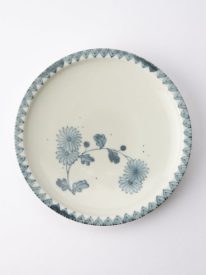
This is a Arita ware plate by Ri Sanpei (Yi Sam-pyeong) Kiln, a brand by the descendant of Yi Sam-Pyeong, the discoverer of white porcelain ore for Arita ware. This dish is simple, yet dignified and powerful. This design itself is from the early Imari period, about 400 years ago. Chrysanthemums are characterized not only by their beauty…
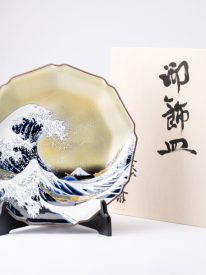
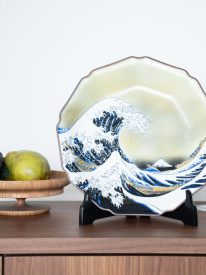
The large plate features the Japanese artist Katsushika Hokusai’s ukiyo-e painting The Great Wave, which depicts surging waves and three boats, and silently standing Mount Fuji in the distant background under the golden sky. Throughout his life, Hokusai painted waves as the main subject of his paintings along with Mount Fuji. Hokusai’s expression of the…
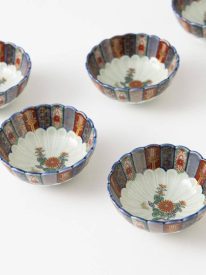
This kobachi small bowl set of 5 has a chrysanthemum shape decorated with patterns, which made by modern interpretation of old Imari. The perfect balance of vivid colors, gold and white makes it a classy and stunning piece. It is a great size as a kobachi serving side dishes such as sunomono (vinegared food), aemono (seasoned…
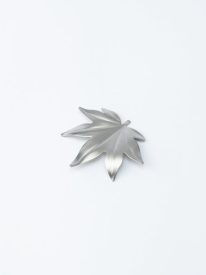
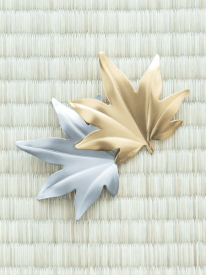
This is a stainless steel chopstick rest in the shape of a maple leaf in silver. It is made in Tsubame Sanjo, which accounts for 90 percent of domestic production of metal tableware.It expresses the soft thinness, undulation, and curves of a maple leaf, and is designed by Kaichiro Yamada, KAICHI DESIGN, which has won…
This small plate is shaped like a sumo referee’s fan, which is used to signal the outcome of a match. Historically, it is said that samurai commanders once used this type of fan to issue commands during battle. With its distinctive form and cultural significance, this plate brings a touch of tradition to your table….
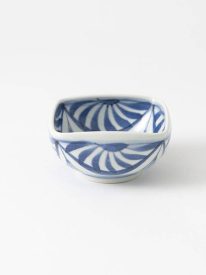
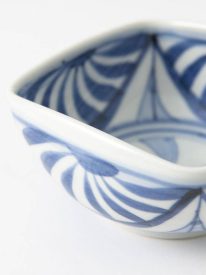
This square kobachi small bowl features a hand-painted chrysanthemum pattern with a modern, geometric design. The indigo shade adds a contemporary touch, while the natural motifs convey the warmth of hand-painting. It’s perfect for serving a variety of side dishes, such as tangy sunomono or slowly simmered nimono. The bowl’s shape stands out with its…
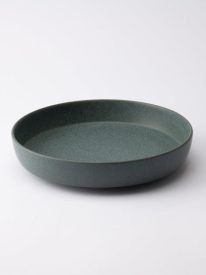
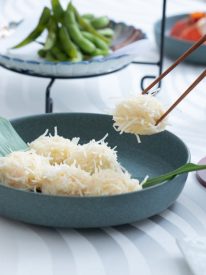
This is an easy-to-use plate characterized by a moody green color, reminiscent of a deep forest. Instead of shiny, bright gems, the design is chic and modern, featuring subdued tones and matte textures like Jade gemstones. The deep green tones go well with warm-colored foods such as red, yellow, and orange. Even a few bright colors,…
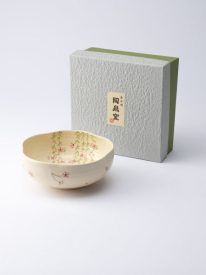
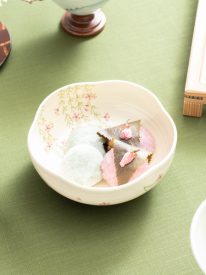
The image of graceful weeping sakura, cherry blossoms, of Gion, Kyoto is depicted on this bowl from Tosen Kiln. Weeping cherry blossoms are one of the representative flowers of Kyoto, and express Kyoto’s unique atmosphere. The pink and pale green of the cherry blossoms beautifully decorate the yellowish cream white color of the Kiyomizu ware base….
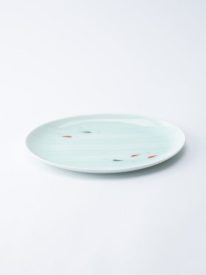
Enjoy the refined natural blue-green luster of celadon with this stylish oval plate from Kosen Kiln. With its translucent glaze on the blue-jade hue of celadon, a peaceful atmosphere emanates from the plate’s surface, like a calm glistening pond. An air of tranquility is furthered by the horizontal lines that grace this plate. Also adorning the…
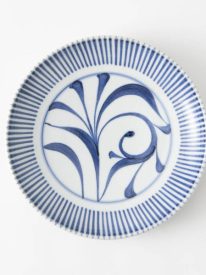
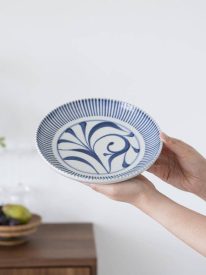
This round dinner plate features an arabesque pattern, a signature motif of Baizan Kiln, accented by a tokusa striped edge that frames the design with elegance. The hand-painted nature motifs add a warm, personal touch, showcasing the artisan’s skill. Perfectly sized for serving salads and main dishes, its traditional, refreshing blue pattern and smooth porcelain…
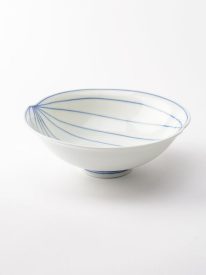
On this bowl, lines in sometsuke “Blue and White” style form smooth and elegant curves, representing leaf veins. These lines are hand-painted by artisans, with subtle variations in thickness and shade making each unique. When using this plate, you can feel a closeness to nature. Sometsuke is a technique that applies indigo color onto a base…
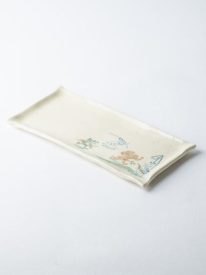
Featuring the distinctive “nami-yu” glaze, which is made from the ashes of the Kyoto forest, this rectangle plate has a natural base color in yellowish cream-white. It depicts the famous illustrated scroll named “Choju Giga” which is a caricature picture scroll depicting anthropomorphic animals and their playfulness, dating from the 12th to 13th centuries. Founded in…


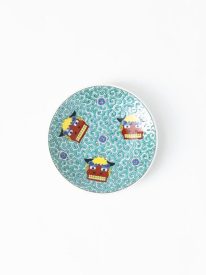 Shishi Sauce Plate