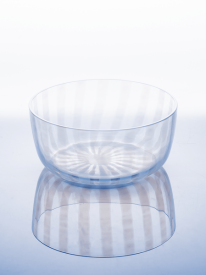
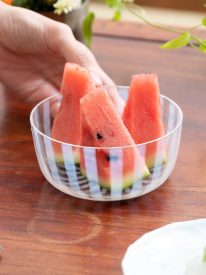
This is a glass bowl with the tokusa “horsetail” pattern from the Taisho Roman glass series by Hirota Glass, a long-established glass manufacturer in Tokyo. The tokusa motif, cherished since the Edo period (1603 CE-1868 CE), symbolizes growth and prosperity. Its straight, upward-reaching lines embody aspirations for success and flourishing, making it a beloved design through…
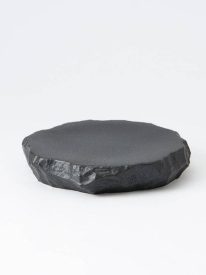
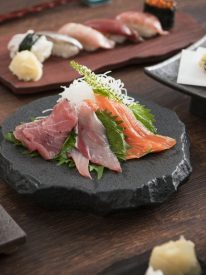
This unique and modern dinner plate has a beautiful crystal rock-like matte black texture. The design, which looks like a real rock, gives the dining table a surprising and strong impression. Incorporating natural motifs into your dining table can also create a sense of seasonality. Perfect for serving appetizers, both main dish and side dish….
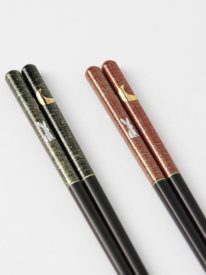
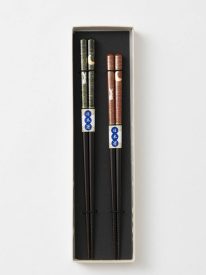
This exquisite set of Japanese chopsticks features a charming rabbit sitting under a crescent moon. The gold moon, silver rabbit and gold powder in the background lend a touch of fine elegance to the motif. The pairing of a rabbit and moon has been beloved in Japan for ages. According to Japanese folklore, the moon’s…
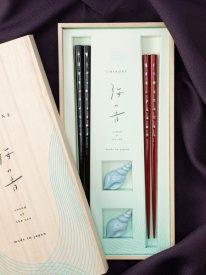
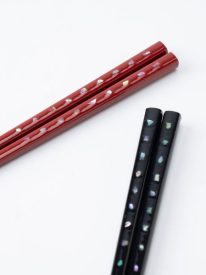
These chopsticks from Matsukan’s Sound of the Sea series are fully coated in lacquer, showcasing the raden technique, where shimmering mother-of-pearl is embedded into the surface. The accompanying chopstick rests are crafted using a seashell-shaped mold originally used to make rakugan, a traditional Japanese confectionery. After an initial ten layers of natural lacquer, shell inlays…
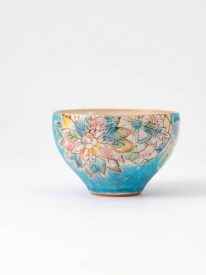
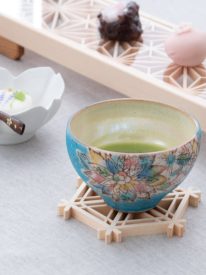
This kobachi small bowl features a vibrant turquoise glaze, with floral patterns in shades of blue, green, yellow, and pink decorating its surface. The delicate hand-painted details and subtle kannyu crackles add depth and texture, creating a design reminiscent of flowers blooming along a water’s edge. The interior is finished with a luxurious champagne gold glaze,…
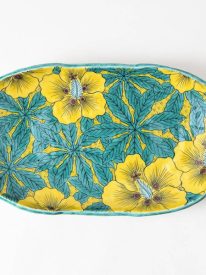
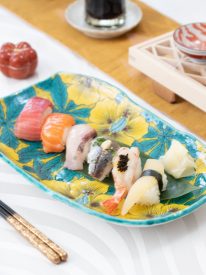
The gorgeous platter features hibiscus flowers painted on its entire surface. The blooming large yellow blooms and spreading green leaves create a beautiful contrast. It is hand-painted by brush, using Japanese paint called wa-enogu which is one of the remarkable features of Kutani ware, as you can see the painted part is slightly thickened. This…
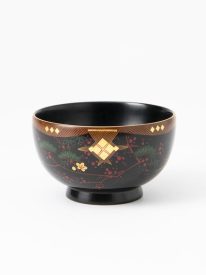
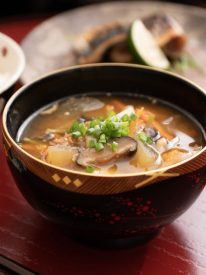
This soup bowl is hollowed out from Japanese horse chestnut, which is the best material for wood bowls. It has a slightly matte texture in calm black color.The lacquering process, from the base coat to the top coat, has been inspected for designation as a traditional Aizu lacquerware craft.Aizu-e, the traditional design of Aizu lacquerware,…
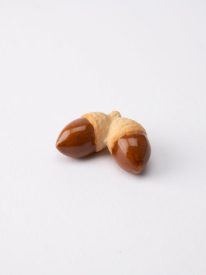
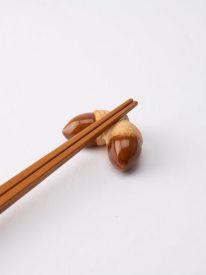
This chopstick rest is shaped like a bamboo-leaf oak acorn, a tree found in Japan, China, and parts of the Korean Peninsula. Its distinctive cap, featuring six to eight horizontal stripes, is carefully recreated in this design. The shiny, rounded shape adds to its charm, making it as adorable as a real acorn. A perfect…
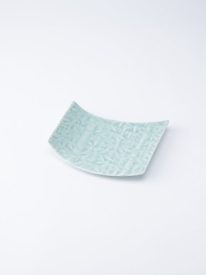
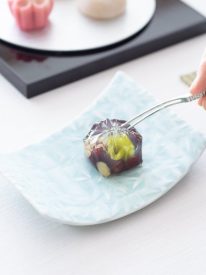
The graceful matte celadon texture of this bamboo-inspired side plate conveys tenderness the moment you touch it. The bamboo motif is intricately engraved, creating a detailed three-dimensional effect that is beautifully enhanced by the subtle gradations of celadon porcelain. The design evokes the serene atmosphere of a bamboo forest, with the plate’s slightly curled edges…
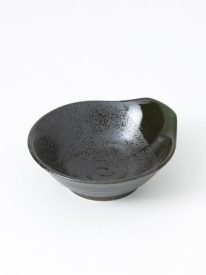
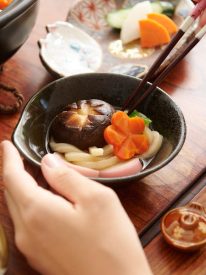
This tonsui bowl features a chic black base with dark green glaze accents, adding a touch of elegance. Its dark color beautifully enhances the presentation by highlighting the vibrant hues of the food. Primarily used as a serving bowl for hot-pot dishes, it is also versatile enough for holding noodle dipping sauces or serving as…
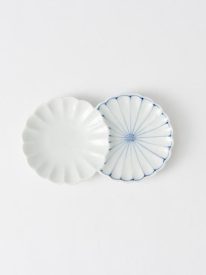
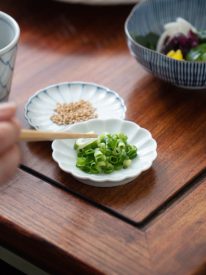
This unique small plate is shaped like two chrysanthemums joined together. One of them features radiating lines colored in indigo blue. Its shape and design make it perfect for serving soy sauce and small relishessuch as spring onions, wasabi, ground ginger, and sesame seedsthat are commonly served with soy sauce when enjoying sashimi or sushi.
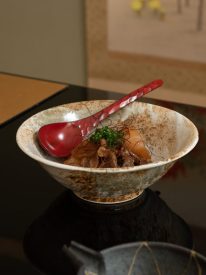
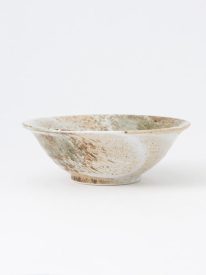
The beautiful white hue of this small ramen bowl is a hallmark of Shino ware. The speckled glaze creates a design that feels both liberating and sophisticated. Shino ware is a type of Mino ware, originally fired in Mino, Gifu Prefecture, during the Azuchi-Momoyama period (1573-1603 CE). While most of the bowl is glazed, offering…

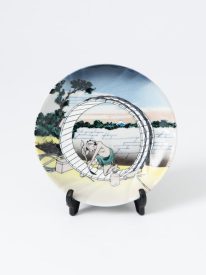 Hokusai Bishu Fujimigahara Decorative Plate