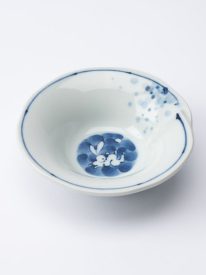
This is an indigo-dyed moon and rabbit kobachi small bowl crafted by Takayama, a renowned maker of Hasami porcelain. The inside of the bowl features a charming illustration of a rabbit playfully leaping beneath the moon, delicately painted in soft indigo tones. In Japanese culture, the rabbit is a symbol of fertility, longevity, and prosperity, making…
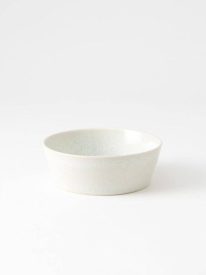
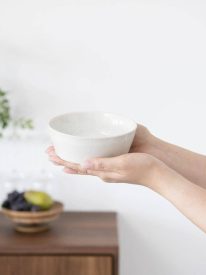
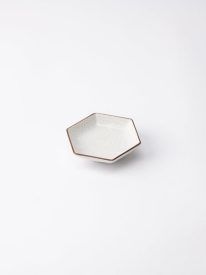
This simple yet modern bowl features a beautiful white glaze. Handcrafted by Hibino Ceramicrenowned for their expertise in creating tableware that enhances both the presentation and appeal of dishesthis bowl combines timeless elegance with practical functionality. In addition to its sleek design, it’s highly durable and easy to handle, making it a popular choice in…
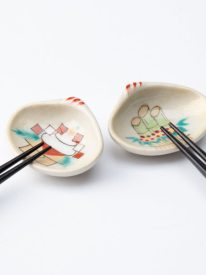
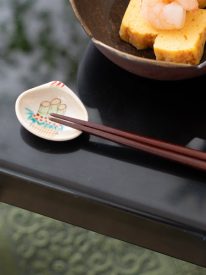
This set of chopstick rests are designed in the shape of shells, featuring a kadomatsu and kagami mochi motif. Kadomatsu, the decorative pine trees for New Year, and kagami mochi are traditional Japanese symbols used to welcome the New Year and to honor the gods. It is believed that Toshigami, a Japanese deity representing vitality, dwells…
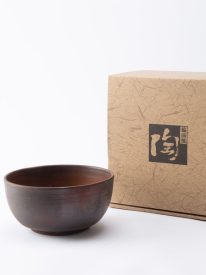
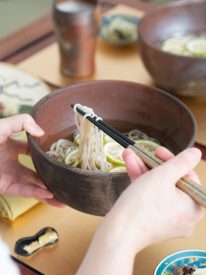
This large donburi bowl embodies the earthy textures and natural colors typical of Bizen ware. Its rough surface and stunning patterns, created by the kiln’s flames, highlight the “art of clay and fire.” The unglazed red clay, adorned with natural ash markings, offers a rugged, metallic feel. Bizen ware, one of Japan’s oldest ceramics, is…
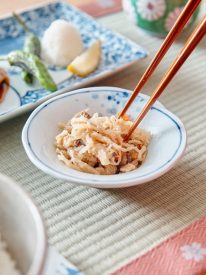
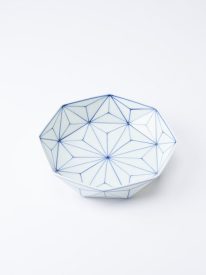
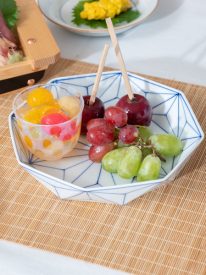
This bowl features the traditional Japanese hemp leaf pattern. The hemp leaf is considered as a symbol of good luck meant to ward off evil and is commonly used on kimono and tableware. Employing a technique of “Sometsuke” (underglaze cobalt blue) painting on a base brilliantly fired to a pure white, each piece is meticulously…
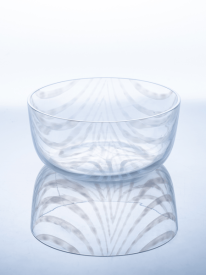
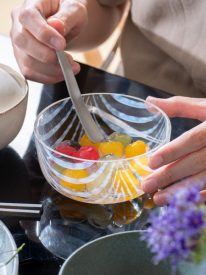
This is a glass bowl with makiage pattern from the Taisho Roman glass series by Hirota Glass, a long-established glass manufacturer in Tokyo. Makiage is a traditional tie-dyeing technique used in kimono making. This method creates intricate patterns that convey an aura of elegance and grace. This pattern is created by the aburidashi “invisible ink” technique,…
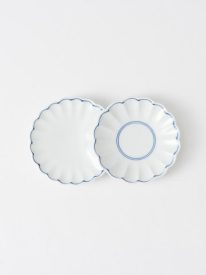
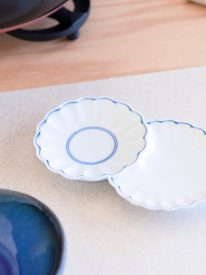
This unique small plate is shaped like two chrysanthemums joined together. One of them features a circle at the center, colored in indigo blue. Its shape and design make it perfect for serving soy sauce and small relishessuch as spring onions, wasabi, ground ginger, and sesame seedswhich are commonly served alongside soy sauce when enjoying…
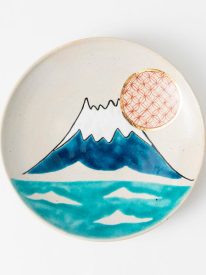
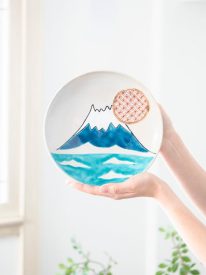
This is a plate with a dynamic design of Mount Fuji and Japanese pattern “Shippou” appeared in a circle design. This pattern is said to be connected in an eternal chain consisting of crossed rings is considered as a symbol of peace. Each piece is uniquely hand-painted by a dedicated artisan of Kutani ware, as…
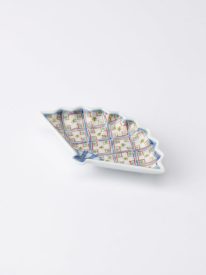
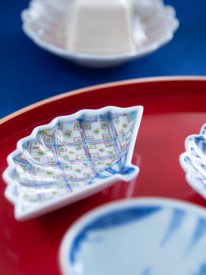
This unique fan-shaped sauce plate features a classic, colorful geometric pattern. Sarasa refers to fabric products made of cotton dyed with multi-colored patterns, which originated in India. This plate is available in different designs, so you can collect them for a more enjoyable table setting. Perfectly sized as a sauce plate, it is also versatile to…
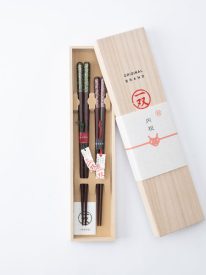
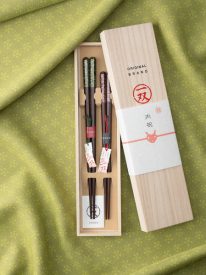
This set, named uchiiwai after the Japanese custom of giving return or thank you gifts, includes two pairs of dark brown-lacquered wood chopsticks with glittering tops. They offer the classy sheen of traditional lacquerware coupled with an eye-catching design. The longer pair measures 22.5 cm (8.8 in) and is accented with green and silver detailing,…
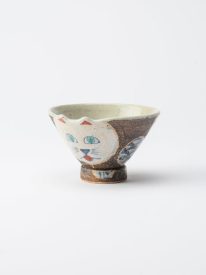
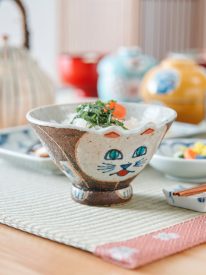
Enjoy eating rice from this cute rice bowl designed with a playful cat from Kousai Kiln. This charmingly designed rice bowl is handmade combining the Shigaraki style yakishime (high-fired unglazed ceramics) and the traditional somenishiki, a technique where a product is first glazed with white and blue patterns and then is further decorated with detailed hand-painted drawings….
This small porcelain plate has auspicious design patterns: “Nami Chidori,” plovers and waves, and “Karakusa,” an arabesque design. Nami Chidori, a combination of a plover and a wave, means “to overcome rough seas together.” Arabesque designs are considered a symbol of longevity and prosperity of offsprings, as arabesque, the vine, extends its stems in all directions….

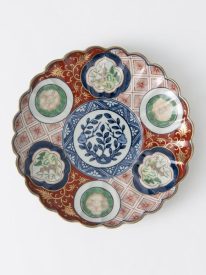 Old Imari Red Sansui Side Plate