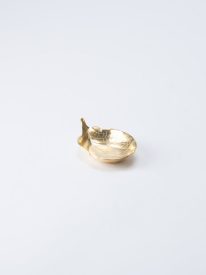
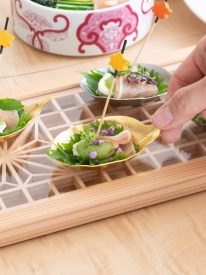
This gold amuse bouche spoon rests in the shape of a delicate persimmon leaf. It has a depth of 1.5cm(0.5in)perfect for carrying food without worries of spillage. The tapered base of the leaf is easy to hold and serves as a handle for the spoon. The veins of a persimmon leaf are recreated faithfully, a…
This is a set of chopsticks with a gold rabbit motif. The lacquer on the top has a beautiful sheen, and the chopsticks are thick enough to hold easily. The lower part features a lovely wood grain and is finished with the natural color and texture of the wood. These chopsticks not only feature an…
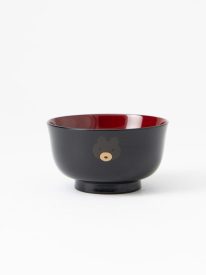
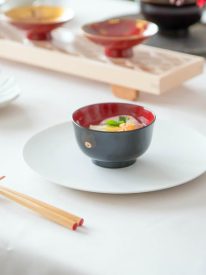
This charming soup bowl is sized for children to hold with ease, adding warmth and playfulness to mealtime. An artisan has delicately hand-painted an adorable bear motif, showcasing fine craftsmanship in every detail. Hollowed from domestic wood and finished with a smooth lacquer, it has a slightly thicker design to prevent heat from transferring to…
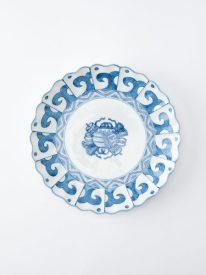
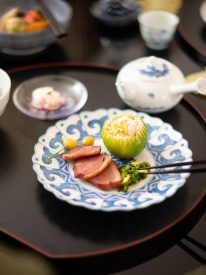
This side plate is a magnificent example of the artistry found in Mikawachi ware, featuring hand-painted designs in blue on fine, durable porcelain. The rim of the plate is adorned with the geometric patterns of shonzui-de waves, a style influenced by the porcelain patterns originally produced in Jingdezhen kilns during the late Ming Dynasty. At…
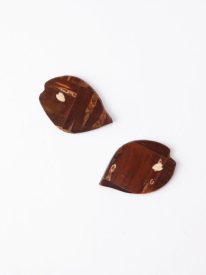
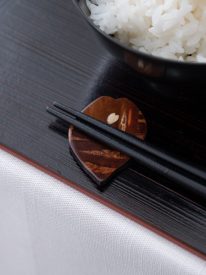
A set of 2 chopstick rests made by Yatsuyanagi, a cherry bark work manufacturerfrom Akita Prefecture. This elegant chopstick rests has a shape of cherry petals, with a decoration of petal motif made of white wood bark on top of cherry bark work. Although small in size, it fully conveys the charm of Akita cherry…
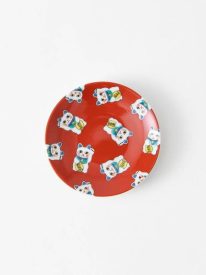
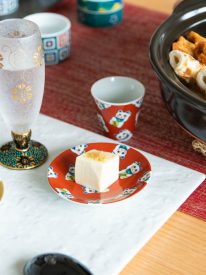
This sauce plate features the iconic lucky cat on a vibrant red background. Inspired by Aoki Mokubei, the plate is decorated in the Mokubei style of Kutani ware, where intricate designs in the traditional five Kutani colors are elegantly set against a rich red base. Today, lucky cats are well-known symbols of wealth and good…
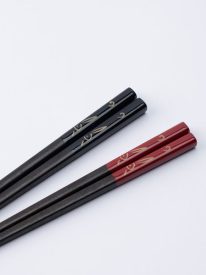
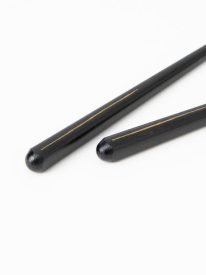
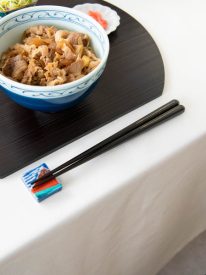
These chopsticks are made of ebony, a famous wood with a sense of luxury and dignity. The gold line in the center of the chopsticks adds a nice accent, giving them a simple yet modern impression. Ebony has become increasingly rare over the years, and its use as a material for chopsticks is decreasing. The…
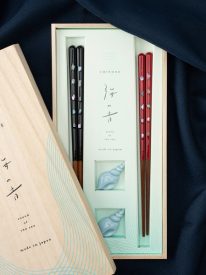
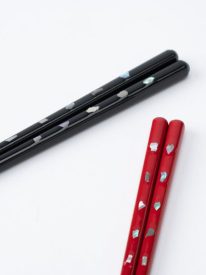
These chopsticks from Matsukan’s Sound of the Sea series are half-coated in lacquer, allowing the natural wood grain and color to be visible. Lightweight and easy to use, they crafted using a technique called raden, where shimmering pieces of mother-of-pearl are embedded into the coating. The chopstick rests are made with a seashell-shaped mold originally…
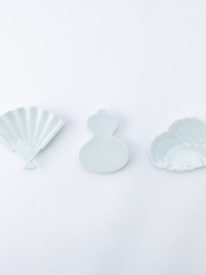
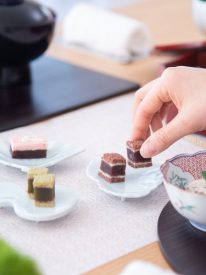
This set includes three small celadon three-footed plates in the shapes of a pine tree, a fan, and a gourd. These shapes are auspicious patterns and are beloved by many in Japan. These small plates are useful for serving small amounts of condiments, delicacies, or dried sweets, and can also double as chopstick rests. They…
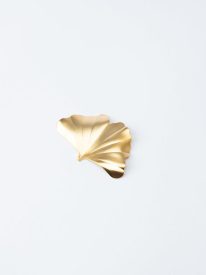
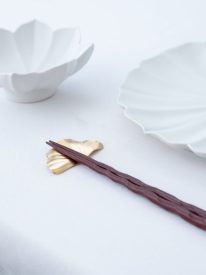
This is a stainless steel chopstick rest in the shape of a ginkgo leaf in gold. It is made in Tsubame Sanjo, which accounts for 90 percent of domestic production of metal tableware.It expresses the soft thinness, undulation, and curves of a ginkgo leaf, and is designed by Kaichiro Yamada, KAICHI DESIGN, which has won…
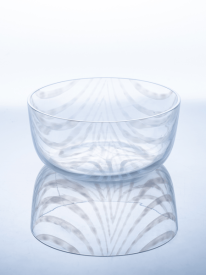
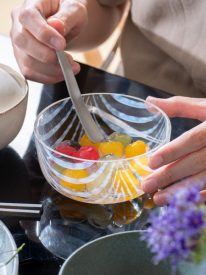
This is a glass bowl with makiage pattern from the Taisho Roman glass series by Hirota Glass, a long-established glass manufacturer in Tokyo. Makiage is a traditional tie-dyeing technique used in kimono making. This method creates intricate patterns that convey an aura of elegance and grace. This pattern is created by the aburidashi “invisible ink” technique,…
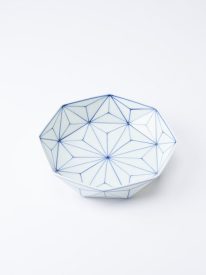
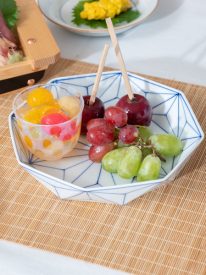
This bowl features the traditional Japanese hemp leaf pattern. The hemp leaf is considered as a symbol of good luck meant to ward off evil and is commonly used on kimono and tableware. Employing a technique of “Sometsuke” (underglaze cobalt blue) painting on a base brilliantly fired to a pure white, each piece is meticulously…

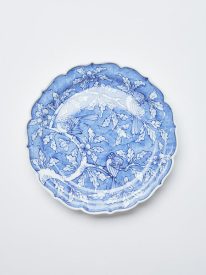 Flower and Birds Bellflower Rim Dinner Plate
 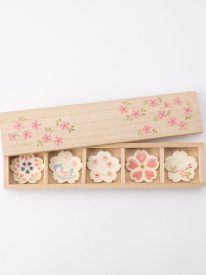 Tosen Kiln Sakura-Shaped Kiyomizu Ware Chopstick Rest Set
 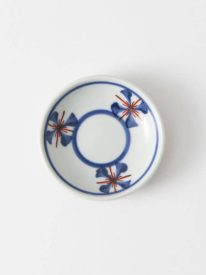 Four Petaled Flower Sauce Plate
 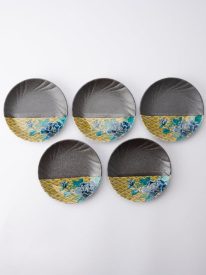 Blue Peony Round Side Plate Set
 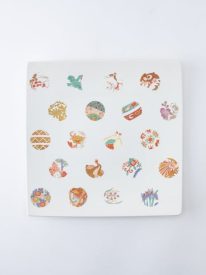 Asteroid Square Dinner Plate
 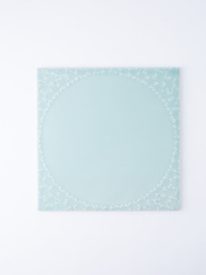 Moist Sakura Square Main Plate
 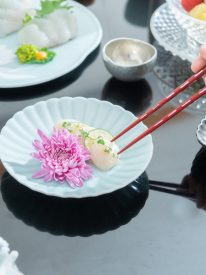 Hataman Touen Moist Chrysanthemum Shape Imari Nabeshima Ware Side Plate
 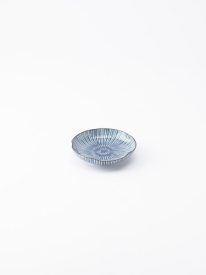 Fukuhou Kiln Tokusa Hasami Sauce Plate