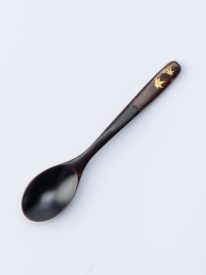
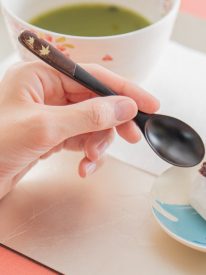
The beautiful black lacquer with red hues peeking through already makes this spoon a work of exceptional craftsmanship. The delicate natural pattern of kabazaiku, or cherry bark work graces the handle and is further decorated in an understated momiji (Japanese maple leaves) motif. The technique used for this spoon is known as tamenuri, which involves a…
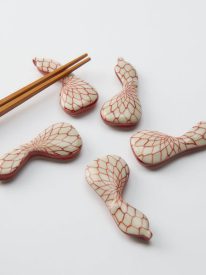
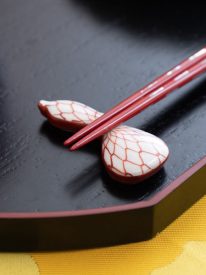
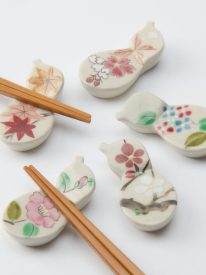
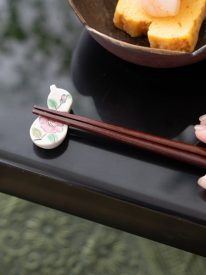
This is a unique gourd-shaped chopstick rest set by Hozan Kiln of Kyo ware. The gourd shape, which spreads out at the bottom, has been considered a good luck charm for warding off disasters and bringing in happiness since ancient times in Japan. Furthermore, the net pattern is a motif commonly used in Japanese tableware,…
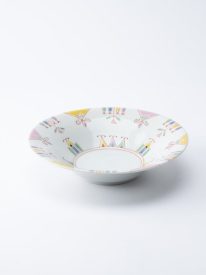
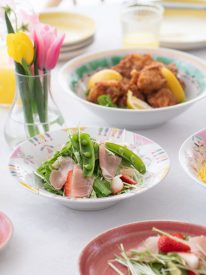
The bowl features a beautiful contrast of soft colors on a white canvas, making the most of the distinctive texture of porcelain. The fine touch of flowers are hand-painted by an artisan, adding a touch of elegance to the space. Unlike other kilns from Kutani ware, Ginshu kiln is especially known as its romantic and…
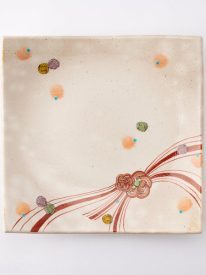
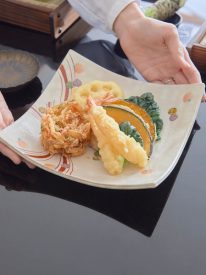
This square plate is decorated with gorgeous and lovely mizuhiki motifs. The square dish with warped edges is stylish yet soft, and matches the graceful knot pattern. The festive motif is perfect for New Year and celebratory occasions. Kanazawa, the birthplace of Kutani ware, is known for its unique and rare traditional craft called Kaga Mizuhiki. Made…
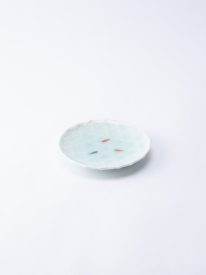
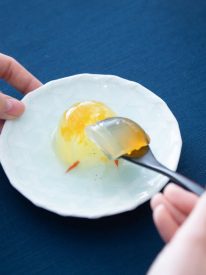
Enjoy the refined natural blue-green luster of celadon with this stylish side plate from Kosen Kiln. This porcelain piece captivates with its intricately woven basket-like design on both sides. The translucent glaze on the blue-jade hue of celadon, creates a tranquil atmosphere emanating from the plate’s glossy surface. Medaka rice fishes are depicted with such realism…
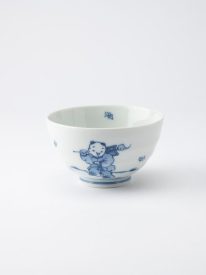
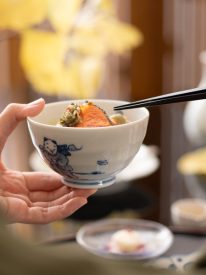
This splendid rice bowl, adorned with delicately painted karako, Chinese-style playful children, encapsulates the essence of playful elegance. Meanwhile, the interior features a single butterfly, displaying both a narrative quality and refined simplicity. Holding this charming bowl in your hand, you can feel the lightness and thinness characteristic of Mikawachi ware. It displays an exquisite gradation,…
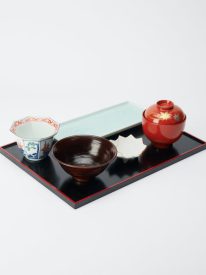
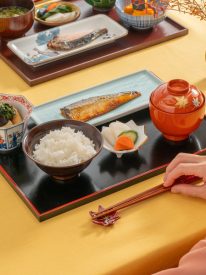
The Quiblas Mono Auburn Maple Dinnerware Set blends the refined artistry of Arita ware with the timeless appeal of Japanese lacquerware. Its rich red tones capture the essence of autumn, featuring pieces decorated with maple leaf designs and complemented by plates with soft water patterns. The set evokes a serene scene of maple leaves floating…
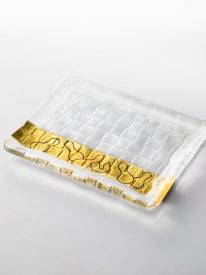
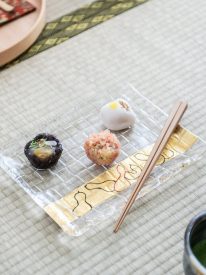
Meticulously handcrafted by adept artisans, the Yoshita Kasho Maki-e glass rectangular plate is a paragon of exquisite craftsmanship, effortlessly uniting the peerless quality of glass with a pioneering technique. This involves the integration of hand-painted Maki-e, employing natural lacquer, harmoniously combined with the esteemed Kanazawa gold leaf, presenting a piece where finesse and tradition resonate in…
This is a unique gourd-shaped chopstick rest set by Hozan Kiln of Kyo ware. The gourd shape, which spreads out at the bottom, has been considered a good luck charm for warding off disasters and bringing in happiness since ancient times in Japan. Each chopstick rest features a painting of a different flower – plum…
This is a beautiful side plate decorated in an old Imari floral pattern painted with precision.The blue tones are arranged in a modern way, and each piece is individually brushed by craftsmen to create an incomparable elegance. Many of the designs are arranged with traditional auspicious designs, making the tableware suitable for the modern dining…
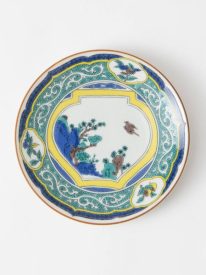
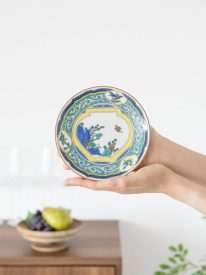
This versatile side plate features a flying bird in mountains, using an art style of ko-Kutani. Kutani ware uses a brush for painting with Japanese coloring paint, as you can see the painted part is slightly thickened. It is great for meal and teatime as it can be used as an extra plate for side…
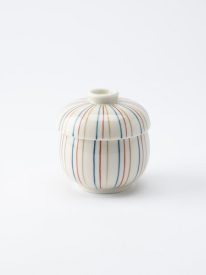
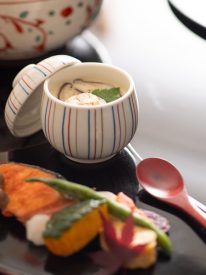
Enjoy delicious chawanmushi, Japanese steamed egg custard, in this beautiful Arita ware chawanmushi bowl. This Chawanmushi bowl is painted in the “Tokusa (Horsetail)” pattern which is a classic motif that has been beloved since the Edo period (1603 CE – 1867 CE). Its straight-growing appearance symbolizes wishes for growth and prosperity. And the three subdued colors…

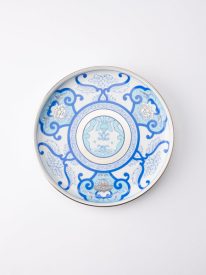
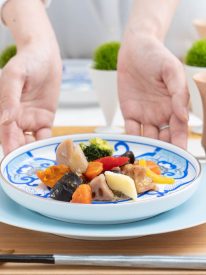
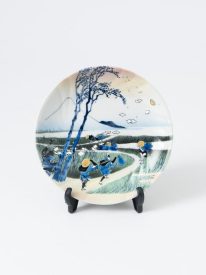 Hokusai Sunshu Ejiri Decorative Plate