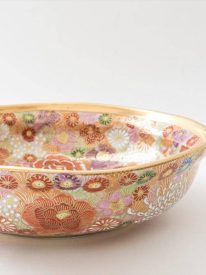
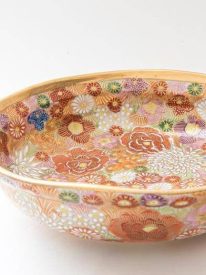
This elegant bowl features a delicate Hanazume style, meaning filled with flowers, one of the most notable design of Kutani ware which has been handed down the Taisho period (CE 1912-1926). Filled with colorful flowers all over the body with gold trimming, it has a timeless elegance and sophistication created by hand drawn technique; there…
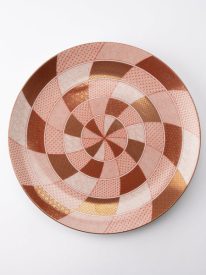
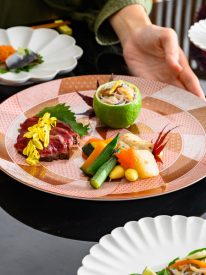
A simply stunning plate with finely detailed traditional patterns in various shades of red decorated with gold. Akae, or “red painting,” is one of the classic techniques of Kutani Ware. Detailed patterns with differing shades of a red pigment are added to the Kutani ware that fully cover the surface of the item. To add…
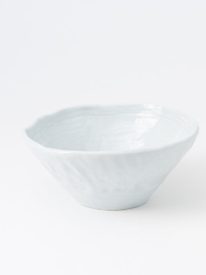
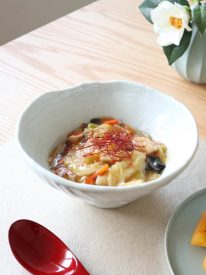
This donburi bowl boasts an attractive celadon finish. The combination of the undulating surface and the smooth, lustrous glaze provides a delightful tactile experience. Shaped using a potter’s wheel, this piece has a pleasant weight that makes it a pleasure to hold in one’s hands. The bowl is perfect for a variety of donburi dishes,…
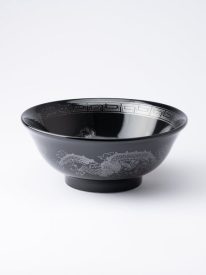
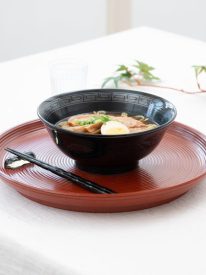
This regular-sized Mino ware ramen bowl features a glossy black background with an elegant silver dragon painted on the sides and bottom. In Asian cultures, the dragon is an auspicious creature, symbolizing nobility and good fortune. Inside the bowl, the square spiral pattern, known as raimon in Japanese, is a traditional Chinese lightning design symbolizing…
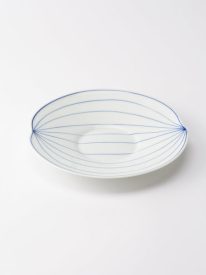
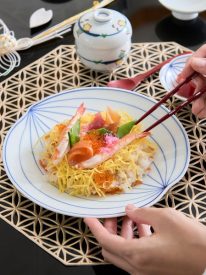
On this large white porcelain plate, lines in sometsuke “Blue and White” style form smooth and elegant curves, representing leaf veins. These lines are hand-painted by artisans, with subtle variations in thickness and shade making each unique. When using this plate, you can feel a closeness to nature. Sometsuke is a technique that applies indigo color…
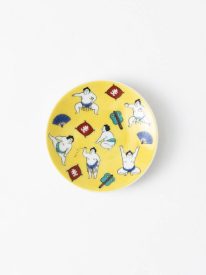
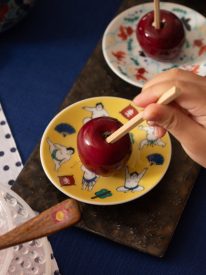
This is a sauce plate featuring sumo wrestlers, a symbol of good luck in Japan since the Edo period (1603 -1868 CE). It’s the perfect size for use as a sauce plate, and it’s also versatile enough to serve cheese, nuts, condiments, and other small foods. Each piece is uniquely hand-painted by a dedicated artisan…
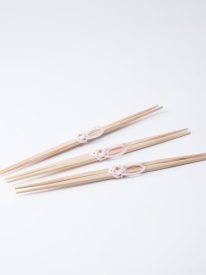
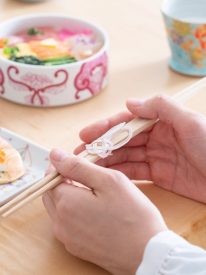
This set of three pairs of chopsticks, each held together by a rabbit-shaped mizuhiki, gives a festive flair to your table setting. Made of Yoshino cedar, they are light, easy to hold, and can be washed and reused multiple times. They are also thin at both ends, so you can pick up food on either side….
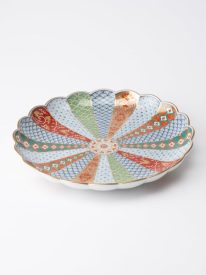
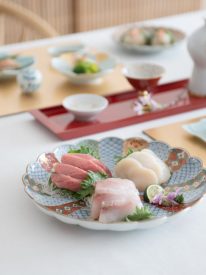
This is a gorgeous large plate with a “chrysanthemum split” design in old Imari style. The lines extend from the outside to the center and are decorated with different traditional patterns.” Each has its own meaning, such as “seigaiha,” “shigebishi,” and “zuiun.” “Seigaiha” (blue ocean waves) – a symbol of prosperity. “Shigebishi” (dense diamonds) –…
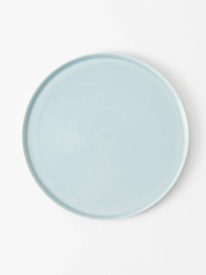
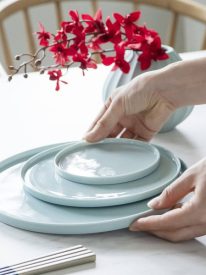
This Japanese plate has light shades of celadon glaze that looks like a white porcelain covered with thin ice. It is 18 cm (7.1 in) diameter and perfect for serving side dishes, bread, desserts and fruits. You may use it as an extra plate for your guest. With the combination of their deep knowledge about…
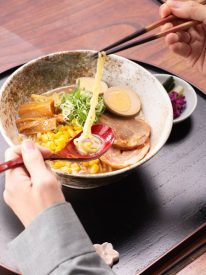
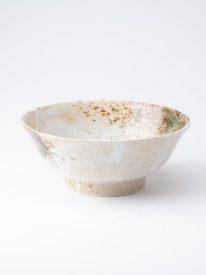
This regular-sized ramen bowl showcases the soft, earthy tones of Shino ware, with shades of brown and green blending seamlessly into a white base. It features a generous application of white glaze, creating a speckled appearance, while the unglazed areas highlight a beautifully rough texture. Originating in Gifu Prefecture during the Azuchi-Momoyama period (1573 CE-1603…
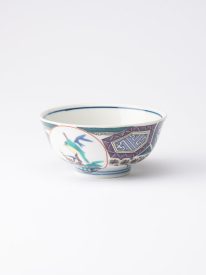
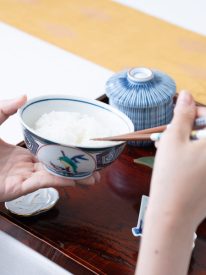
This Japanese rice bowl has a typical design of the Ko-Kutani (old Kutani) style dating back to mid-17th century, depicting the nature-themed motif and traditional patterns and distinctive bright colors of Kutani ware. It is painted with the five colors of red, yellow, green, purple and dark blue, known as “Go-Sai” in Japanese. Kutani ware uses…
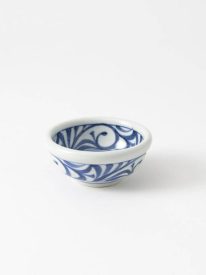
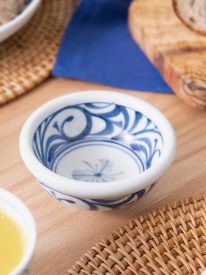
This small kobachi small bowl features a hand-painted arabesque pattern, a representative motif of Tobe ware. The deep indigo shade adds a hint of modern elegance. Its size is ideal for serving side dishes like tangy sunomono or gently simmered nimono. It’s also perfect for small portions of relishes, which can be placed on a…

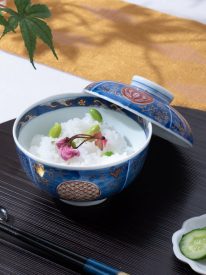 Gold Arabesque Kobachi Small Bowl With Lid