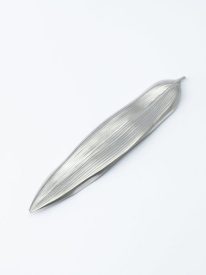
This is a stainless steel cutlery rest in the shape of a bamboo leaf in silver. It is made in Tsubame Sanjo, which accounts for 90 percent of domestic production of metal tableware.It expresses the soft thinness, undulation, and curves of a bamboo leaf, and is designed by Kaichiro Yamada, KAICHI DESIGN, which has won…
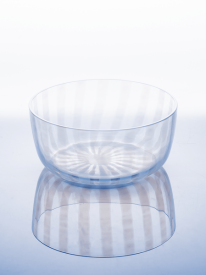
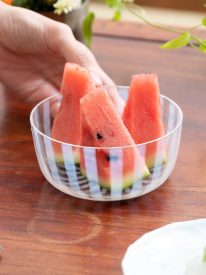
This is a glass bowl with the tokusa “horsetail” pattern from the Taisho Roman glass series by Hirota Glass, a long-established glass manufacturer in Tokyo. The tokusa motif, cherished since the Edo period (1603 CE-1868 CE), symbolizes growth and prosperity. Its straight, upward-reaching lines embody aspirations for success and flourishing, making it a beloved design through…
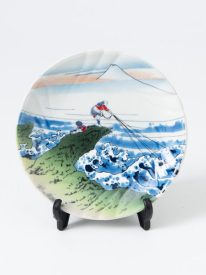
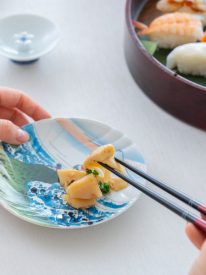
The plate depicts Hokusai’s famous Ukiyoe work, “Koshu Kaji Kazawa“. It shows the skill of his geometrical composition, such as the fact that a fisherman who bends his body in a dogleg shape and draws a net and Mt. Fuji have similar figures. With the combination of Kutani ware with the masterpiece of the genius…
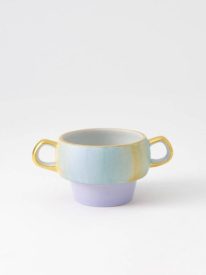
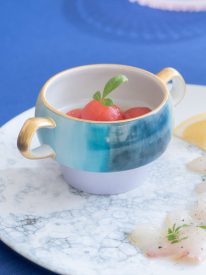
This elegant Japanese soup bowl is handcrafted by Kinzan Kiln. The beautiful gradation expands your imagination, such as the sky’s azure, the cosmic blue, the hazy spring light, or the clear light of early summer. The pale colors and delicate gold are perfectly match in this piece. This series named “Ukiyo” was inspired by the…
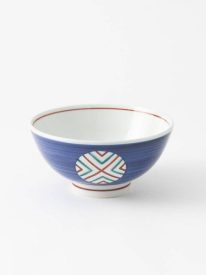
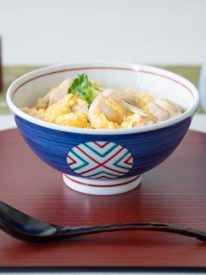
Featuring a sharp red and green pattern peeking out from a large round cut-out shape, called marunuki, this large donburi bowl makes a strong visual impression. The pattern stands out against a striking indigo blue background. The bright red is echoed on the foot of the bowl and the inner rim, creating a beautifully balanced design…
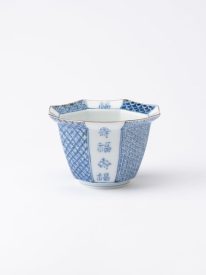
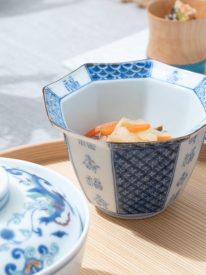
This kobachi small bowl is adorned with a fukuju pattern in the style of old Imari. Fukuju symbolizes happiness and longevity, with the design rooted in this auspicious character. The bowl has an octagonal shape with an outward-extending rim. Its depth makes it ideal for serving soupy dishes, as well as appetizers and desserts.
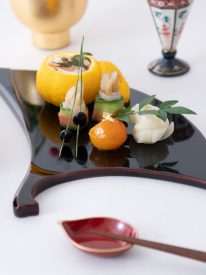
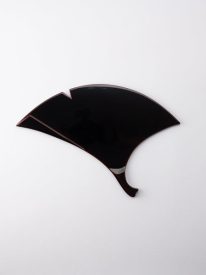
This beautiful glossy plate features a shape of a ginkgo leave that is finished with a lacquered technique called “Tame-nuri.” Tame-nuri is a lacquering technique in which the red color can be seen through the translucent lacquer by applying a coat of translucent black lacquer on top of a middle coat of red lacquer….
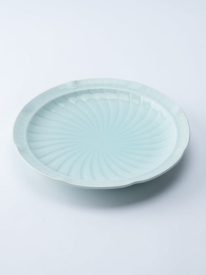
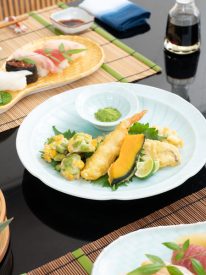
This round celadon plate is generously sized and its depth makes it ideal for serving various dishes at family gatherings or parties. Celadon porcelain, with its beautiful gradient from white to light blue, enhances dish presentation and imparts a cool, refreshing feel. Ideal for colorful dishes like small Japanese sweets, it captivates on the table….
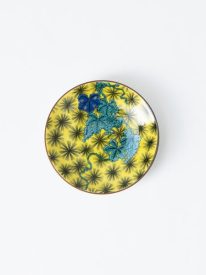
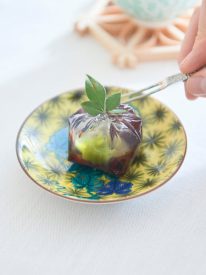
The Japanese plate features a grape and vines in Ko-Kutani (old Kutani) style, dating back to mid-17th century, depicting the nature-themed daring design and distinctive bright colors of Kutani ware. Perfect size as a sauce plate. It is also versatile to serve cheese, nuts, condiments, and other small food. Or you can put a small…
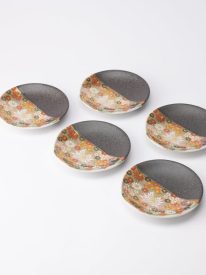
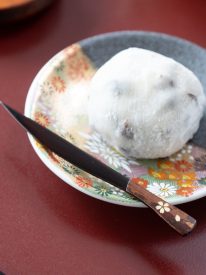
This small plates set features beautiful Hanazume style, meaning filled with flowers, one of the most notable design of Kutani ware which has been handed down the Taisho period (CE 1912-1926). Filled with colorful flowers all over the body with gold trimming, it has a timeless elegance and sophistication. The size is perfect for small…
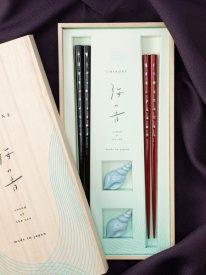
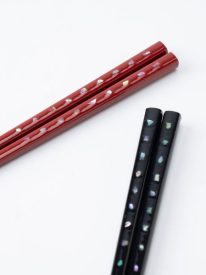
These chopsticks from Matsukan’s Sound of the Sea series are fully coated in lacquer, showcasing the raden technique, where shimmering mother-of-pearl is embedded into the surface. The accompanying chopstick rests are crafted using a seashell-shaped mold originally used to make rakugan, a traditional Japanese confectionery. After an initial ten layers of natural lacquer, shell inlays…
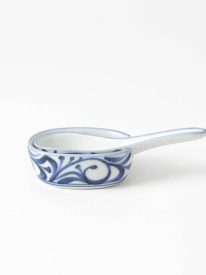
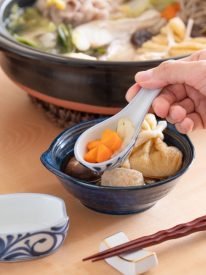
A set of spoon and spoon rest features a hand-painted arabesque pattern, one of the representative motifs of Tobe ware. The shade of indigo gives a sense of modern taste. You can feel the warmth of hand-painting from the patterns using nature motifs. It makes a perfect combination with noodle bowls from Tobe ware, which…

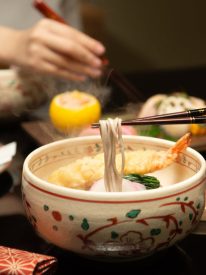 Akae Arabesque Pattern Serving Bowl