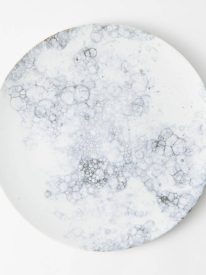
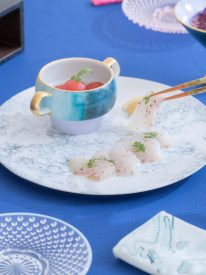
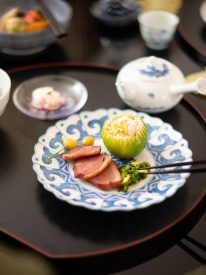
This dinner plate features a unique pattern reminiscent of sea foam and has an elegant matte texture. As well as its excellent design, it is durable and easy to use which makes it is widely used in restaurants in Japan and overseas. Highly versatile plate and suitable for serving the salad, appetizers, and main dish….
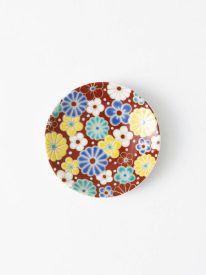
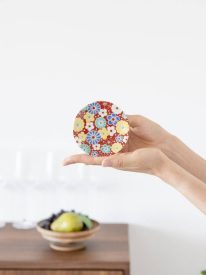
This Japanese sauce plate features an elegant pattern of plum blossoms and chrysanthemums, an auspicious combination in Japanese culture. Plum blossoms symbolize vitality as they bloom early, even in the cold of winter, while chrysanthemums are revered as one of the most noble and auspicious flowers, often referred to as the “king of a hundred…
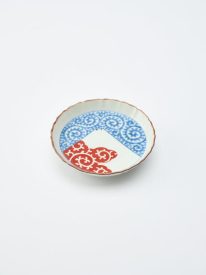
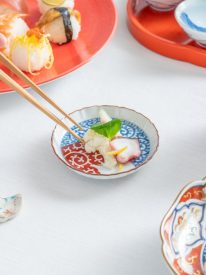
This sauce plate features swirling karakusa “arabesque” motifs that signify growth and longevity, alongside an iconic depiction of Mount Fuji. This plate features an 8 cm (3.1 in) flat center framed by a sharply contoured 1 cm rim. It showcases the somenishiki technique, where the plate is first glazed with intricate blue and white patterns before…
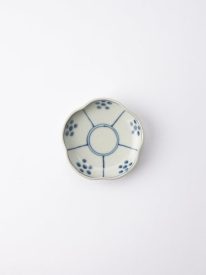
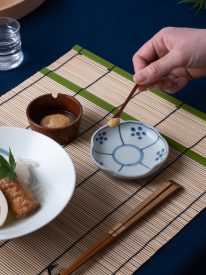
This plum-shaped sauce plate is made by Ri Sanpei (Yi Sam-pyeong) Kiln, a brand by the descendant of Yi Sam-Pyeong, the discoverer of white porcelain ore. The thick and round edge gives a soft and welcoming atmosphere. It is a perfect size for serving sauce or snacks like nuts and candies. Also, you can put a…
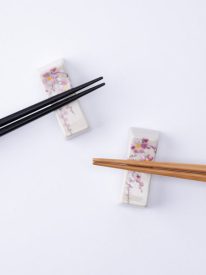
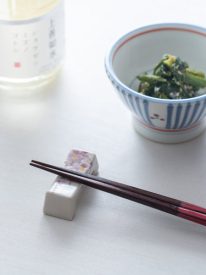
A pair of chopstick rests by Hozan Kiln depicting weeping cherry blossoms. This set is footed and tall, giving an elegant look, and the design is also painted on the side. The cherry blossoms are beautifully rendered in shades of pink, and although small, it will make an eye-catching piece in your dining room. With…
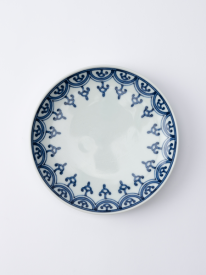
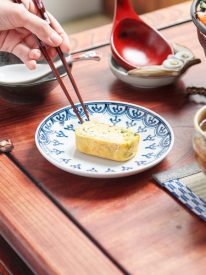
This round side plate is crafted by Takayama Toki, a renowned maker of Hasami porcelain, and dyed with seitan, a kind of indigo. It features a finely detailed yoraku design along the rim, an intricate pattern that originates from luxurious ancient Indian necklaces and ornaments. Traditionally, this pattern has been cherished as an auspicious symbol…
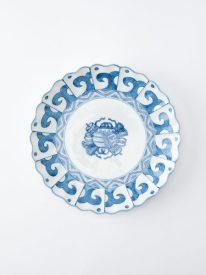
This side plate is a magnificent example of the artistry found in Mikawachi ware, featuring hand-painted designs in blue on fine, durable porcelain. The rim of the plate is adorned with the geometric patterns of shonzui-de waves, a style influenced by the porcelain patterns originally produced in Jingdezhen kilns during the late Ming Dynasty. At…
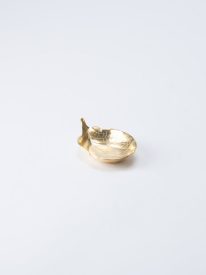
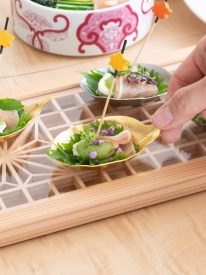
This gold amuse bouche spoon rests in the shape of a delicate persimmon leaf. It has a depth of 1.5cm(0.5in)perfect for carrying food without worries of spillage. The tapered base of the leaf is easy to hold and serves as a handle for the spoon. The veins of a persimmon leaf are recreated faithfully, a…
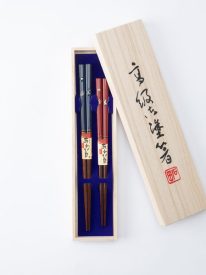
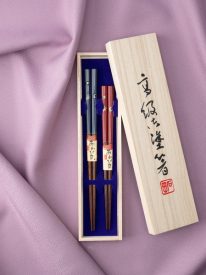
This set includes two pairs of finely crafted chopsticks, combining chic blue and red hues with subtle shell inlays. Made from natural wood and finished with layers of lacquer on the bottom half, these chopsticks have a beautiful, rich luster. Intricately designed with the traditional Japanese motif of a rabbit and a full moon, the…
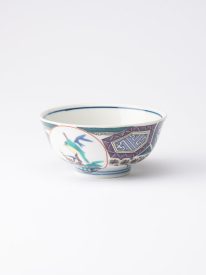
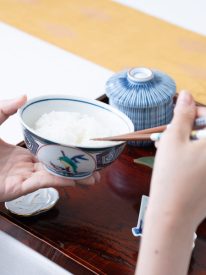
This Japanese rice bowl has a typical design of the Ko-Kutani (old Kutani) style dating back to mid-17th century, depicting the nature-themed motif and traditional patterns and distinctive bright colors of Kutani ware. It is painted with the five colors of red, yellow, green, purple and dark blue, known as “Go-Sai” in Japanese. Kutani ware uses…
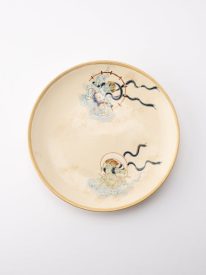
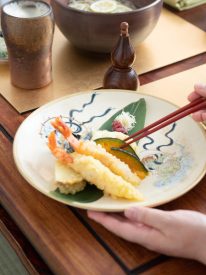
Featuring the distinctive “nami-yu” glaze, which is made from the ashes of the Kyoto forest, the plate has a natural base color in yellowish cream-white. Founded in 1868 as a Kiyomizu ware wholesaler in Kyoto, Tosen Kiln uses its own blend of soil and glaze, preserving the methods and quality of the works of Nonomura…
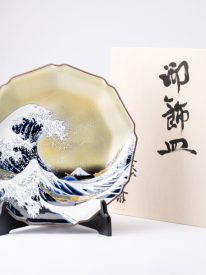
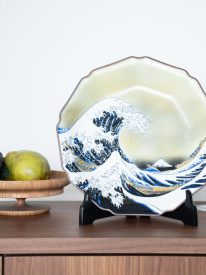
The large plate features the Japanese artist Katsushika Hokusai’s ukiyo-e painting The Great Wave, which depicts surging waves and three boats, and silently standing Mount Fuji in the distant background under the golden sky. Throughout his life, Hokusai painted waves as the main subject of his paintings along with Mount Fuji. Hokusai’s expression of the…

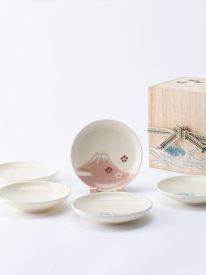 Tosen Kiln Mt. Fuji Kiyomizu Ware Sauce Plate Set
 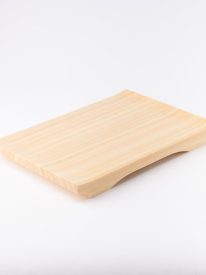 Miyabi Urushi HinokiCypress Kiso Woodwork Sushi Plate
 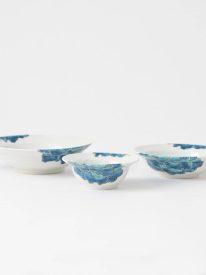 Blue Peony Bowl Set B