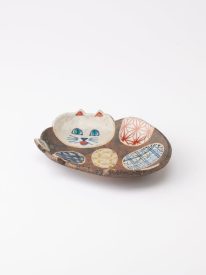
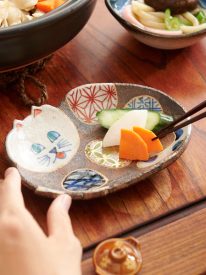
Enjoy meal time with this unique plate from Kousai Kiln. This charmingly designed plate is handmade combining the Shigaraki style “Yakishime(high-fired unglazed ceramics)” and traditional “Some-nishiki,” a technique where a product is first glazed with white and blue patterns and then is further decorated with detailed hand-painted drawings. Stoneware items are rarely seen in Hasami Ware….
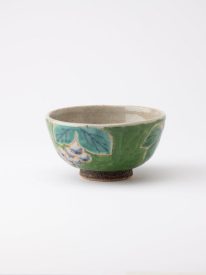
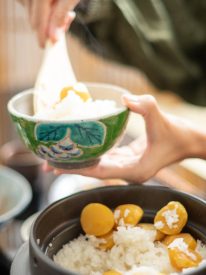
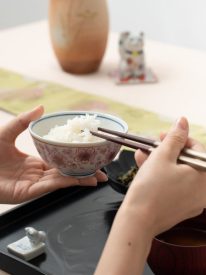
This is a Hasami ware rice bowl made by Kousai Kiln. It is handpainted to bring out the warm texture of the clay. The base of the rice bowl is finished in green with a blue grape and leaf design. The rough texture of the clay is coated with a glossy, bright glaze that offers different textures….
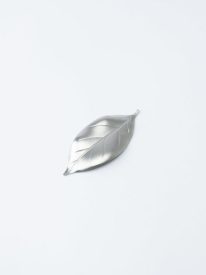
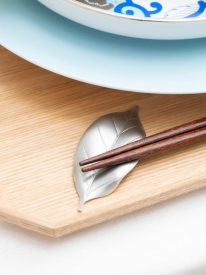
This is a stainless steel chopstick rest in the shape of a camellia leaf in silver. It is made in Tsubame Sanjo, which accounts for 90 percent of domestic production of metal tableware.It expresses the thickness, undulation, and curves of a camellia leaf, and is designed by Kaichiro Yamada, KAICHI DESIGN, which has won awards…
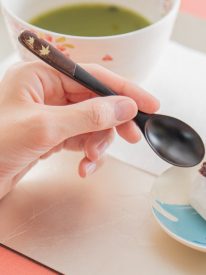
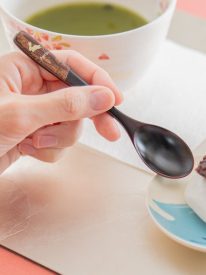
The beautiful black lacquer with red hues peeking through already makes this spoon a work of exceptional craftsmanship. The delicate natural pattern of kabazaiku, or cherry bark work graces the handle and is further decorated in an understated momiji (Japanese maple leaves) motif. The technique used for this spoon is known as tamenuri, which involves a…
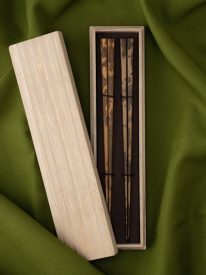
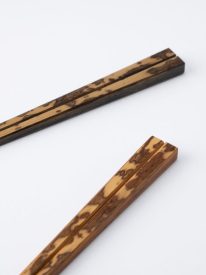
This set of chopsticks features the unique zumen bamboo from Kyoto. Random patterns adorn one side of each chopstick, lending a traditional and elegant appeal. Enjoy their rustic natural charm in two subtle shades of brown. Zumen bamboo refers to dappled or mottled bamboo and is the work of skilled craftsmen, who use specialized techniques….
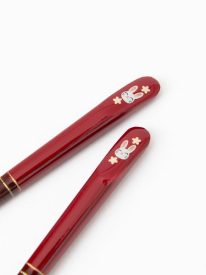
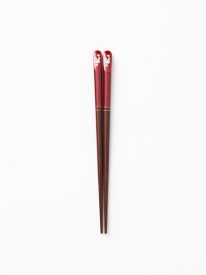
These are children’s chopsticks made of natural wood and lacquer, featuring gold maki-e, a traditional technique. The upper part of the chopsticks is cut diagonally and decorated with a cute rabbit and flower pattern. They are suitable for children in the upper grades of elementary school. The tips of the chopsticks are square to make them…
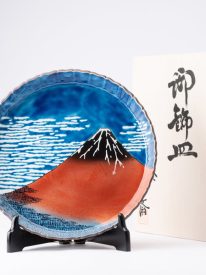
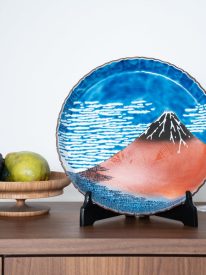
The large plate features Red Fuji, capturing the moment of the rising sun turning Mount Fuji red in a clear early morning. Red Fuji is known to bring good fortune. With the combination of Kutani ware with the masterpiece of the genius artist Hokusai Katsushika, the plate has truly an eye-stopping charm for anyone. The…
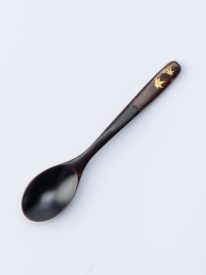
The beautiful black lacquer with red hues peeking through already makes this spoon a work of exceptional craftsmanship. The delicate natural pattern of cherry bark graces the handle and is further decorated in an understated motif of a rabbit jumping over blades of grass. The technique used for this spoon is known as tamenuri, which…
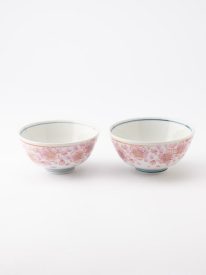
A pair of rice bowls decorated with brush painted cherry blossoms and falling petals. The pale pink color shines against the white porcelain base, beautifully depicting the petals dancing in the wind.In Japan, there is a culture of giving rice bowls as a gift to married couples to celebrate their marriage. It’s also perfect for…
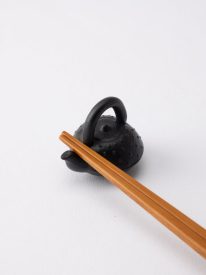
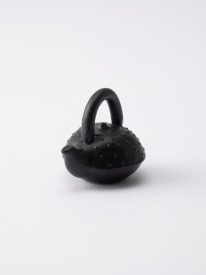
This chopstick rest is designed to resemble a miniature tetsubin (cast iron teapot). Though small, its moderate weight and detailed craftsmanship give it a strong presence on the table. Perfect for everyday dining and special occasions, this unique design adds a touch of elegance to any setting. Chopstick rests are an essential part of table settings….
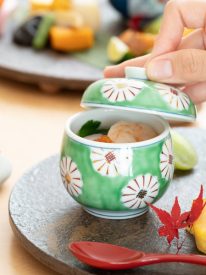
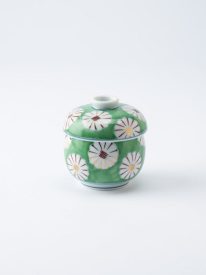
Enjoy delicious chawanmushi, Japanese steamed egg custard, in this beautiful Arita ware chawanmushi bowl. A scattering of golden chrysanthemums is carefully painted first, preserving their delicate beauty. A bright green sweeps in to fill the remaining space as the varied shades showcase exquisite hand-painted artistry. Versatile in size and shape, this piece can also hold…
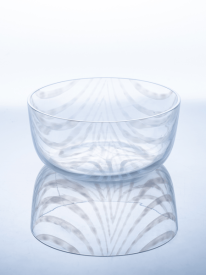
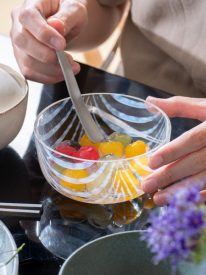
This is a glass bowl with makiage pattern from the Taisho Roman glass series by Hirota Glass, a long-established glass manufacturer in Tokyo. Makiage is a traditional tie-dyeing technique used in kimono making. This method creates intricate patterns that convey an aura of elegance and grace. This pattern is created by the aburidashi “invisible ink” technique,…


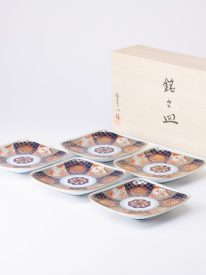 Yazaemon Somenishiki Kotobuki Pattern Side Plate Set