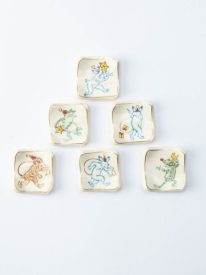
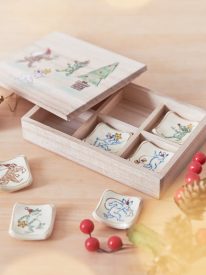
The enchanting animals from the famous Chojugiga Scroll, including frogs, monkeys, and rabbits, come alive on these chopstick rests from Tosen Kiln. Each animal is depicted with a festive Christmas touch: stars shimmering around them, hats adorning their heads, and the mischievous one even carries a bag of presents. These whimsical scenes wonderfully capture the…
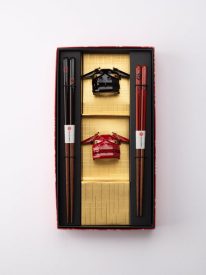
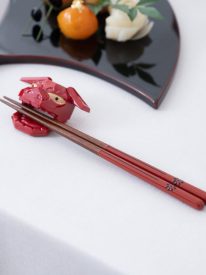
This striking gift set includes two pairs of Wakasa lacquerware chopsticks with chrysanthemum designs and two chopstick rests shaped like lion masks from the traditional shishi-mai “lion dance.” Each chopstick is decorated with a single chrysanthemum flower. The chrysanthemum flower holds deep significance in Japan as it serves as the emblem of the Imperial Family….
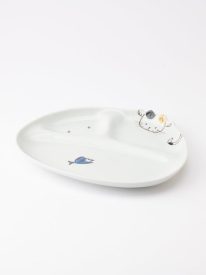
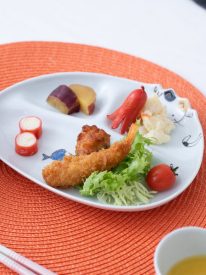
Serve meals to your little ones in this cute and well-designed children’s plate. Kids will love seeing the cat staring from the rim of the plate and the fish with its big eyes. The cat’s ears are neatly shaped on the edges to give the plate a unique shape. The two little paw prints are…
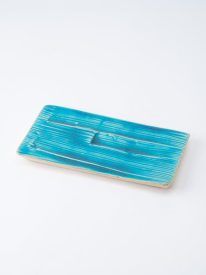
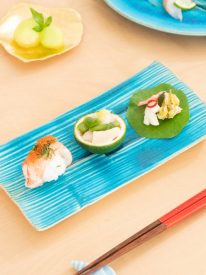
This rectangular side plate features a captivating turquoise in a matte finish, evoking the serene beauty of ocean waves. It brings a pop of color to your dinner table, while the texture of Shigaraki ware adds an element of artisanal charm. The turquoise glaze is hand-mixed using a generations-old formula. The masterfully textured stoneware with…
This small porcelain plate has auspicious design patterns: “Nami Chidori,” plovers and waves, and “Karakusa,” an arabesque design. Nami Chidori, a combination of a plover and a wave, means “to overcome rough seas together.” Arabesque designs are considered a symbol of longevity and prosperity of offsprings, as arabesque, the vine, extends its stems in all directions….
This beautiful plate depicts Sakura (cherry blossoms) and autumn maple leaves, which are popular spring and autumn motifs in Japan. The gently wavy rim creates an elegant atmosphere that matches the painting drawn. It is made by Kokuzou kiln, known for its gentle and warm stoneware, and features beautiful painting with watercolor-like transparency and luster,…
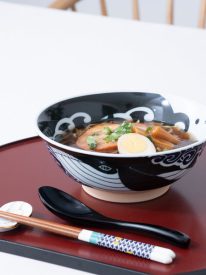
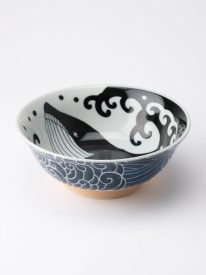
This regular-sized Japanese ramen bowl boasts a captivating design, featuring a whale swimming gracefully through the ocean, surrounded by waves and splashes. The artwork is primarily depicted in black, while the wave patterns on the exterior are elegantly brushed in shaded indigo blue. Its size and shape are perfect for ramen and other noodle dishes…
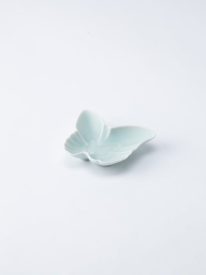
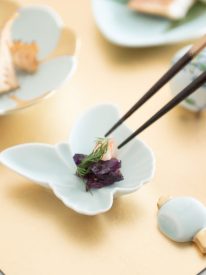
This butterfly-shaped sauce plate features a graceful matte celadon texture that conveys tenderness the moment you touch it, enhanced by a moist and gentle surface finish. The butterfly’s wings are designed asymmetrically, creating a vivid appearance that adds a sense of movement to the piece. With its distinctive shape, this plate catches the eye on…
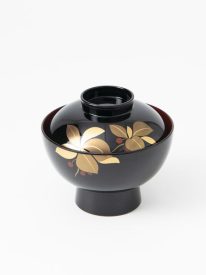
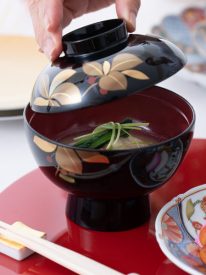
This is a large soup bowl with a lid. The glossy texture of the surface is beautiful, and the gold painting of spear flowers gives it an elegant feel. With its tall footing and lid, it is an ideal soup bowl for ceremonial occasions. At New Year’s in Japan, people enjoy zoni, also known as ozoni,…
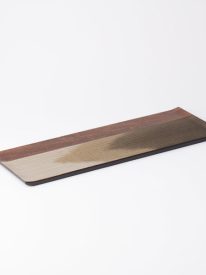
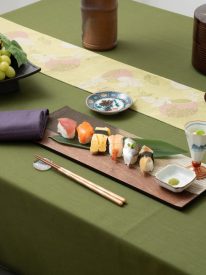
This serving tray is made by Mr. Kiyoteru Morita, a renowned undercoat craftsman of Echizen lacquerware. Sushi and tempura can be stylishly plated on this tray. It can also be used to serve appetizers, main dishes, and desserts. Neatly display small plates, bowls, and ochoko (sake cups)for an elegant Japanese style table setting. The sides…
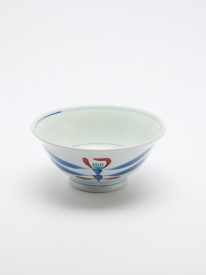
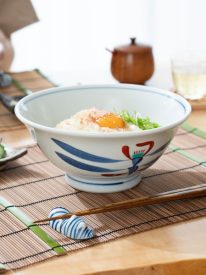
The hand-painted motif on this donburi bowl gracefully transitions between a flower and a dragonfly. The charming design is rendered in blue and red on white porcelain. Created using the tsuketate technique, where each stroke is applied without outlines, the design wins you over with its hand-painted touch and genuine creativity. The sturdy bowl is…
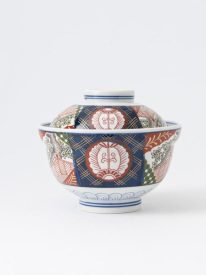
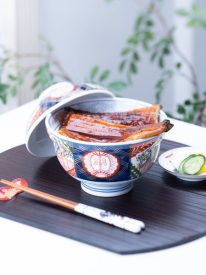
This large-sized Japanese donburi rice bowl features sakura, or cherry blossoms, framed by dark blue, lattice-like patterns, all rendered in the traditional nishiki-e style. Nishiki-e, meaning “brocade picture,” is a multi-colored woodblock print technique that revolutionized ukiyo-e during the Edo period (1603 CE-1868 CE), when most prints were in black and white. The lid helps keep…

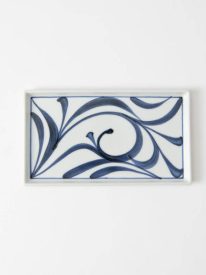 Arabesque Rectangle Dinner Plate
 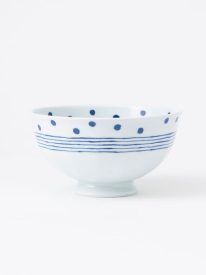 Dot Line Donburi Bowl M
 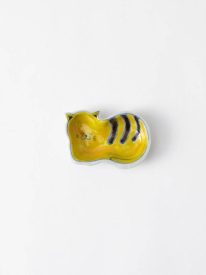 Yellow Cat-shaped Sauce Plate
 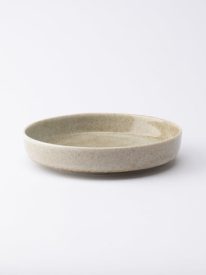 MERU Grains Spume Mino Ware Round Plate 6.5in
 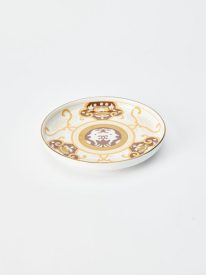 Japan Autumn Gold Old Imari Side Plate
 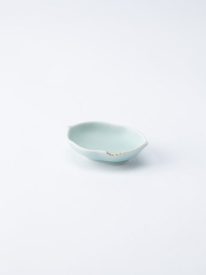 Moist Gold Leaf Sauce Plate
 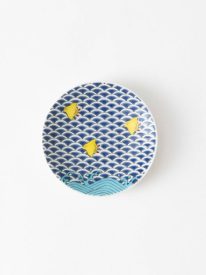 Chidori Sauce Plate
 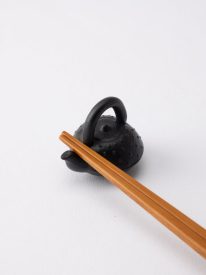 Cast Iron Teapot Chopstick Rest
 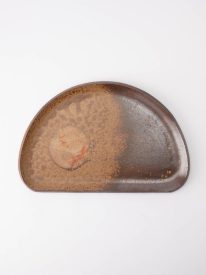 Botamochi Half-Round Dinner Plate
 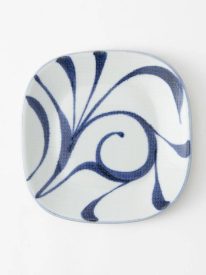 Arabesque Square Side Plate
 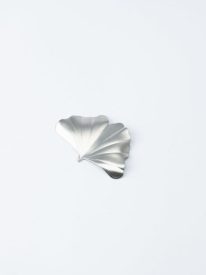 Tsubame Hutlery Silver Ginkgo Leaf Chopstick Rest