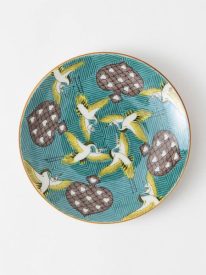
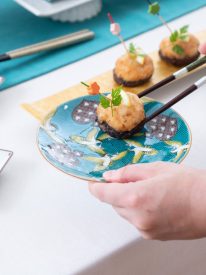
A sauce plate features flying Japanese cranes as if they are dancing. Kutani ware uses a brush for painting with Japanese coloring paint, as you can see the painted bird is slightly thickened and standing out. The crane is known to be a symbol of longevity and prosperity. The size is great as an extra plate….
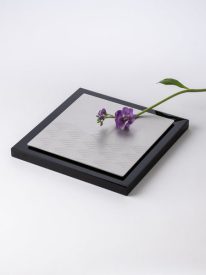
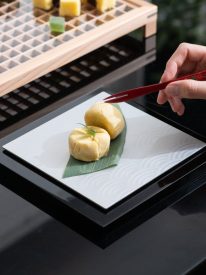
This serving tray is the result of a collaboration between a matte, subdued aluminum tray and a deep, moist Echizen lacquerware tray. The wave pattern is called “seigaiha“, which is a traditional Japanese pattern that reminds us of the blessings of the vast ocean. The infinitely expanding wave pattern is an auspicious one that expresses…
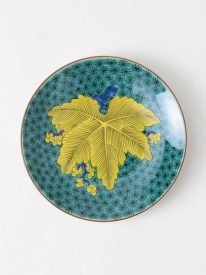
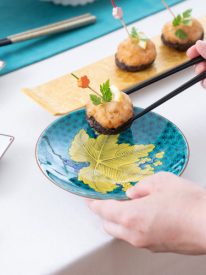
The side plate features a large yellow sycamore leaf in ko-Kutani (old Kutani) style, dating back to mid-17th century, depicting the nature-themed daring design and distinctive bright colors of Kutani ware. With a diameter of 15 cm (5.9 in), it is perfect as an extra plate for the side dishes or desserts. You can use…
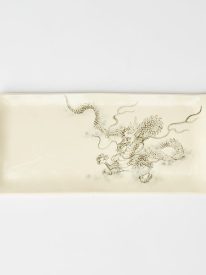
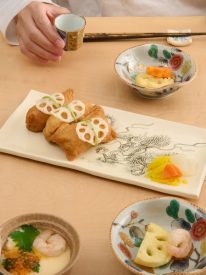
This rectangular ivory-hued plate is adorned with an intricately hand-painted dragon design, crafted with exceptional skill by a master artisan. Every detail, from the dragon’s whiskers and scales to the swirling clouds around it, is brought to life with remarkable precision. The image of the five-clawed dragon, originating from China and later embraced in Japan,…
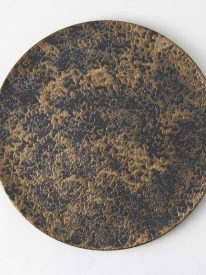
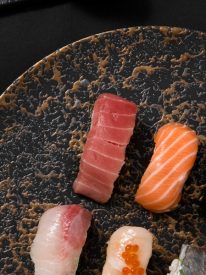
This stunning dinner plate combines matte black with muted gold tones, creating an eye-catching and modern design. Its sophisticated color palette makes it a versatile choice for any table setting. Durable and practical, it’s favored by restaurants in Japan and beyond. Ideal for serving sashimi, sushi, or tempura, it also works beautifully for appetizers, main…
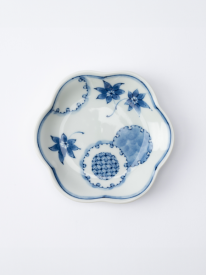
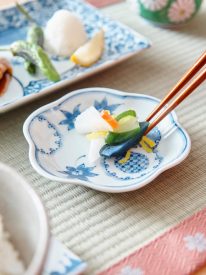
This elegant sauce plate is crafted by Takayama, renowned for Hasami porcelain. In the timeless blue and white of sometsuke, it features the shape of a snowflake and is decorated with maple leaves. The plate’s size is ideal for sides and small desserts like wagashi, and traditional Japanese sweets, and the shape stacks neatly with other…
The Quiblas Mono Graceful Garden Dinnerware Set features tableware adorned with Shogoin radish, a summer vegetable from Kyoto, and raspberry branches. The combination of turquoise, a gradient of light blue, and deep brown evokes the feeling of being in a summer garden, creating a sense of nostalgia. The side plate decorated with the Shogoin radish…
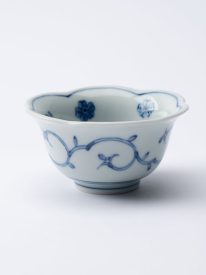
This elegant petal-rimmed kobachi small bowl is crafted by Takayama, renowned for Hasami porcelain. In the classic blue and white of sometsuke, it features an interior pattern of a blooming peony surrounded by waves and gently falling sakura. The exterior is adorned with karakusa scrollwork of budding vines. This pattern has long been cherished in…
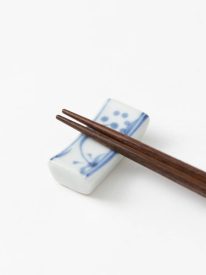
This chopstick rest features a beautifully hand-painted pattern, with a round circle symbolizing the sun, a mark of hope and glory. Its versatile design pairs effortlessly with both traditional and contemporary tableware, making it a perfect addition to any dining table. Crafted for durability, this piece suits everyday meals as well as special gatherings.
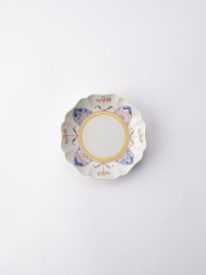
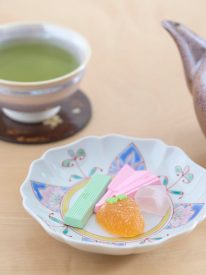
This sauce plate showcases dreamy patterns delicately painted by the artisans of Ginshu Kiln, renowned for its romantic and playful pastel-colored designs. The painted areas have a slightly raised texture, a characteristic of Kutani ware, which is traditionally hand-painted using Japanese coloring pigments and a brush. Perfect size for serving appetizers, cheese, dessert and fruits…
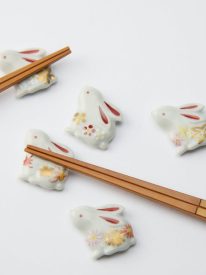
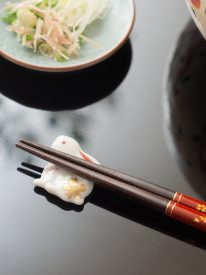
A set of charming rabbit chopstick rests from Kyo ware, Hozan Kiln, adorned with five different types of flowers and leaves. You can enjoy each season with designs such as cherry blossoms, chrysanthemums, and autumn leaves. The rabbit’s expression and the golden lines painted in Kinsai technique are incredibly beautiful, making this chopstick rest not only cute…
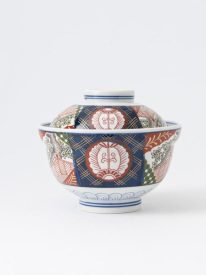
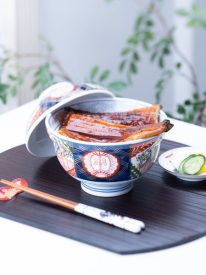
This large-sized Japanese donburi rice bowl features sakura, or cherry blossoms, framed by dark blue, lattice-like patterns, all rendered in the traditional nishiki-e style. Nishiki-e, meaning “brocade picture,” is a multi-colored woodblock print technique that revolutionized ukiyo-e during the Edo period (1603 CE-1868 CE), when most prints were in black and white. The lid helps keep…


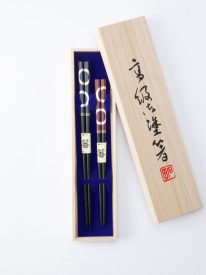 Gold and Silver Circle Set of Chopsticks Pair Set
 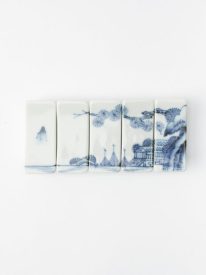 Palace and Landscape Chopstick Rest Set
 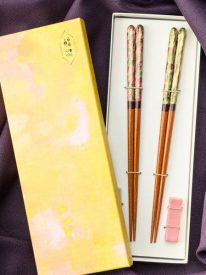 Matsukan Crystal Komorebi Wakasa Lacquerware Chopsticks Set 22.5 cm (8.9 in) with Chopstick Rests (Set of Two)
  Origami Crane Kutani Chopstick Rest Set