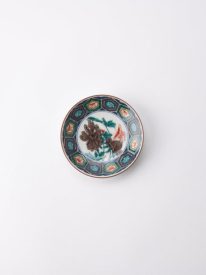
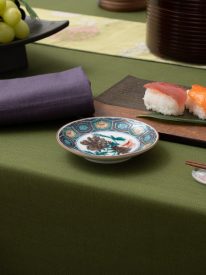
This sauce plate features a hexagonal pattern with peony in ko-Kutani (old Kutani) style, dating back to mid-17th century, depicting the nature-themed daring design and distinctive bright colors of Kutani ware. It is the perfect size as a sauce plate. It is also versatile to serve cheese, nuts, condiments, and other small food. Or you…
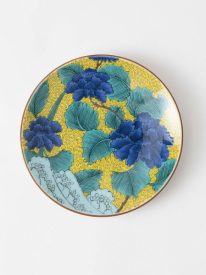
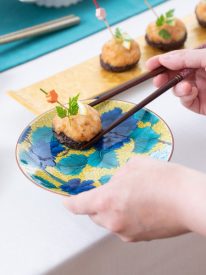
This side plate features large blue peonies elegantly painted against a yellow background. This is a classic design of the ko-Kutani (old Kutani) style dating back to mid-17th century, depicting the nature-themed daring design and distinctive bright colors of Kutani ware. With a diameter of 15 cm (5.9 in), it is perfect as an extra…
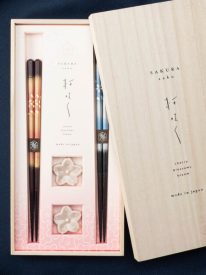
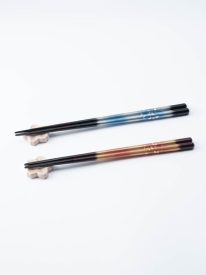
The essence of a soft spring breeze weaving through delicate cherry blossoms is eloquently expressed in this set of two pairs of chopsticks. An elegant harmony ensues as the cherry blossom motif on each chopstick dances over soft silvery blue and gold. The black Wakasa lacquer base of the chopsticks creates a wonderful contrast with…
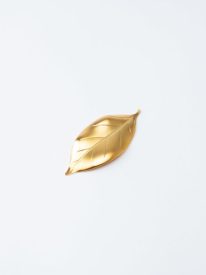
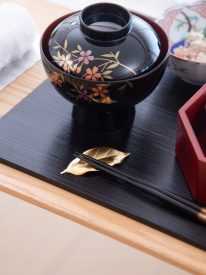
This is a stainless steel chopstick rest in the shape of a camellia leaf in gold. It is made in Tsubame Sanjo, which accounts for 90 percent of domestic production of metal tableware.It expresses the thickness, undulation, and curves of a camellia leaf, and is designed by Kaichiro Yamada, KAICHI DESIGN, which has won awards…
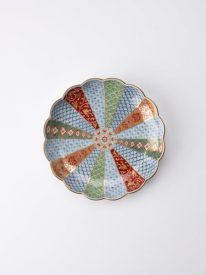
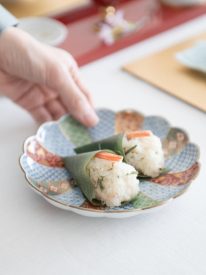
This is a gorgeous Japanese plate with a “chrysanthemum split” design in the old Imari style. The lines extend from the outside to the center and are decorated with different traditional patterns.” Each has its own meaning, such as “seigaiha,” “shigebishi,” and “zuiun.” “Seigaiha” (blue ocean waves) – a symbol of prosperity. “Shigebishi” (dense diamonds)…
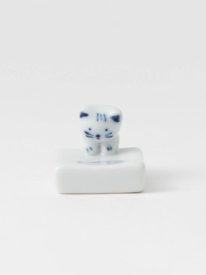
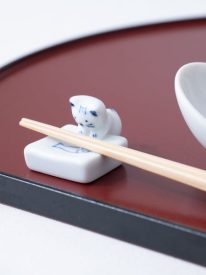
The motif of this Japanese chopstick rest is a cat waiting patiently in front of fish. “Mate” means “stay” in English. When you place the chopsticks on it, it looks as if it is watching over them. From the side or behind, this chopstick rest looks adorable from any angle. The indigo color looks great on…
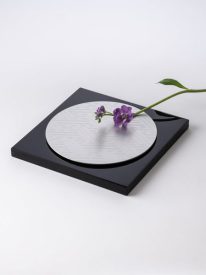
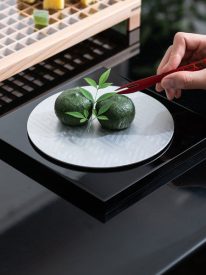
This serving tray is the result of a collaboration between a matte, subdued aluminum tray and a deep, moist Echizen lacquerware tray. “Sayagata” is one of the auspicious patterns meaning prosperity and longevity of a family. It is a diagonal overlay of the Sanskrit character for Manji (Buddhist cross). It can be used as a…
The Japanese kobachi from the “Une” series is made by Taniguchi Seidojo, which has been making Kutani ware clay for three generations. Instead of using vivid colors of Kutani ware, they propose a new, simple and modern Kutani ware that can only be created by a company that knows the characteristics of clay. The carefully…
This is a sauce plate with arabesque pattern on white glaze. It is an eye-catching piece on the table with a rustic and warm atmosphere that brings out the best of hand-drawn lines and handmade shapes. There are two places to put sauces and condiments, which is convenient when eating sashimi. It is also deep…
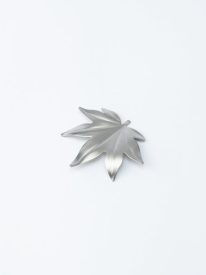
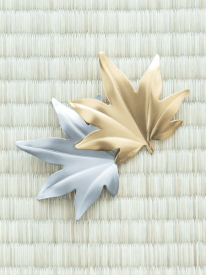
This is a stainless steel chopstick rest in the shape of a maple leaf in silver. It is made in Tsubame Sanjo, which accounts for 90 percent of domestic production of metal tableware.It expresses the soft thinness, undulation, and curves of a maple leaf, and is designed by Kaichiro Yamada, KAICHI DESIGN, which has won…
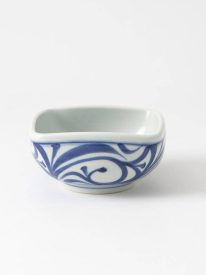
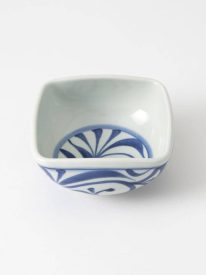
This square medium bowl features a hand-painted arabesque pattern, one of the representative motifs of Tobe ware. The indigo shade adds a modern touch, while the natural motifs convey the warmth of hand-painted craftsmanship. It is ideal for serving various side dishes, such as tangy sunomono and slowly simmered nimono. The shape stands out with…
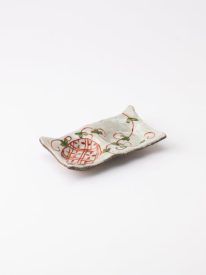
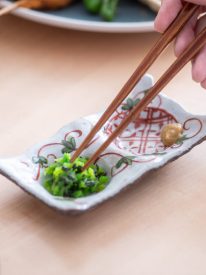
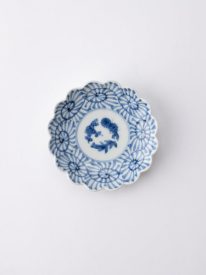
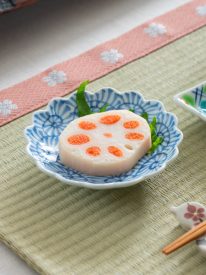
This easy-to-use chrysanthemum-shaped sauce plate showcases a design called an octopus arabesque pattern among arabesque patterns. The name “octopus arabesque” comes from the fact that the shape of the spiraling vine with leaves on the outside resembles the octopus’s legs. It is one of the classic patterns and is found on many Japanese tableware. The plates…

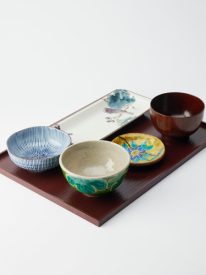 Emerald Orchard Dinnerware Set
 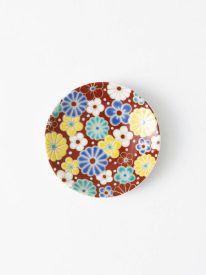 Plum and Chrysanthemum Sauce Plate