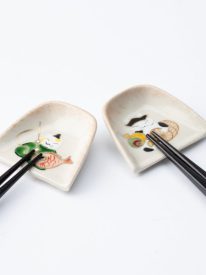
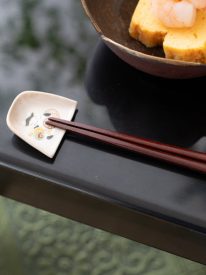
This set features chopstick rests in the shape of a traditional straw cape, portraying cats dressed as Ebisu and Daikokuten, two of the Seven Lucky Gods. Ebisu, the god of fishermen, is known as the deity of prosperous business. He is depicted holding a sea bream in his left hand and a fishing rod in his right,…
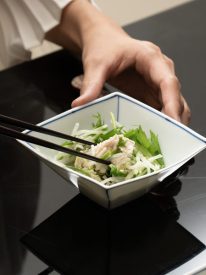
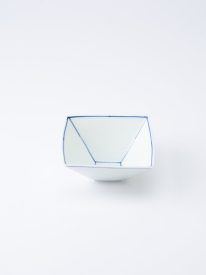
This kobachi bowl is perfectly suited for serving side dishes. The lines drawn along the rim accentuate the bowl elegantly. Employing a technique of “Sometsuke” (underglaze cobalt blue) painting on a base brilliantly fired to a pure white, each piece is meticulously crafted, embodying the essence of Seto Sometsuke ware. Though square, the form exhibits…
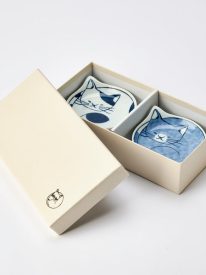
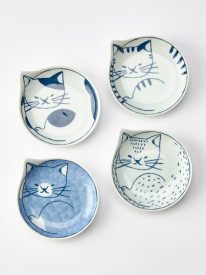
This charming set features four Japanese sauce plates adorned with beautifully detailed, hand-drawn cat illustrations. Each plate showcases a different cat with unique fur patterns, all in an endearing curled-up position. The raised ears of the cats bring personality to each feline friend and add a playful touch to the plate’s design. The smooth porcelain…
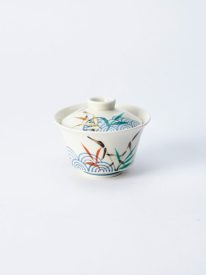
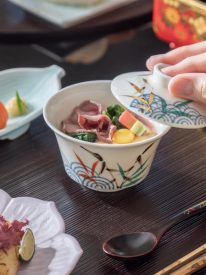
Enjoy delicious chawanmushi, Japanese steamed egg custard, in this beautiful Arita ware chawanmushi bowl. A symbol of good fortune, the traditional seigaiha “wave” pattern with its expanding, layered semi-circles graces the cup and lid of this chawanmushi bowl. Soft brushstrokes transition into slender stalks of reed grass. Its spouted shape can also accommodate other steamed…
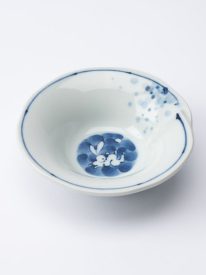
This is an indigo-dyed moon and rabbit kobachi small bowl crafted by Takayama, a renowned maker of Hasami porcelain. The inside of the bowl features a charming illustration of a rabbit playfully leaping beneath the moon, delicately painted in soft indigo tones. In Japanese culture, the rabbit is a symbol of fertility, longevity, and prosperity, making…
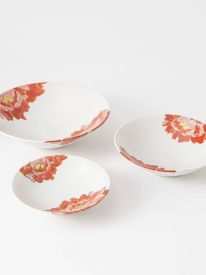
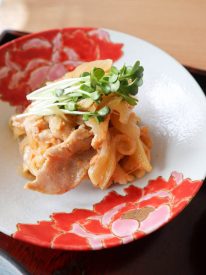
This gorgeous Japanese bowl set adorned with a bright red peony is made by Sato Tsuyoshi, a Kutani ware artisan known for his use of bright colors and florals. With brush painting, which is a characteristic of Kutani ware, a thick peony motif is drawn as if it bloomed on bowls, and the center is…
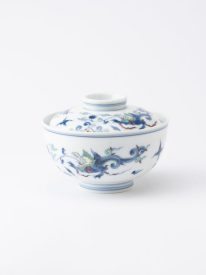
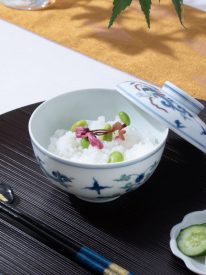
This kobachi small bowl with a lid is adorned with vibrant dragon and arabesque patterns, which stand out beautifully against white porcelain. Both dragons and arabesque motifs are considered auspicious and have been popular designs on tableware since ancient times. The bowl is perfectly sized for serving rice and is also ideal for simmered dishes. The…
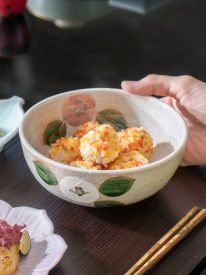
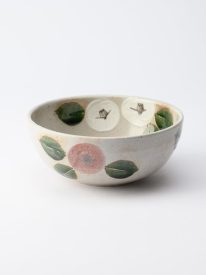
This bowl fascinates with its charming red and white camellia motif, reflecting the beauty of nature. Tsujii Musashi, the artisan behind the kiln, draws inspiration from his surroundings to create pieces that embody a subtle, rustic elegance. The bowl’s refined appearance is further enhanced by gohondenatural pinkish spots that emerge after the firing process. Its…
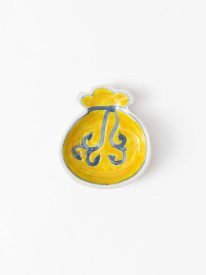
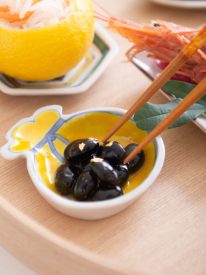
This small plate is shaped like a treasure bag, an auspicious motif symbolizing wealth and good fortune. Often depicted in art and crafts, it represents an endless source of riches and blessings. With its charming form and meaningful design, it adds a touch of tradition and elegance to your table. Perfectly sized as a sauce…
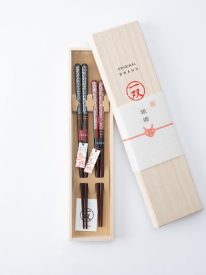
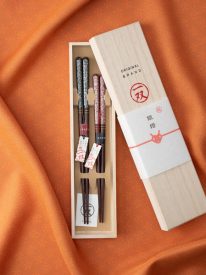
Mark happy moments together with the Ginkon Celebration chopstick set. Named after ginkon, meaning silver anniversary, this set includes two pairs of dark brown-lacquered wood chopsticks with silver-decorated tops. They combine the elegant sheen of traditional lacquerware with a sophisticated design. The longer pair measures 23 cm (9 in) and features a black and silver…
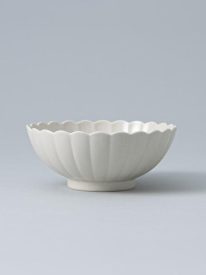
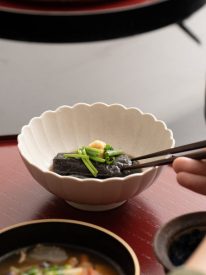
This chrysanthemum shaped Japanese small bowl features a matte white color, overlaid with a white speckled glaze that looks like snow. It is made by Hasami ware, which is widely known as a light, durable and easy-to-use tableware among Japanese tableware, and is an indispensable stoneware in both restaurants and homes. Chrysanthemum is a shape…
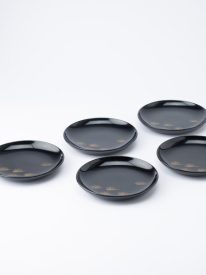
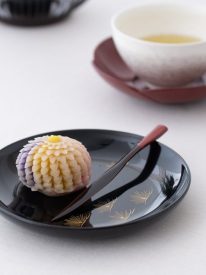
These Echizen Lacquerware side plates are exquisite items combining the elegant black shine of lacquer with the detailed gold designs made with “Chinkin.” “Chinkin” is a traditional technique used to create detailed designs with gold and silver on lacquerware surfaces. Unlike Maki-e, where gold leaves and powder are directly applied to a surface, for Chinkin, shallow…

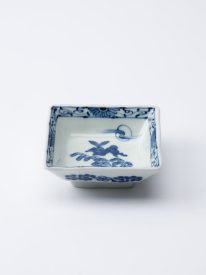 Rabbit and Seigaiha Square Kobachi Small Bowl
 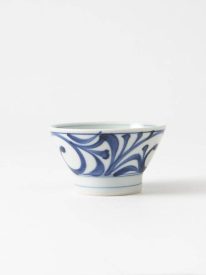 Kurawanka Arabesque Kobachi Small Bowl
 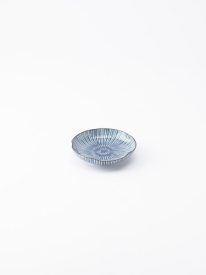 Fukuhou Kiln Tokusa Hasami Sauce Plate