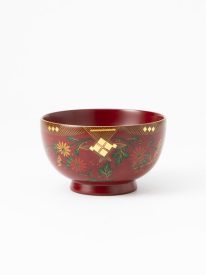
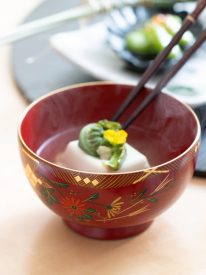
This soup bowl is hollowed out from Japanese horse chestnut, which is the best material for wood bowls. It has a slightly matte texture in calm vermilion color.The lacquering process, from the base coat to the top coat, has been inspected for designation as a traditional Aizu lacquerware craft.Aizu-e, the traditional design of Aizu lacquerware, is…
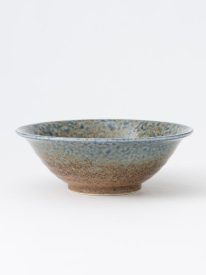
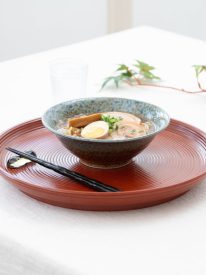
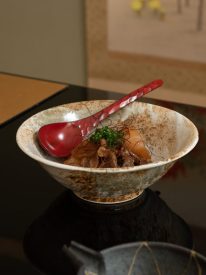
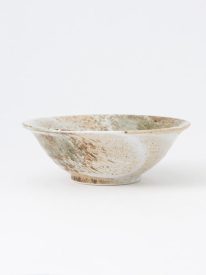
The organic colors over the surface of this small-sized ramen bowl are created by pouring an indigo glaze over porcelain that contains sand. The resulting shades of indigo blue and light brown form earthy patterns, enhancing the bowl’s warmth and effortless beauty. The bowl is perfect for a variety of noodle dishes, such as udon…
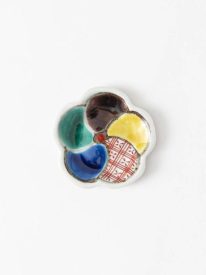
This plum flower-shaped Japanese sauce plate fits comfortably in the palm of your hand. It is a wonderful example of use of Kutani ware colors named gosai (red, yellow, green, purple, and dark blue). Each piece is hand-painted, making the texture of the plate warm and appealing. Perfectly sized as a sauce plate, it is also…
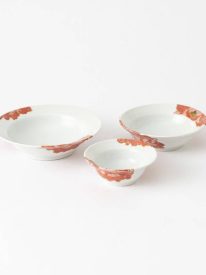
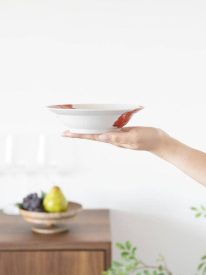
This gorgeous Japanese bowl set adorned with a bright red peony is made by Mr. Tsuyoshi Sato, a Kutani ware artisan known for his use of bright colors and florals. With brush painting, which is a characteristic of Kutani ware, a thick peony motif is drawn as if it bloomed on the rim and outer…
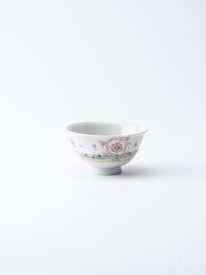
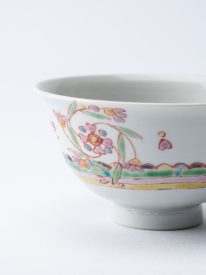
This rice bowl features flower petals delicately painted by artisans of Ginshu Kiln, which is especially known as its romantic and playful pastel colored painting. The painted areas have a slightly raised texture, a characteristic of Kutani ware, which is traditionally hand-painted using Japanese coloring pigments and a brush. With a diameter of 10.3 cm(4.1 in),…
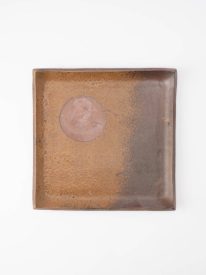
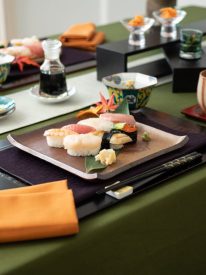
The Hozan Kiln Square Plate embodies the earthy textures and colors characteristic of Bizen ware. The term “botamochi” in the product name refers to a traditional round-shaped Japanese confectionery and is also one of the classic patterns found on Bizen ware pieces. This pattern is created by inserting round pieces of refractory clay between each…
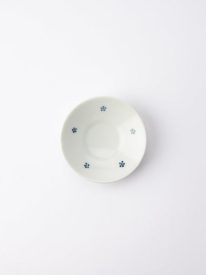
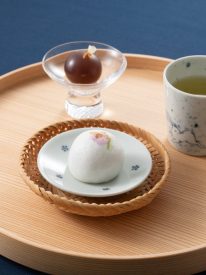
This sauce plate is made by Ri Sanpei (Yi Sam-pyeong) Kiln, a brand by the descendant of Yi Sam-Pyeong, the discoverer of white porcelain ore for Arita ware. It is a simple and suitable piece for any dish, with a lovely small painting of plum blossoms. The thick and round edge gives a soft and welcoming atmosphere….
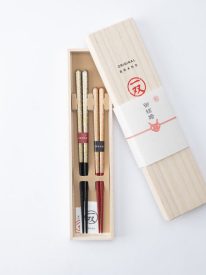
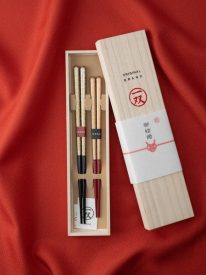
Celebrate life’s milestones with this stunning celebratory chopstick set. It includes a pair of black chopsticks, measuring 23 cm (9 in), and a pair of red chopsticks, measuring 20.5 cm (8.1 in). The upper part of the black chopsticks is coated with gold and accented with shimmering silver dots, while the red pair is finished…
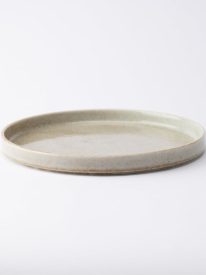
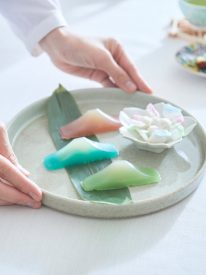
This is an easy-to-use plate that looks great in the dining room, as is typical of MERU, which specializes in dishes suitable for professional use. Measuring 21cm(8.3in), it is just the right size for a main plate for one person. It can also be used for salads and appetizers to be shared by a small…
The beautiful white hue of this small ramen bowl is a hallmark of Shino ware. The speckled glaze creates a design that feels both liberating and sophisticated. Shino ware is a type of Mino ware, originally fired in Mino, Gifu Prefecture, during the Azuchi-Momoyama period (1573-1603 CE). While most of the bowl is glazed, offering…
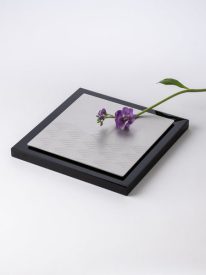
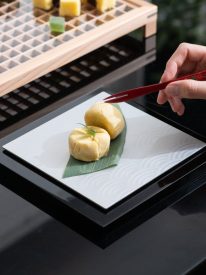
This serving tray is the result of a collaboration between a matte, subdued aluminum tray and a deep, moist Echizen lacquerware tray. The wave pattern is called “seigaiha“, which is a traditional Japanese pattern that reminds us of the blessings of the vast ocean. The infinitely expanding wave pattern is an auspicious one that expresses…
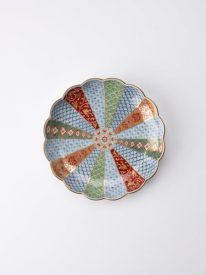
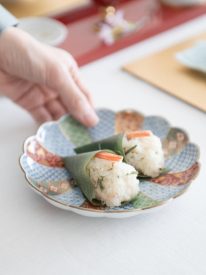
This is a gorgeous Japanese plate with a “chrysanthemum split” design in the old Imari style. The lines extend from the outside to the center and are decorated with different traditional patterns.” Each has its own meaning, such as “seigaiha,” “shigebishi,” and “zuiun.” “Seigaiha” (blue ocean waves) – a symbol of prosperity. “Shigebishi” (dense diamonds)…

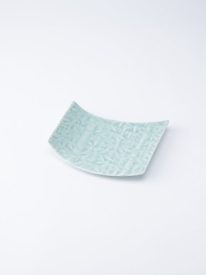 Moist Bamboo Side Plate
 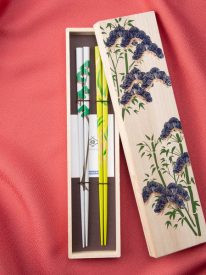 Matsukan Rimpa Pine and Bamboo Wakasa Lacquerware Set of Two Pairs of Chopsticks 23 cm (9.1 in)